
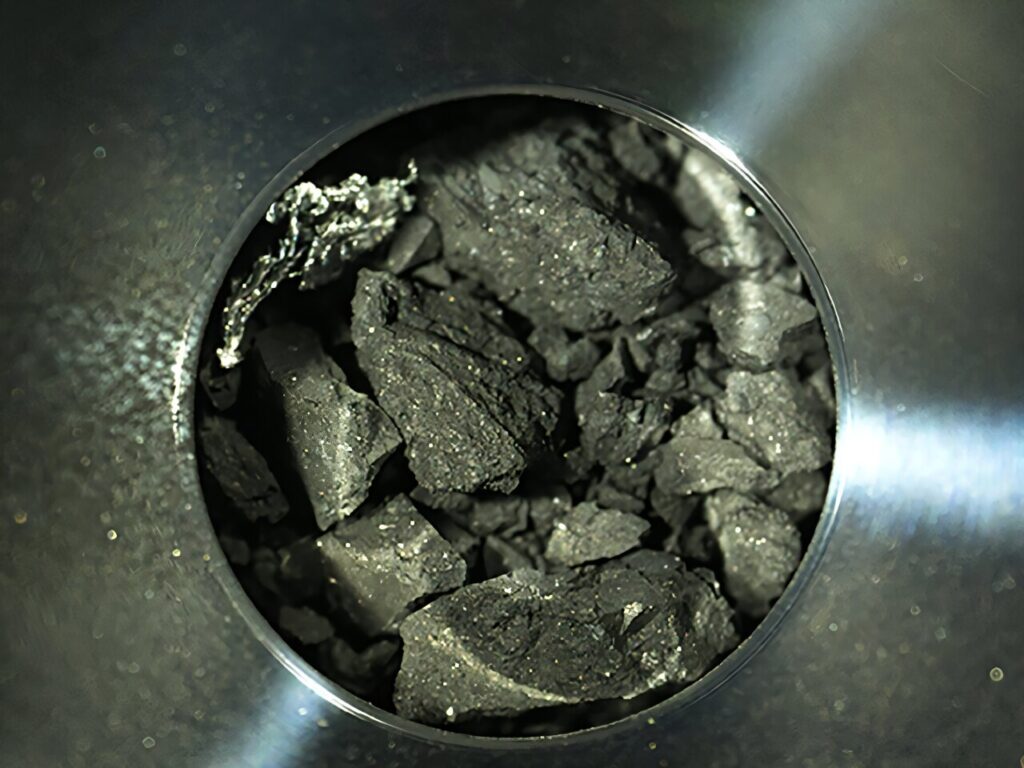
Scientists have discovered, in samples brought back to Earth by the Hayabusa spacecraft in 2020, all the substances necessary for the formation of ribonucleic and deoxyribonucleic acids—the primary carriers of genetic information in living organisms. It seems that life really could have originated in space.
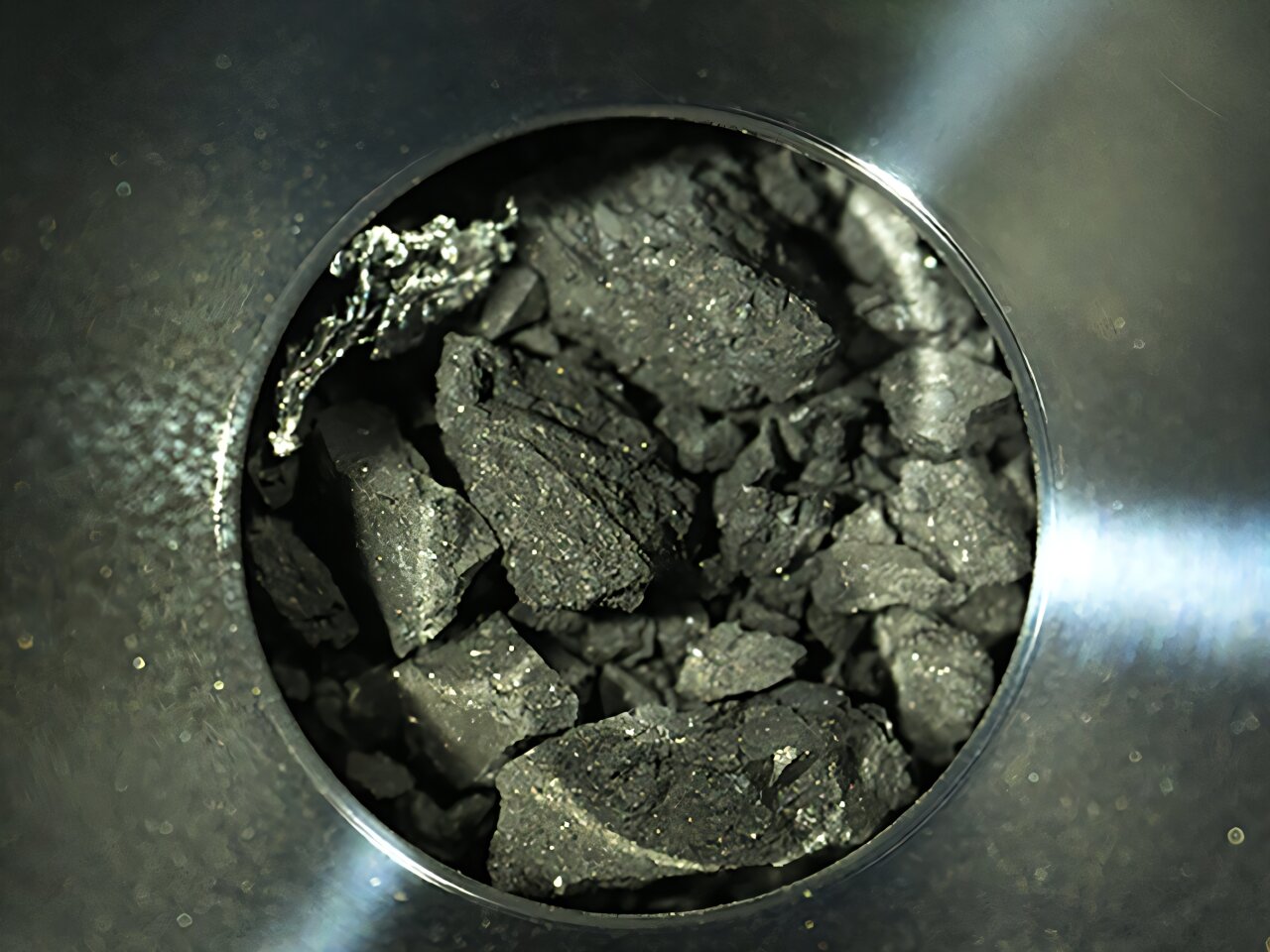 Samples from the asteroid Ryugu. Source: phys.org
Samples from the asteroid Ryugu
On Monday, an article was published in Nature Astronomy that could prove to be one of the most significant in our understanding of the origins of life in the Universe. In the study, Japanese researchers reanalyzed the chemical composition of samples brought back by the Hayabusa spacecraft from the asteroid Ryugu and discovered some interesting findings.
These are adenine, guanine, cytosine, and thymine—the four bases that make up deoxyribonucleic acid (DNA), which carries genetic information in most organisms on Earth. Uracil—a base that replaces thymine in ribonucleic acid—has also been identified, and it is equally crucial for cellular function.
This was made possible by a story that began back in 2014, when the Japanese spacecraft Hayabusa collected samples from the asteroid Ryugu. Its journey to Earth was not an easy one, but finally, in 2020, it released a capsule containing 5.4 grams of material from another world into our planet’s atmosphere. Since then, Japanese scientists have been studying these samples.
Life from space
The importance of this finding is underscored by the fact that scientists had previously identified the same substances in a sample from another asteroid, Bennu. It differs from Ryugu in many ways, but these two discoveries indicate that the basic building blocks of DNA are extremely widespread throughout the Solar System.
And DNA bases could not have reached these asteroids in such large quantities from Earth. They had to be present there even before the planets formed. And this confirms the long-debated theory that certain fairly complex elements of life on Earth had to have formed in space.
This does not disprove the theory of evolution or most of the theory of abiogenesis, but it provides insight into the rapid formation of complex structures on our planet in its very early stages.
According to phys.org