
Enabling & Support
17/03/2026
2 views
0 likes
Today’s Earth observation satellites deliver snapshots – precise and valuable, but static. Many of the most consequential events on Earth, from wildfires to floods to urban crises, unfold over minutes and hours. A new SysNova campaign is looking for ideas that could change that.
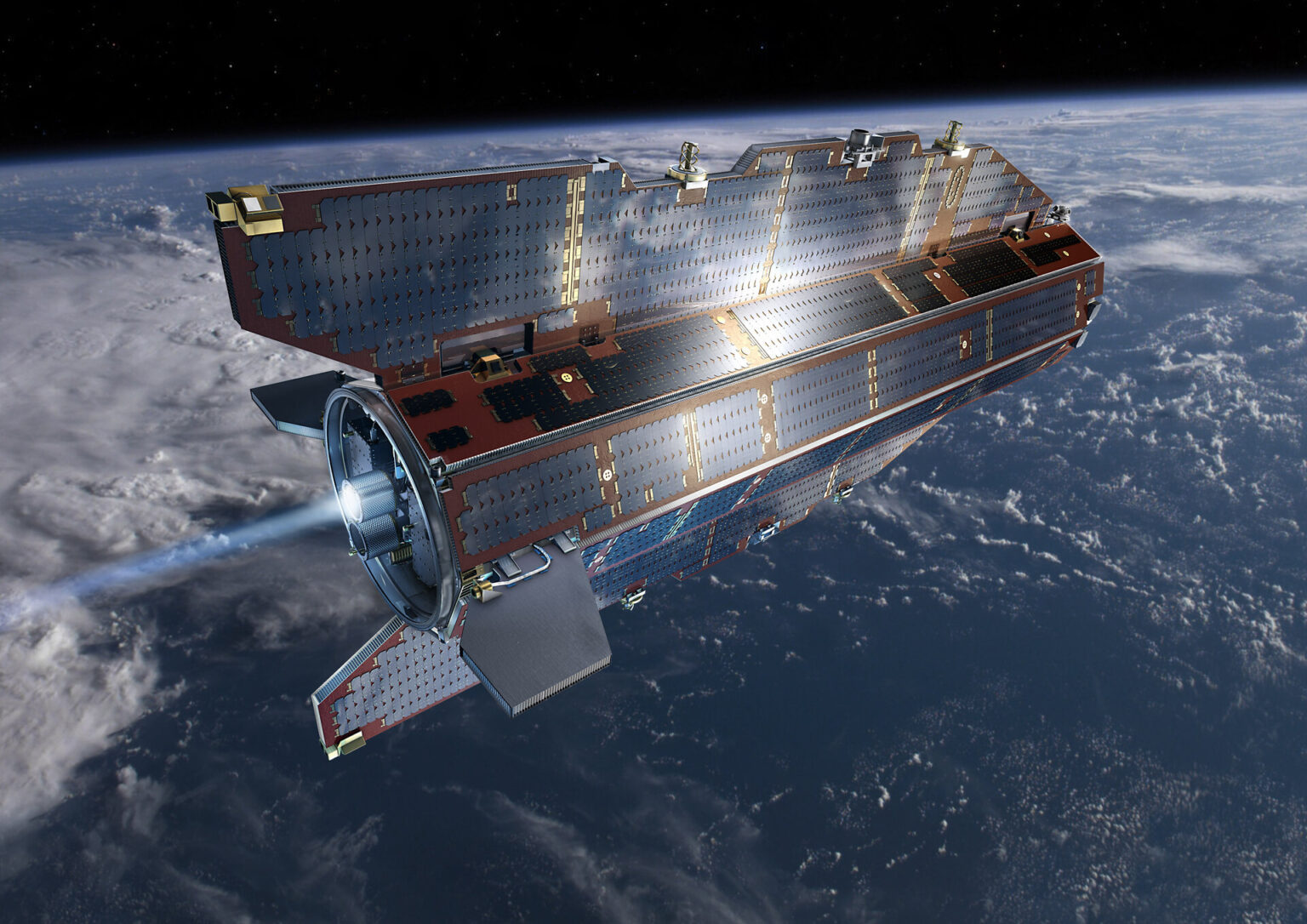
The Scalable VLEO Platform for Satellite Video campaign invites industry and academia to develop disruptive mission concepts for continuous, high-fidelity video monitoring from Very Low Earth Orbit (VLEO). Satellites operating at VLEO altitudes – typically 250 to 350 km – are significantly closer to Earth’s surface than conventional Earth observation spacecraft, offering sharper resolution, lower latency, and improved revisit and persistence characteristics.
“Recording video from satellites is a new capability that could transform how dynamic processes on Earth are observed,” says Iga Szczesniak, Space Innovation Engineer. “We are looking for mission concepts that enable continuous monitoring rather than periodic snapshots of a specific geolocation. By unlocking the advantages of VLEO, such as higher spatial resolution, reduced latency, and improved revisit time, we can provide even sharper data to empower the most demanding applications on Earth.”
The challenge is run through the Open Space Innovation Platform (OSIP) and seeks complete mission concepts – not individual subsystems – that make continuous visual monitoring from VLEO technically and economically feasible. Target applications include near-real-time monitoring of floods, wildfires, and other dynamic phenomena; continuous situational awareness for humanitarian and security applications; environmental monitoring; and agricultural tracking. A key benchmark is the ability to record a minimum ten-minute video at 15 frames per second over a region of interest.
The total reference mission budget (excluding launch) must not exceed €50 m, and the mission must be ready for in-orbit demonstration by 2030.
Submit your ideas
The campaign is open for approximately six weeks. Up to eight ideas will be selected to develop full proposals, with up to five teams awarded a Cooperative Agreement of €120,000 to carry out a six-month pre-Phase A study. The most compelling concept will be invited to a joint study at ESA’s Concurrent Design Facility.
This call is being run by the Preparation element of ESA’s Basic Activities via the Open Space Innovation Platform (OSIP). You can find all the details of the timing, process and conditions here.
Like