Like tiny photobombers, cosmic anomalies resembling small, bright red points show up in almost every snapshot taken by the most powerful space telescope ever made. Astronomers now call them [little red dots](https://science.nasa.gov/asset/webb/little-red-dots-nircam-image/), or LRDs, but there is no agreement yet on what exactly they are.
Since NASA’s James Webb Space Telescope started peering into the universe four years ago, hundreds of the puzzling objects have appeared in its images. Their unknown origins effectively launched a scientific case that hundreds of studies have attempted to crack.
“This is the first time in my career that I have studied an object where we truly do not understand why it looks the way it does,” said Jenny Greene, a professor of astrophysical sciences at Princeton University. “I think it’s fair to call them a mystery.”
One thing was clear from the beginning — these strange objects were common. “Every deep pointing you did with James Webb, you were finding a few,” said Greene, referring to the action of focusing the telescope on the same patch of sky for an extended time to collect extremely faint light.
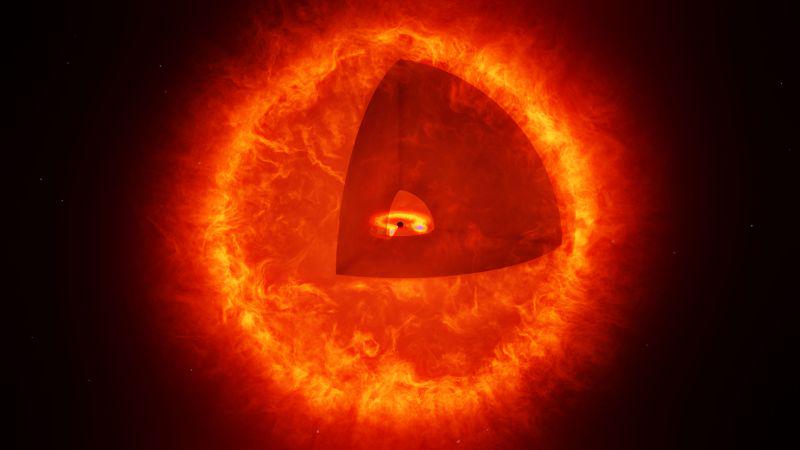
“I certainly think they’re powered by growing black holes, but there are other, more exotic suggestions, like some kind of very massive star dying,” Greene said. An expert in supermassive black holes and galaxy evolution, she explained that she believes a black hole as the main component of LRDs fits the largest number of the observations made of the objects so far.

1 Comment
Like tiny photobombers, cosmic anomalies resembling small, bright red points show up in almost every snapshot taken by the most powerful space telescope ever made. Astronomers now call them [little red dots](https://science.nasa.gov/asset/webb/little-red-dots-nircam-image/), or LRDs, but there is no agreement yet on what exactly they are.
Since NASA’s James Webb Space Telescope started peering into the universe four years ago, hundreds of the puzzling objects have appeared in its images. Their unknown origins effectively launched a scientific case that hundreds of studies have attempted to crack.
“This is the first time in my career that I have studied an object where we truly do not understand why it looks the way it does,” said Jenny Greene, a professor of astrophysical sciences at Princeton University. “I think it’s fair to call them a mystery.”
One thing was clear from the beginning — these strange objects were common. “Every deep pointing you did with James Webb, you were finding a few,” said Greene, referring to the action of focusing the telescope on the same patch of sky for an extended time to collect extremely faint light.
“I certainly think they’re powered by growing black holes, but there are other, more exotic suggestions, like some kind of very massive star dying,” Greene said. An expert in supermassive black holes and galaxy evolution, she explained that she believes a black hole as the main component of LRDs fits the largest number of the observations made of the objects so far.
[](https://www.cnn.com/2026/03/05/science/milky-way-galaxy-image-astronomy)