
A diver off the coast of British Columbia thought he’d discovered a UFO underwater, but the mysterious object turned out to be linked to one of America’s most chilling Cold War incidents
Emilia Randall GAU Writer
14:00, 16 Mar 2026Updated 14:41, 16 Mar 2026
The Canadian government decided to investigate(Image: Getty Images/iStockphoto)
One diver off the coast of British Columbia was wrapping up his day when he believed he’d spotted a UFO in the Pacific Ocean – but the object’s real identity proved far more alarming than he could have ever conceived.
With global tensions escalating, concerns are mounting over the numerous nuclear weapons “lost” by the US military throughout the decades.
America has a staggering six unaccounted-for nuclear warheads – armaments capable of obliterating entire metropolitan areas.
In 2016, the Canadian navy initiated an inquiry following Sean Smyrichinsky’s account of witnessing one of the globe’s earliest “broken arrow” episodes. Broken arrow serves as the US military’s designation for incidents involving nuclear weaponry.
Sean informed the Canadian Broadcasting Corporation: “I was just looking for fish for the next day. I figured I would do a little reconnaissance dive looking around and on my dive I got pretty far from my boat. And then I found something that I had never, ever seen before.”, reports the Mirror US.
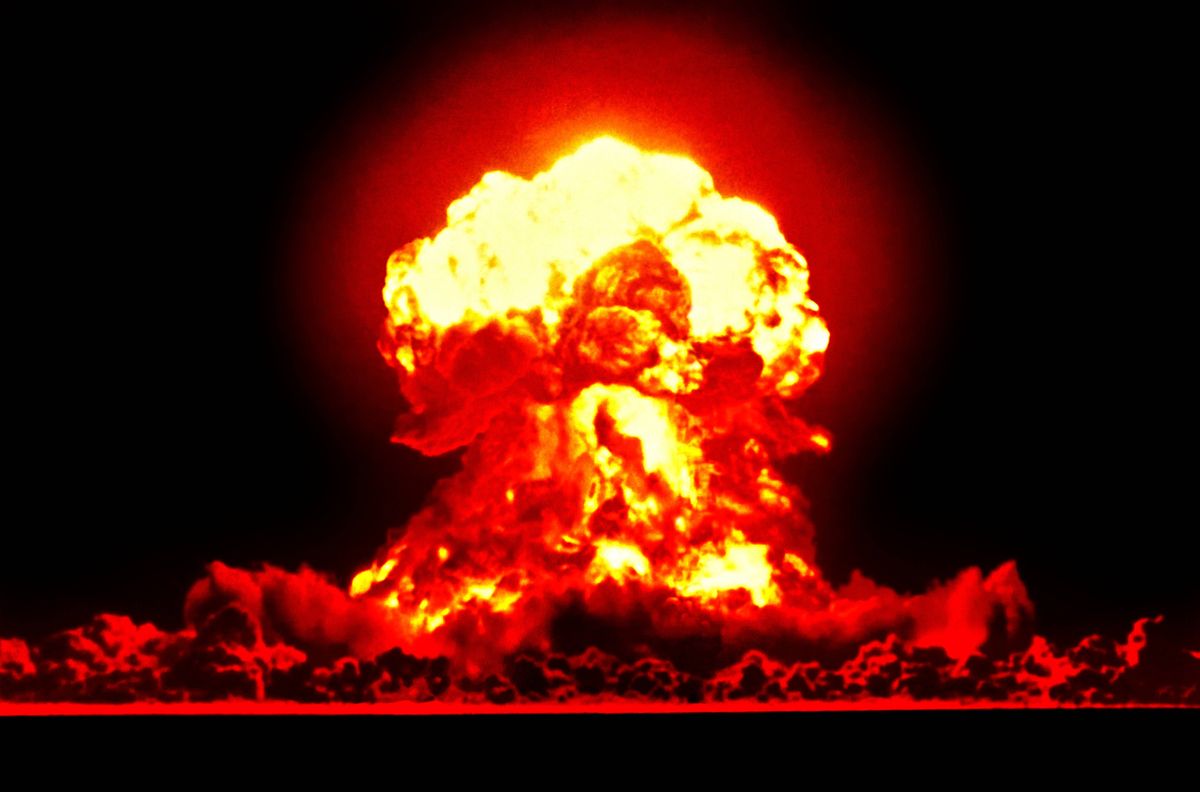
The bomb could wipe out a city
He encountered a colossal 12-foot-long UFO-shaped ‘object’ resting on the seabed of Haida Gwaii, an island chain situated 80km west of British Columbia’s coastline.
He described: “It resembled a bagel cut in half, and then around the circle of the bagel these bolts all molded into it, like half spheres. It was the strangest thing I had ever seen.”
Noting the bolts were larger than basketballs, he surfaced from the water desperate to share his discovery with the world.
He recalled: “I started telling my crew: ‘My God, I found a UFO.’”
Sketching an outline of what he witnessed on a napkin he told the Vancouver Sun: “Nobody had ever seen it before or heard of it. Nobody ever dives there. Then some old-timer said: ‘Oh, you might have found that bomb.’”
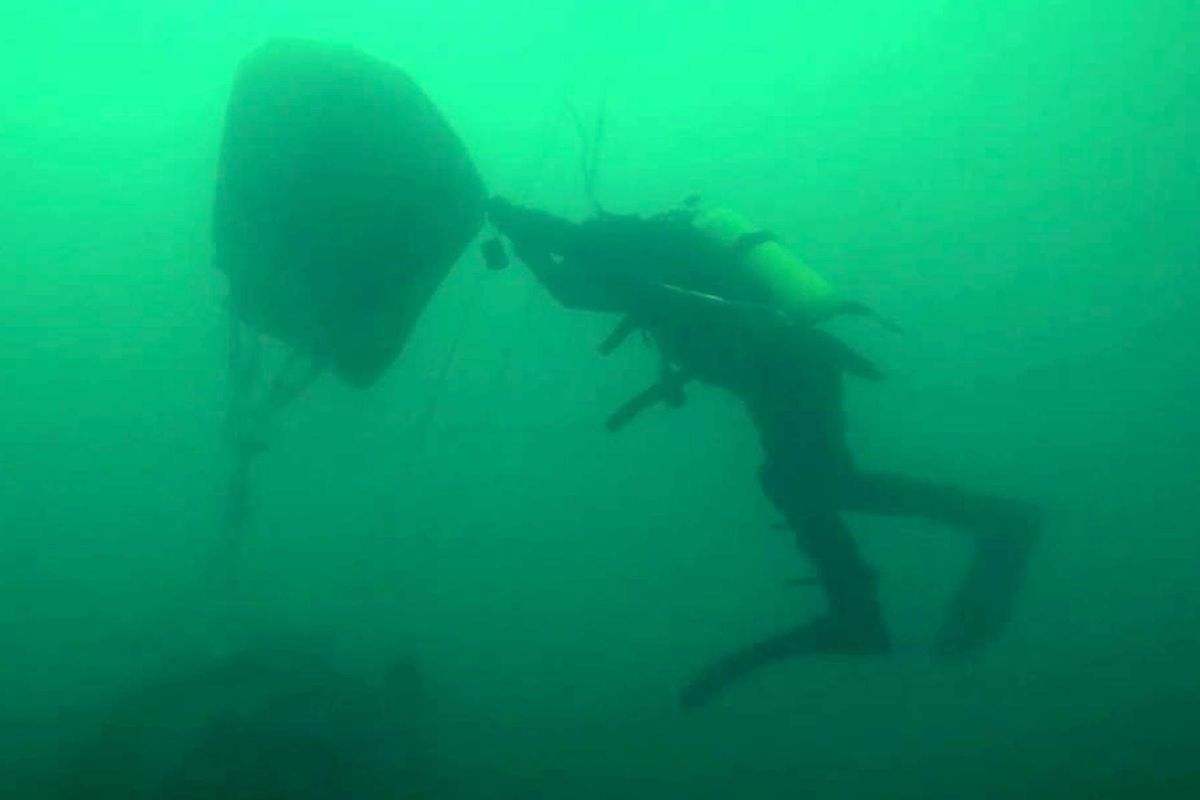
The diver thought he had found a UFO(Image: AFP/Getty Images)
The explosive in question was a “lost nuke” – a Mark IV bomb which vanished after an American B-36 bomber crashed in the area during the cold war.
The Mark IV was a 10-foot, blimp-shaped nuclear bomb weighing some five tonnes and which disappeared over the Pacific during a US air force B-36 training flight on 13 February 1950.
According to the Royal Aviation Museum of Western Canada, the intercontinental bomber had departed an air base in Alaska for a mission that included a simulated drop on San Francisco when three of the aircraft’s six engines caught fire.
The crew was compelled to abandon the bomber but US air force reports said they jettisoned the bomb into the Pacific.
The US military said the missing bomb was a dummy capsule packed with lead rather than the plutonium core needed for an atomic explosion.
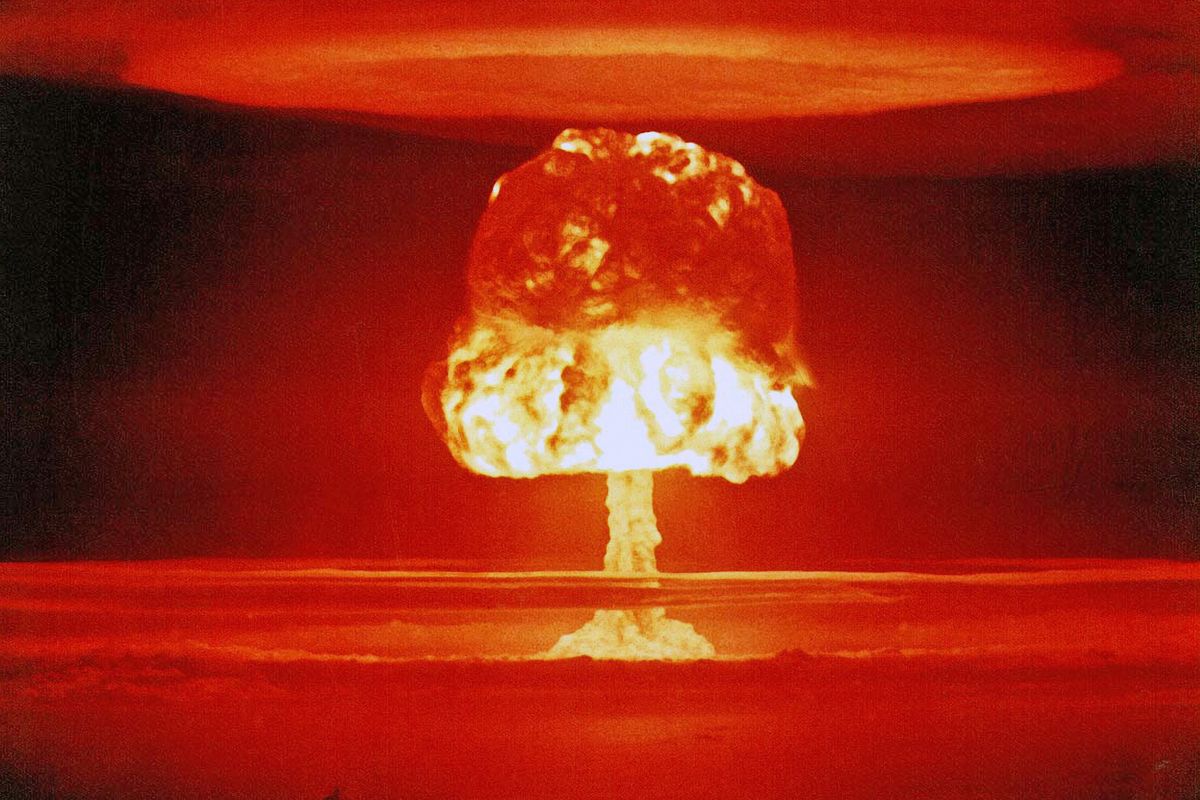
The US Military has ‘lost’ at least six bombs(Image: Getty Images)
The army also claimed this in 1958 when a fully-armed B-47 carrying a Mark 15 hydrogen bomb near Tybee Island dropped its nuclear bomb following a mid-air collision.
The weapon was never recovered, and initially the army maintained it was a dummy.
However, decades later, in 1994, documents released from a 1966 Congressional testimony revealed the Tybee Mark 15 was actually an intact nuclear weapon.
However, the bomber vanished for several hours. Days later, 12 of the 17 men onboard were discovered alive – the plane had crashed into the Canadian mountains.
The US has said if they can’t find the bombs, no one can(Image: Getty Images/iStockphoto)
Sean started to search for the story online. He told CBC: “And sure enough, there was a story about this lost bomb.”
He saw an image of his bomb. He said: “A big circle with these balls, I had no idea that particular bomb contained all these enormous balls, bigger than basketballs.”
These balls housed the explosives. Sean found out the bomber had crashed some 50 miles south of where he had been diving.
He said: “I’m right in the right area and it looks like it could be a piece of that thing. What else could it possibly be? I was thinking UFO, but probably not a UFO, right?”.
Sean sent an email to Canada’s department of national defence, who informed him they were examining the matter with “keen interest”. Then in 2016, the Canadian Armed Forces announced a ship would be dispatched in the coming weeks to investigate the object.
The Canadian government reiterated the claim the bomb was a dummy. It said: “Nonetheless we do want to be sure and we do want to investigate it further. A team specialising in unexploded ordnance will determine what risk, if any, the object poses and whether it should be retrieved from its resting place or left as is.”