
ⓘ NASA-Imagery – Pixabay
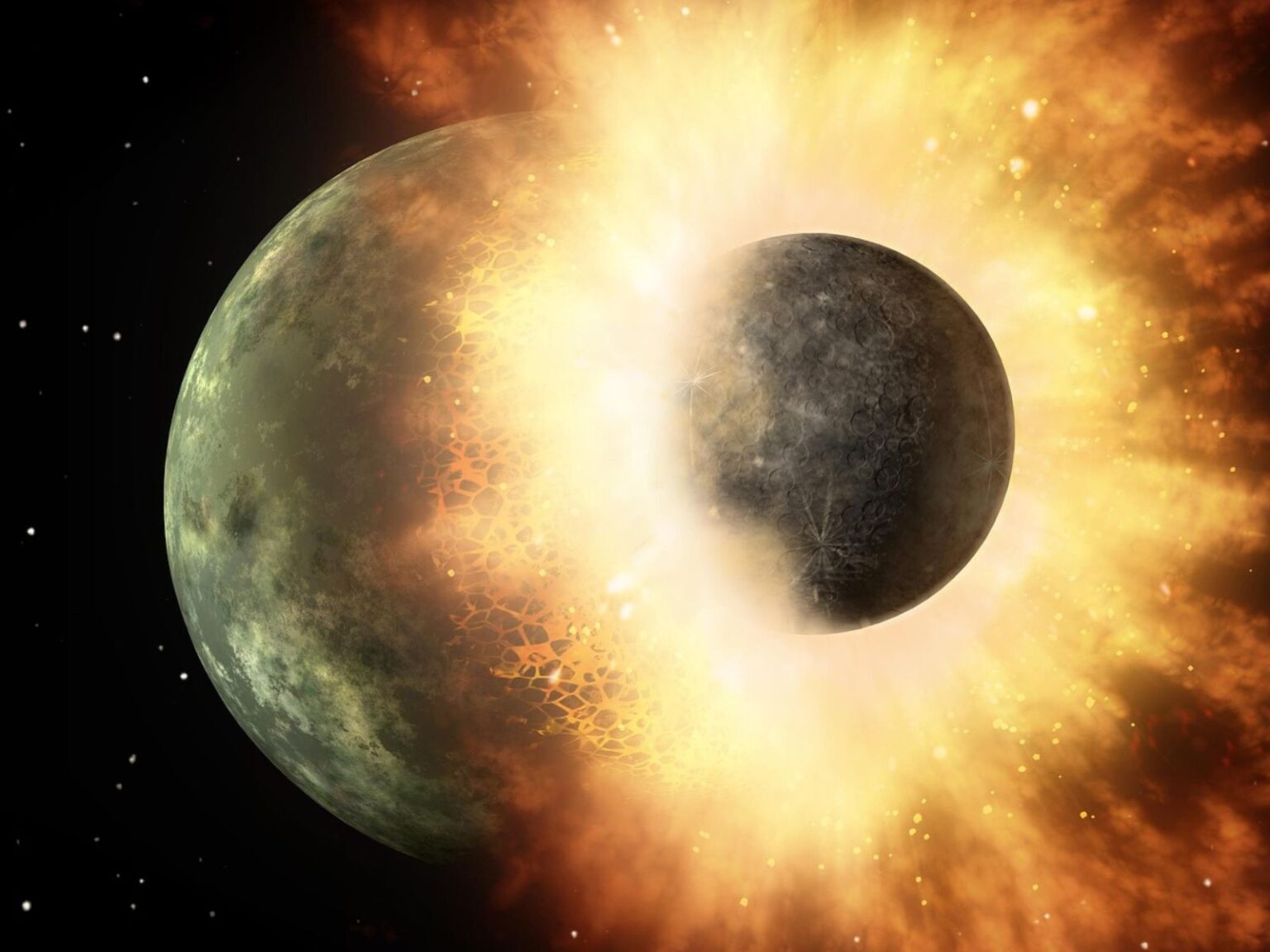
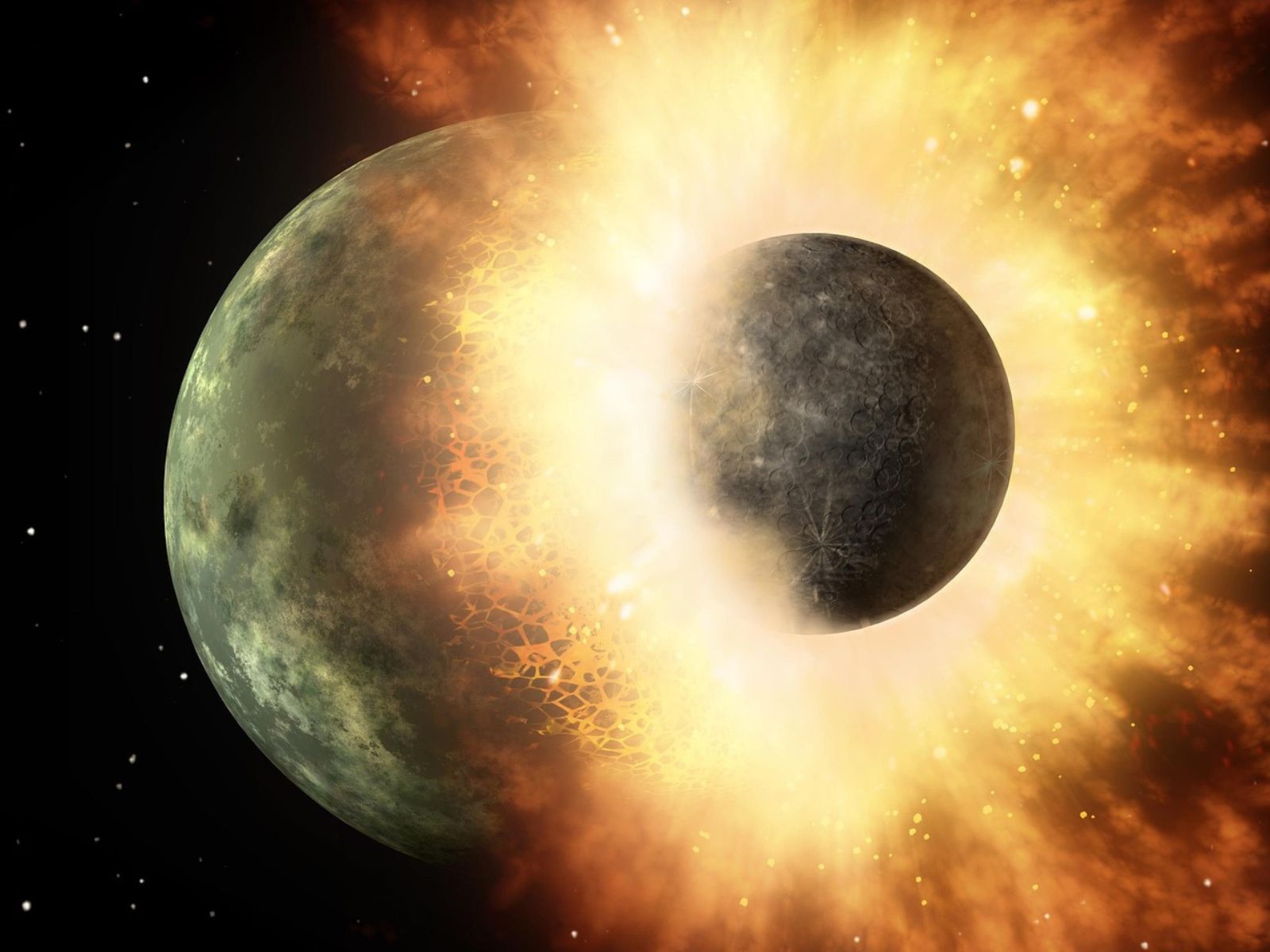
An artist’s illustration showing a collision between two planets.
Astronomers have recently discovered a collision between two exoplanets in a star system located about 11,000 light-years from Earth. While this is a major breakthrough, it could help to better understand the formation of these structures in the universe.
When observing the universe, astronomers make amazing discoveries. Indeed, after discovering the merger of two neutron stars and a pulsar located at the center of our galaxy, they have now detected a collision between two exoplanets in a distant star system.
In reality, they did not see this collision in real time, but they discovered evidence of its existence. It was by observing Gaia20ehk, a star located about 11,000 light-years from Earth, that they noticed a strange phenomenon. Its brightness was stable until 2016, when it dimmed three times. But in 2021, it became completely unstable, which is unusual for stars of this type.
By conducting studies and observing its behavior, they realized that these phenomena were not related to the star. These variations in brightness were caused by large amounts of rock and dust passing in front of this celestial object. And that’s not all, because it was a collision between two exoplanets that created these fragments.
Indeed, during the early stages of the formation of a solar or planetary system, collisions are frequent and help shape these structures. In other words, collisions between exoplanets are not uncommon. However, over time, these events become rarer as the environment becomes more stable. Thus, this discovery is a real achievement and could also help to better understand solar systems.
 Alexis Stegmann – Tech Writer – 544 articles published on Notebookcheck since 2025
I’ve been working in the field of web writing for several years, and I’m passionate about keeping readers up to date with the latest news on astronomy, technology, the world of video games and other exciting subjects. In particular, I’ve had the opportunity to work on a number of websites, which has enabled me to cover a wide range of subjects. In my personal life, I’m passionate about a wide range of subjects, including astronomy, video games, history and science. I’m also drawn to psychology, which is a subject that deserves greater documentation and recognition.