
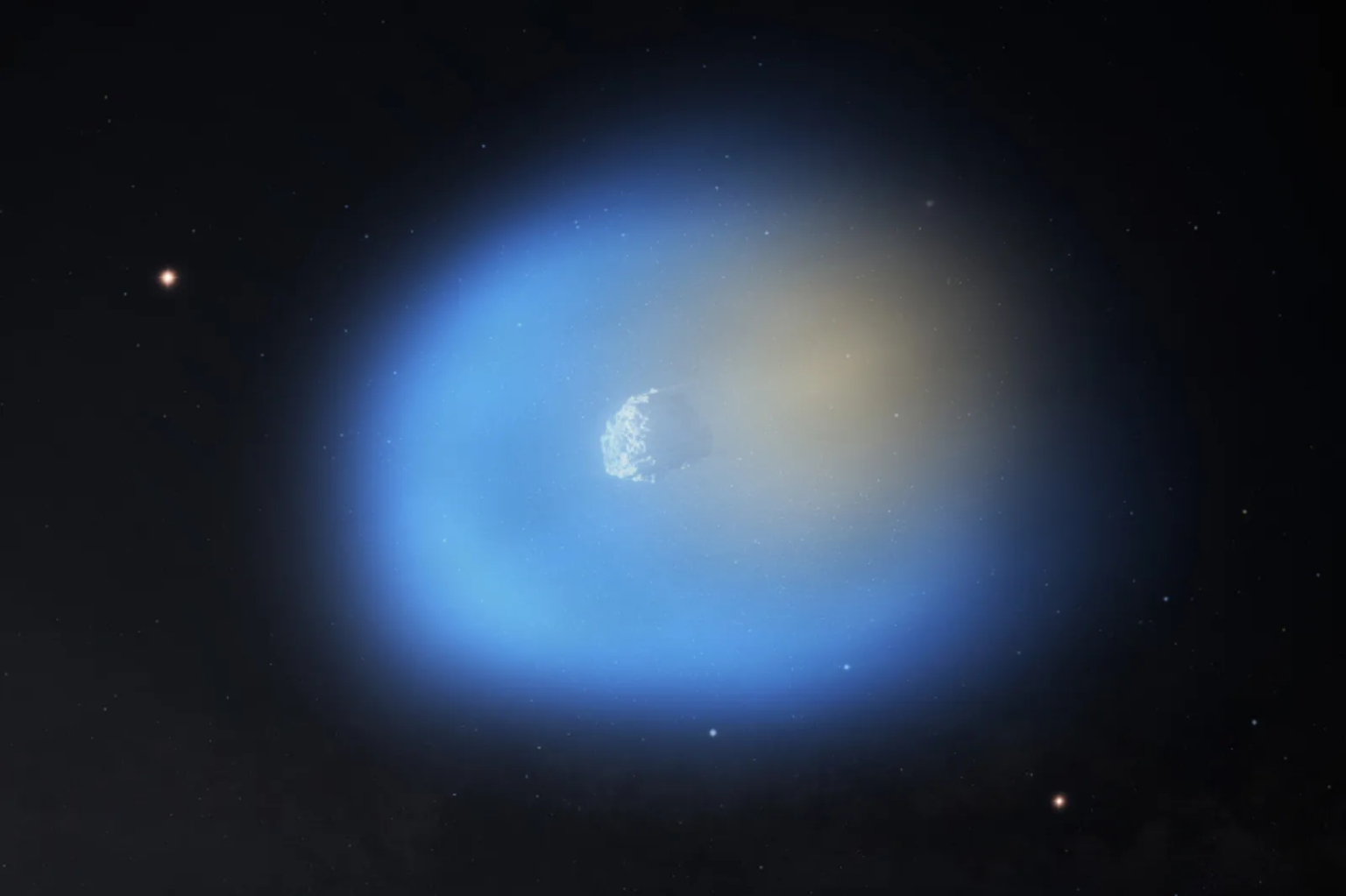
Astronomers using the Atacama Large Millimeter/submillimeter Array (ALMA) have detected unusually large amounts of methanol, a simple alcohol, in interstellar comet 3I/ATLAS—levels that exceed those seen in almost all known comets from our own solar system.
The findings offer a rare chemical snapshot of how planetary systems beyond our own form and evolve.
“Observing 3I/ATLAS is like taking a fingerprint from another solar system,” Nathan Roth, the research‘s lead author and a professor at American University, said in a statement. “The details reveal what it’s made of, and it’s bursting with methanol in a way we just don’t usually see in comets in our own solar system.”
The new results come from observations made with ALMA, an international observatory in Chile of which the U.S. National Science Foundation’s National Radio Astronomy Observatory (NSF NRAO) is a partner.
Researchers watched 3I/ATLAS on multiple dates in late 2025 as the comet approached the Sun. As solar heating warmed its icy surface, the comet released gas and dust, forming a surrounding cloud known as a coma. By studying this material, astronomers were able to identify the chemical makeup of the comet.
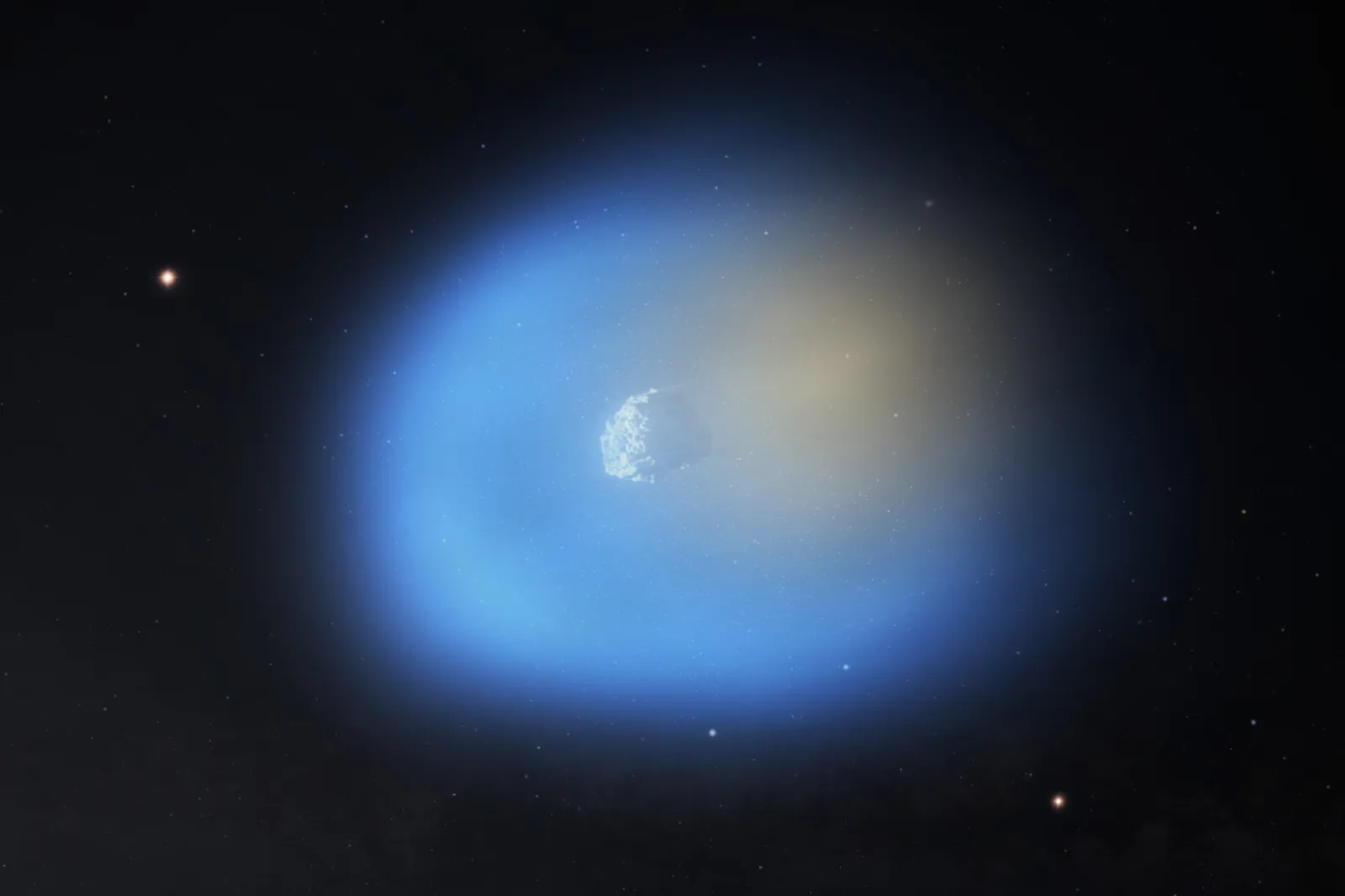
The team focused on two key molecules commonly found in comets: methanol (CH₃OH) and hydrogen cyanide (HCN). While both are organic compounds, their relative abundance in 3I/ATLAS stood out. The ALMA data show that methanol is present in exceptionally high amounts compared with hydrogen cyanide, far beyond the ratios typically measured in comets that formed in our solar system.
On two separate observing dates, researchers measured methanol-to-HCN ratios of roughly 70 and 120. Those figures place 3I/ATLAS among the most methanol-rich comets ever studied, including those native to our own planetary neighborhood.
According to the team, such extreme enrichment suggests the comet formed under very different chemical conditions than most solar system comets.
The findings build on earlier observations made with the James Webb Space Telescope, which showed that when 3I/ATLAS was farther from the Sun, its coma was dominated by carbon dioxide. Together, the Webb and ALMA results point to a chemical composition unlike that of most known comets, adding to evidence that interstellar objects can differ markedly from those formed around the Sun.
ALMA’s high-resolution imaging also allowed scientists to trace how different molecules escape from the comet.
Hydrogen cyanide appears to be released mainly from the comet’s solid nucleus, a pattern commonly seen in solar system comets. Methanol, however, behaves differently. The data suggest it comes not only from the nucleus but also from icy particles in the coma itself.
Comet 3I/ATLAS is only the third confirmed object known to have entered our solar system from interstellar space, following 1I/‘Oumuamua and 2I/Borisov. Those earlier visitors also displayed unexpected properties, raising questions about how common such diversity may be among objects formed around other stars.
Do you have a tip on a science story that Newsweek should be covering? Do you have a question about 31/ATLAS? Let us know via science@newsweek.com.