
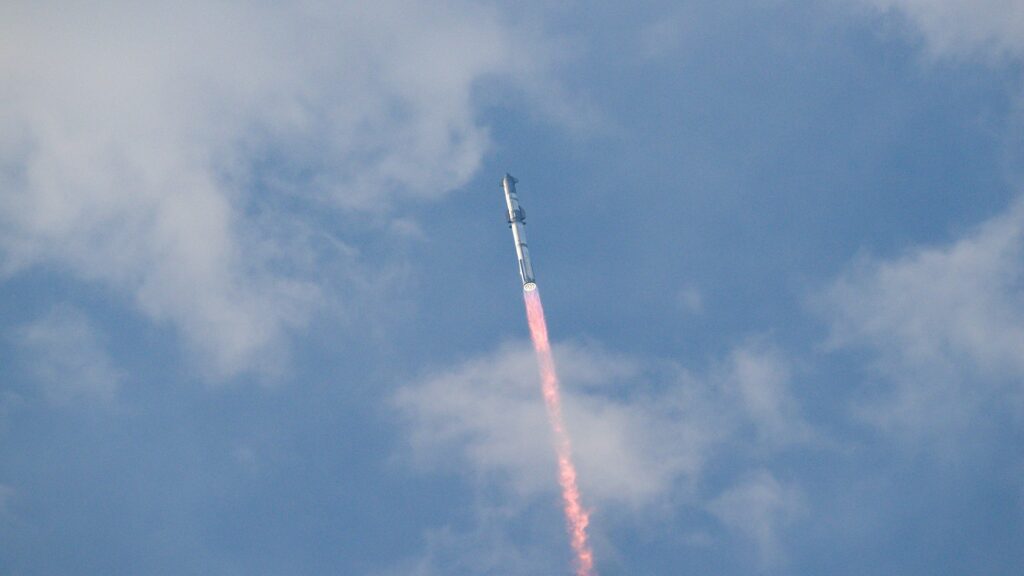
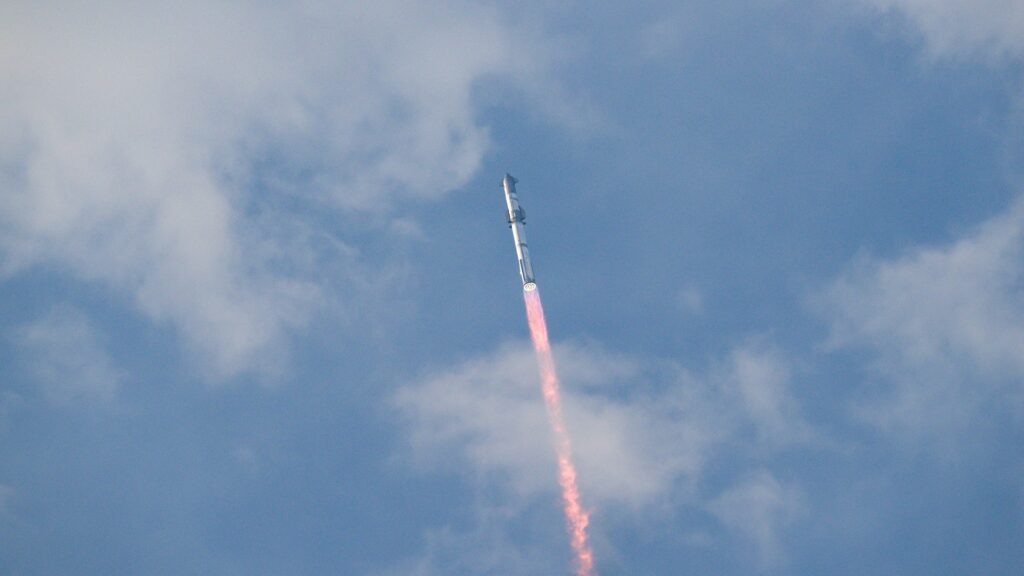
The countdown clock has shifted again for SpaceX’s Starship V3 test, as the company delays the first launch of its newest-generation rocket while facing growing pressure from NASA to accelerate work on a lunar landing system.
Like a rocket sitting on the pad while engineers chase the final loose bolts, the schedule for Starship’s next leap has been nudged back — even as the race to return astronauts to the moon intensifies.
Launch Timeline Slides to Early April
Elon Musk, founder and chief executive of SpaceX, announced in a social media post early March 7 that the first flight of the vehicle’s third iteration — known as version 3 or V3 — is expected to occur “in about four weeks.”
Counting forward from that announcement places the target date around April 4.
The updated projection comes nearly six weeks after Musk offered a different estimate. On Jan. 26, he wrote that the next Starship launch would take place “in six weeks,” which pointed to roughly March 9.
Neither Musk nor SpaceX explained the cause of the effective four-week delay. But observers tracking development activities at Starbase, the company’s sprawling launch and manufacturing complex in Texas, had already noted that a launch did not appear imminent. Testing schedules, along with the absence of maritime and airspace notices typically issued before launches, hinted that the timeline was slipping.
Testing Continues at Starbase
SpaceX said March 7 that it had completed a “cryoproof” test of the upper stage planned for the next flight — known internally as Ship 39. The test is designed to demonstrate that the vehicle can safely handle cryogenic propellants while maintaining structural integrity.
Although the company confirmed that milestone, it stopped short of providing a firm launch date.
The previous Starship mission took place in October during the final flight of version 2 of the rocket system. At that time, SpaceX said it would soon shift to the upgraded V3 model, which features improvements intended to boost performance and increase the vehicle’s long-term reusability.
In early November, a company executive suggested that V3 would become “our production rocket,” with the first launch potentially arriving as soon as January.
Booster Damage Set Back Plans
Those ambitions ran into trouble on Nov. 21, when the first V3 Super Heavy booster suffered damage during testing.
Following that incident, SpaceX said Starship’s twelfth flight test remained targeted for the first quarter of 2026, though the setback cast uncertainty over the timeline.
Starship — towering and stainless-steel clad — is designed as the backbone of SpaceX’s future ambitions, from Mars exploration to serving as a landing craft for NASA astronauts.