
Genetic and Linguistic Evidence of Simultaneous Post-Catastrophe Population Bottlenecks
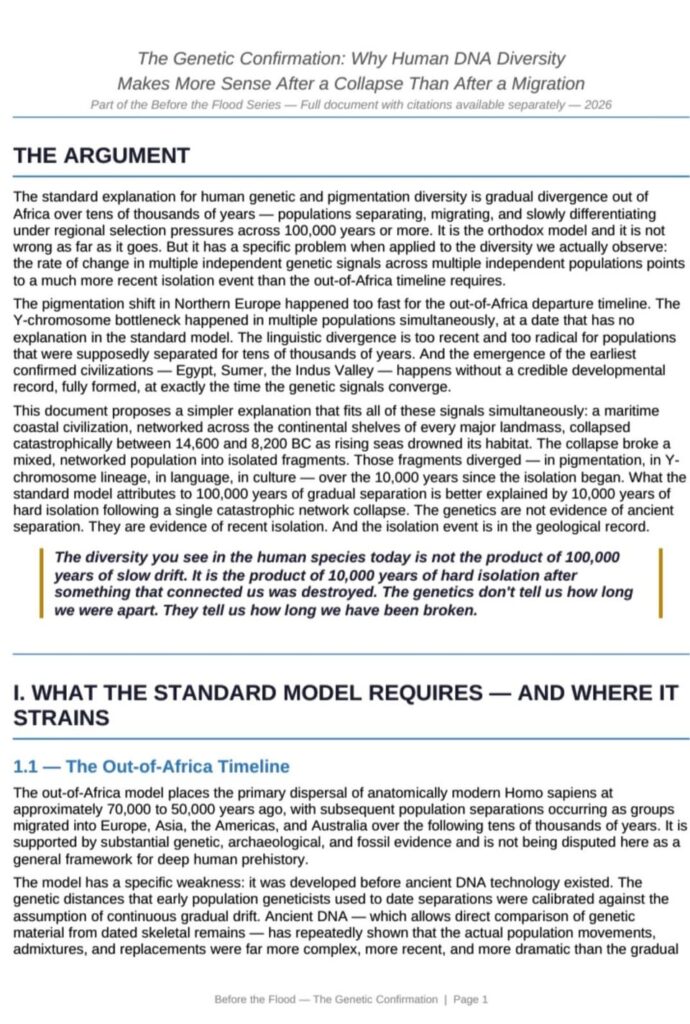
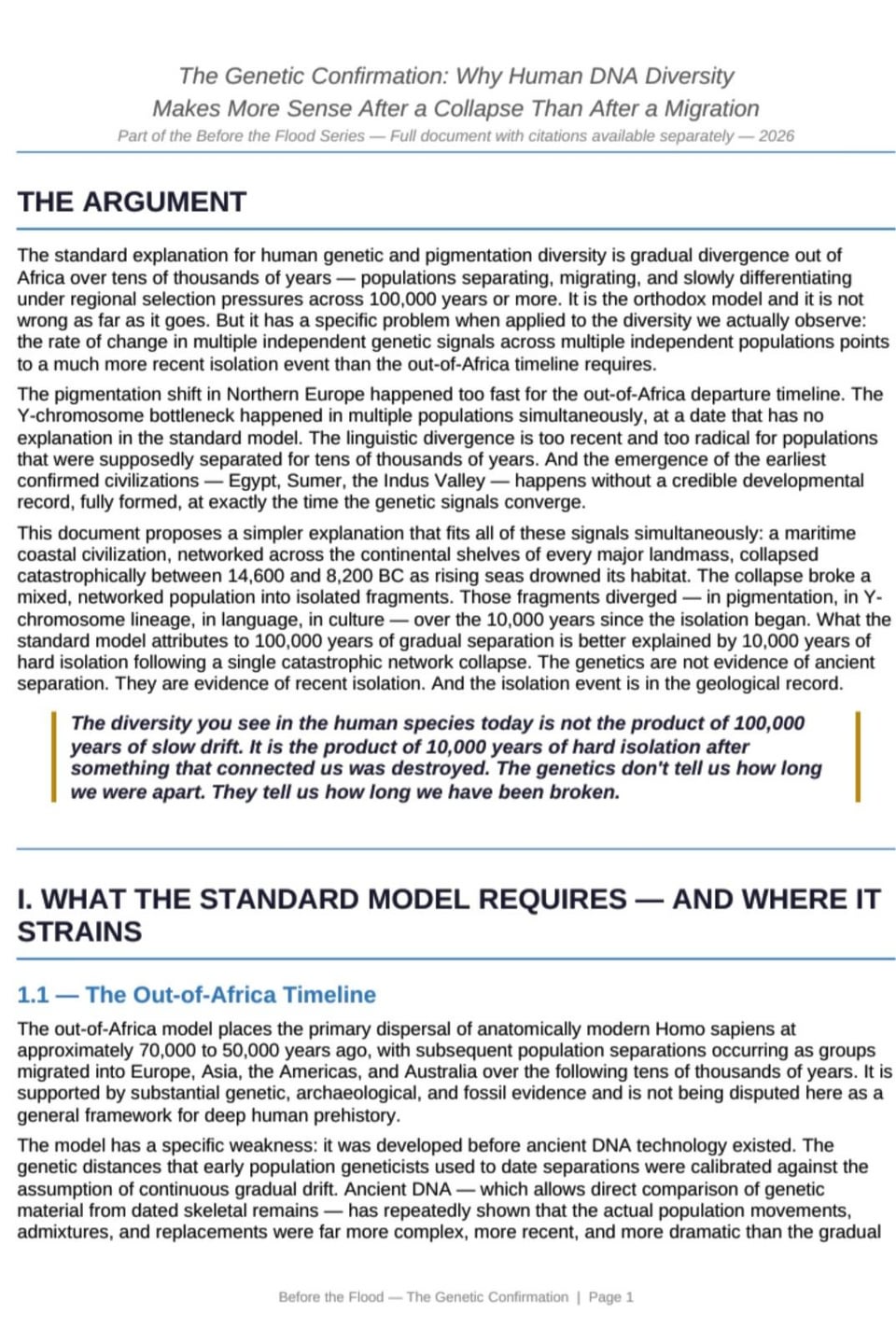
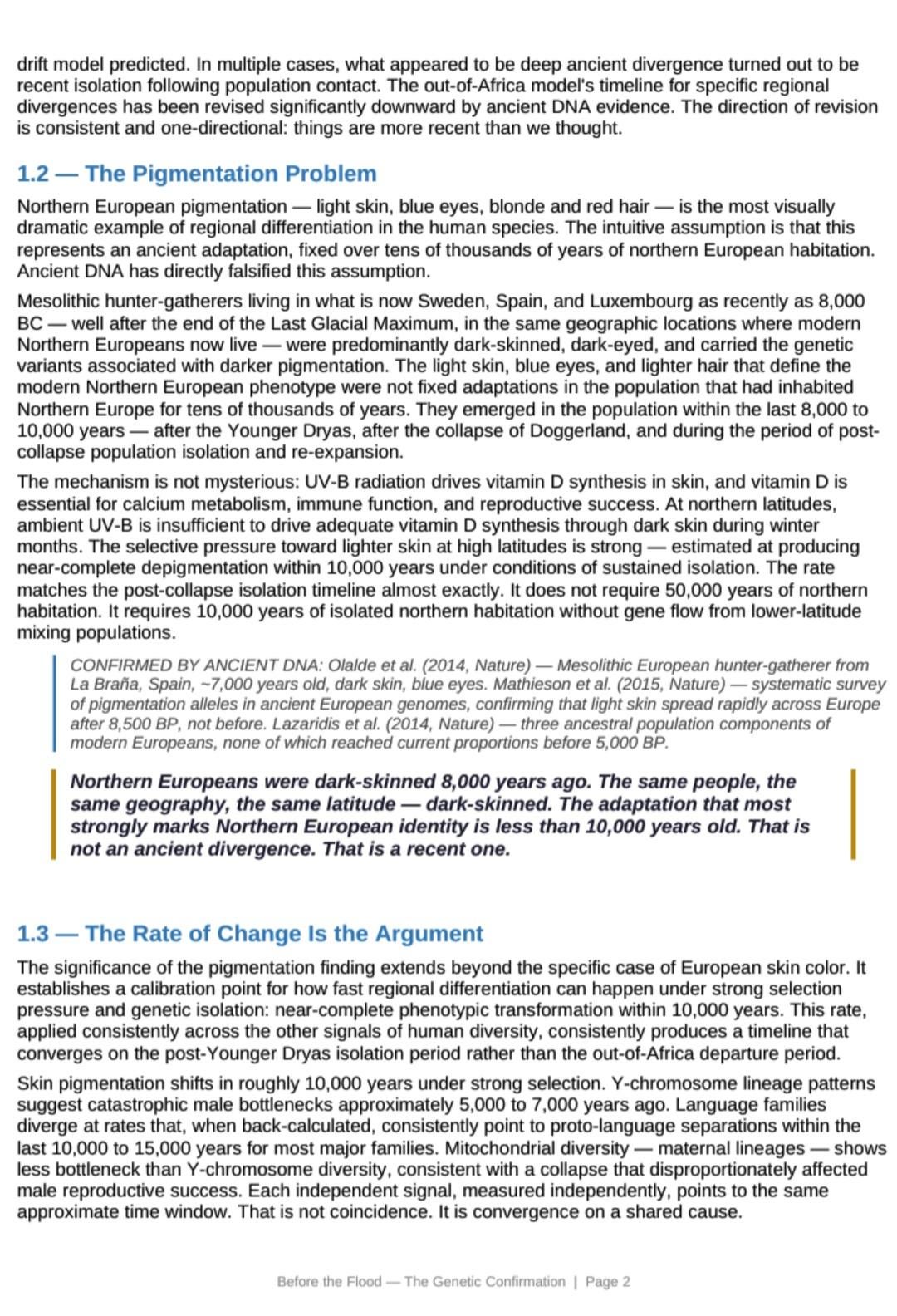
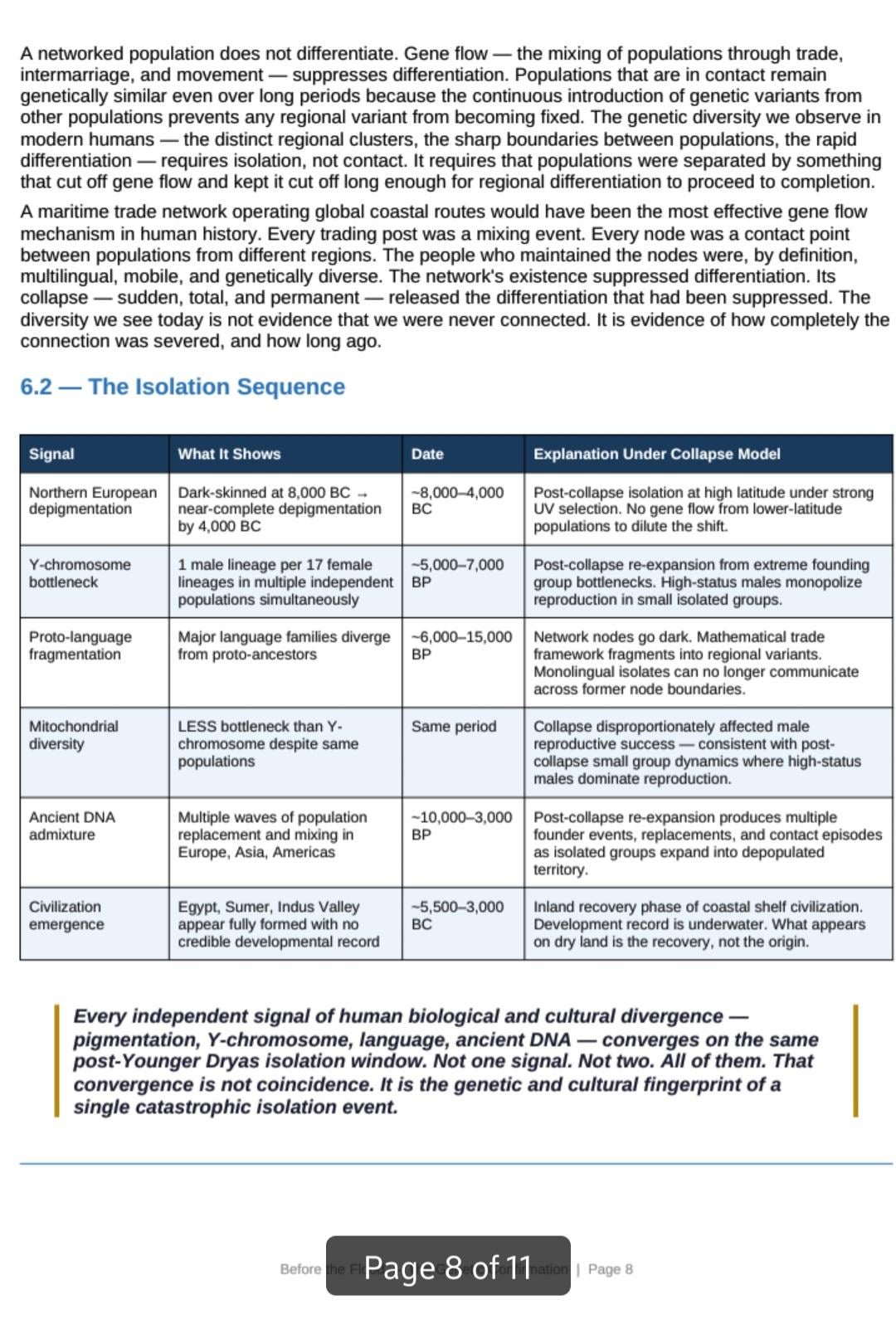
Ancient DNA reveals that Northern Europeans had dark skin as recently as 8,000 years ago. The genetic shift to light pigmentation happened in under 10,000 years—fast enough to have occurred after the Younger Dryas catastrophe rather than before it. This timing is significant because it places a major biological adaptation at the exact moment when populations would have been stressed by environmental collapse and forced migration.
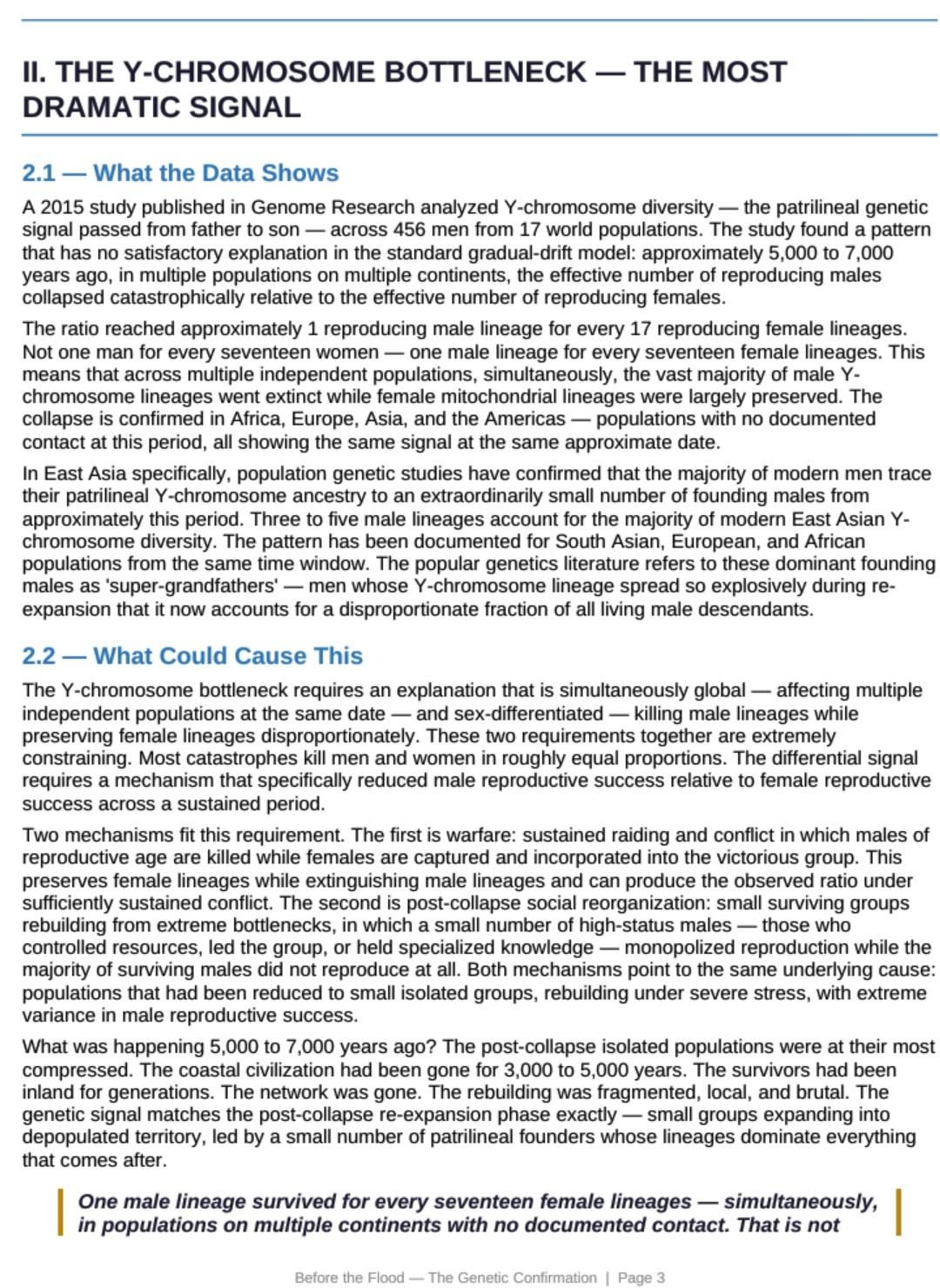
More striking is the Y-chromosome bottleneck: multiple genetically independent populations across different continents experienced simultaneous population crashes at the same time period, with no explanation offered by standard evolutionary models. A single, coordinated environmental catastrophe affecting all human populations at once would account for this pattern. Independent, regional disasters would not.
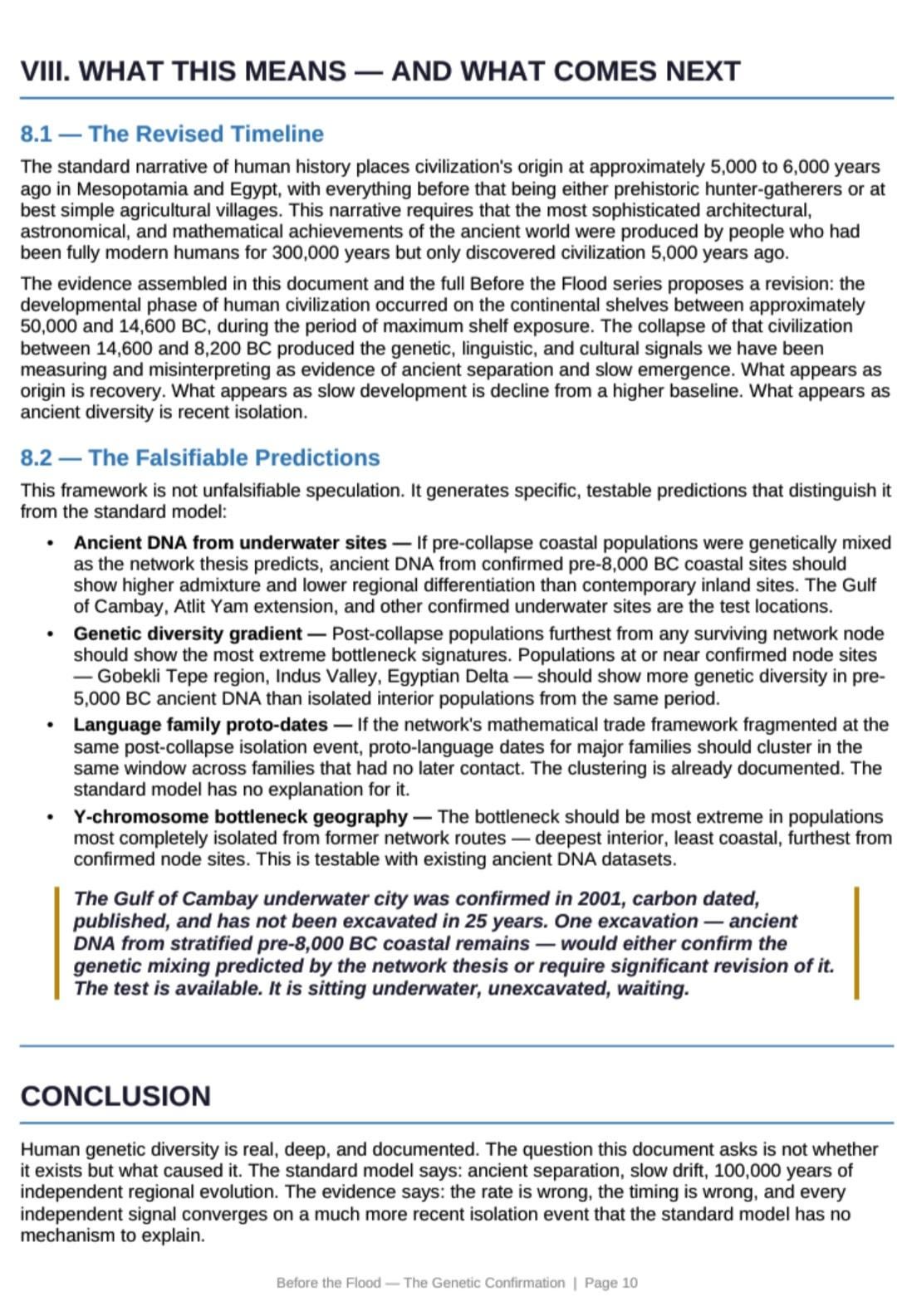
Language families tell a parallel story. When linguists back-calculate the origin dates of major language families worldwide—Indo-European, Sino-Tibetan, Afro-Asiatic, Niger-Congo, and others—they converge on the same post-ice-age window. Unrelated language families, separated by thousands of miles and thousands of years of independent development, all point to a common origin period immediately following the end of the last ice age. This suggests populations everywhere were simultaneously displaced, regrouped, and reorganized during the same catastrophic transition.
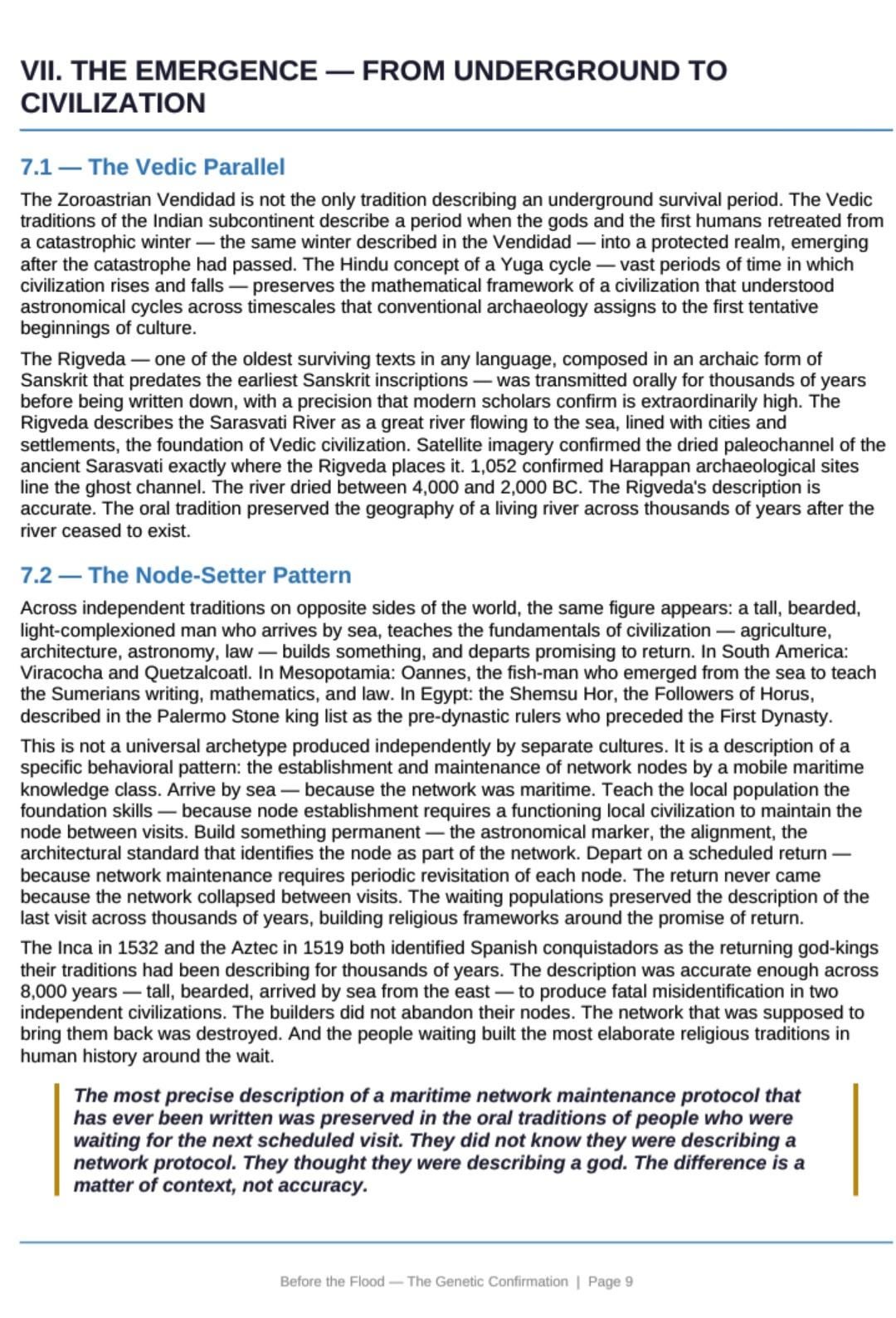
The rapid pigmentation shifts, synchronized genetic bottlenecks across continents, and convergent linguistic dating suggests these lines of evidence point to a single global event that disrupted human populations simultaneously, not a series of isolated regional crises.
by C_B_Doyle