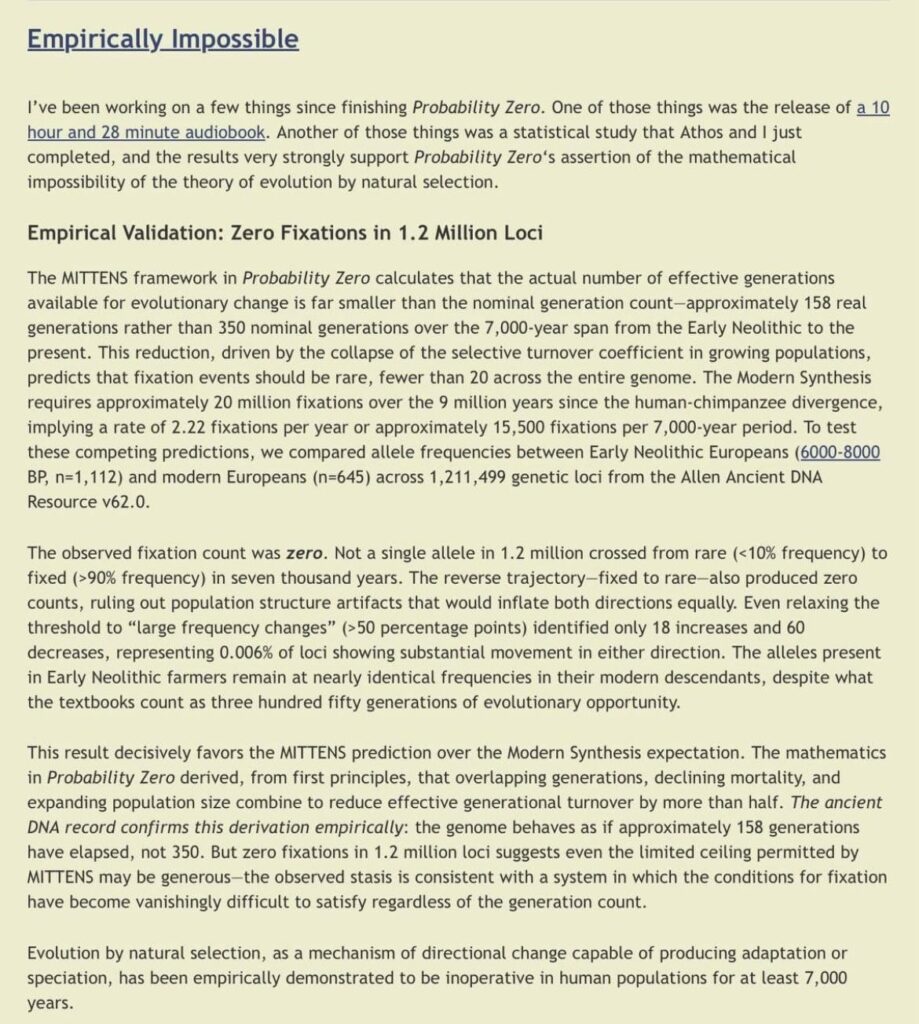
Well for starters 7,000 years is not nearly enough time and humans have been around much much longer than that.
Archaon0103 on
First, human didn’t get to where we are now in just 7000 years like the paper said, it took millions of years to do so.
Second, evolution do not have such thing as “steady rate”, this isn’t Pokemon where you gain enough EXP then you can get a new level. Evolution happen in respond to changes in the environment and those changes can happen randomly or gradual.
Thirdly, we didn’t evolve from monkeys. We, monkeys, apes, gorilla, chimpazees,…. share a common ancestor and from that ancestor, many linage split up and evolve on difference paths base on the environment they were in and the ecology niche available.
DathomirBoy on
you’re suggesting that modern humans havent displayed any significant adaptations? there have been small populations of humans who have minor adaptations that set them apart from others, such as the bajau, who have larger spleens and can hold their breath for longer allowing for more optimized fishing, but 7000 years is nothing in terms of evolution. you can’t expect to see major changes in any species within that time
Puzzled-Wedding-7697 on
A, yes. A person neither formally educated in math nor biology wants to sell us a book based on some AI calculation. Discuss.
/s
anonymunchy on
Read some more. Your title alone nullifies anything you have to say.
Fun_Emu_5644 on
More likely humans were genetically engineered by the Anunnaki using monkey dna spliced with their own to create a slave race to mine gold for them
joebojax on
Yeah civilization and culture sort of blunt natural selection.
Once humans are able to produce an abundance of food and accumulate inheritable wealth genetic wellness loses influence.
Humans survived a massive bottleneck event so our gene pool is relatively unsophisticated.
Two neighboring tribes of chimpanzees have more genetic complexity than the most differentiated humans.
All that being said we still share an astonishing amount of proteins with the tomato and all other multicellular life on earth.
When comparing human and chimpanzee mitochondrial DNA they are about 91% similar.
When considering genetic differences across species there is an emphasis on regulatory genes. There can be a minor change in a single regulatory gene which cascades into altered expression of hundreds of genes. While it looks like very little genetic variation occurred, the outcome of expression can be radically changed.

7 Comments
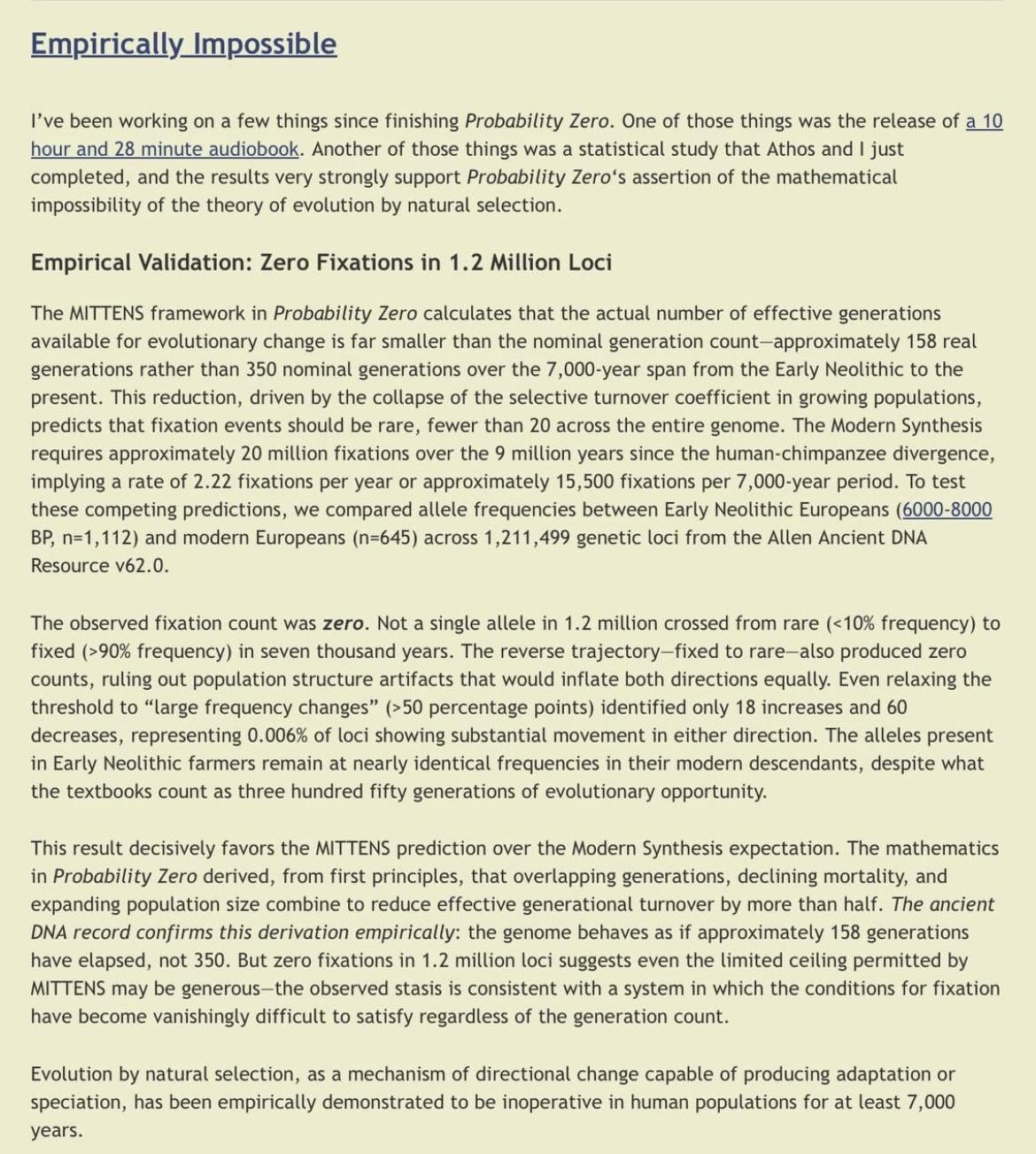
Well for starters 7,000 years is not nearly enough time and humans have been around much much longer than that.
First, human didn’t get to where we are now in just 7000 years like the paper said, it took millions of years to do so.
Second, evolution do not have such thing as “steady rate”, this isn’t Pokemon where you gain enough EXP then you can get a new level. Evolution happen in respond to changes in the environment and those changes can happen randomly or gradual.
Thirdly, we didn’t evolve from monkeys. We, monkeys, apes, gorilla, chimpazees,…. share a common ancestor and from that ancestor, many linage split up and evolve on difference paths base on the environment they were in and the ecology niche available.
you’re suggesting that modern humans havent displayed any significant adaptations? there have been small populations of humans who have minor adaptations that set them apart from others, such as the bajau, who have larger spleens and can hold their breath for longer allowing for more optimized fishing, but 7000 years is nothing in terms of evolution. you can’t expect to see major changes in any species within that time
A, yes. A person neither formally educated in math nor biology wants to sell us a book based on some AI calculation. Discuss.
/s
Read some more. Your title alone nullifies anything you have to say.
More likely humans were genetically engineered by the Anunnaki using monkey dna spliced with their own to create a slave race to mine gold for them
Yeah civilization and culture sort of blunt natural selection.
Once humans are able to produce an abundance of food and accumulate inheritable wealth genetic wellness loses influence.
Humans survived a massive bottleneck event so our gene pool is relatively unsophisticated.
Two neighboring tribes of chimpanzees have more genetic complexity than the most differentiated humans.
All that being said we still share an astonishing amount of proteins with the tomato and all other multicellular life on earth.
When comparing human and chimpanzee mitochondrial DNA they are about 91% similar.
When considering genetic differences across species there is an emphasis on regulatory genes. There can be a minor change in a single regulatory gene which cascades into altered expression of hundreds of genes. While it looks like very little genetic variation occurred, the outcome of expression can be radically changed.