
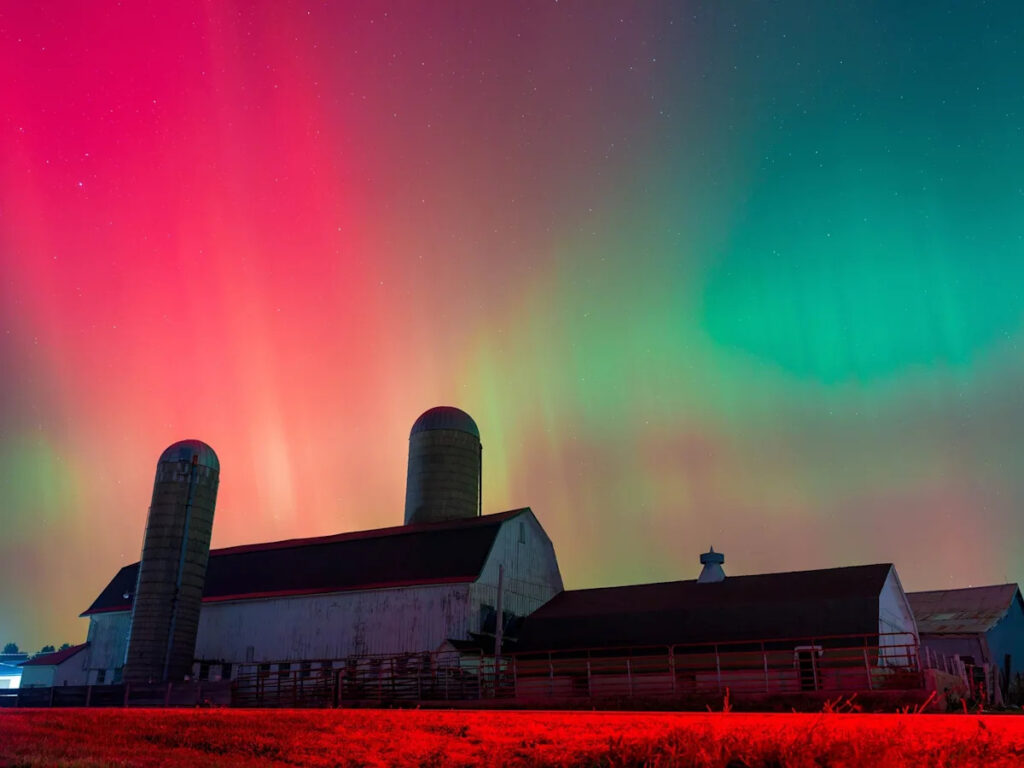
The month of March could be an opportune time to catch a northern lights display, as an increase of solar activity and the spring equinox could make auroras more likely in the coming weeks.
A forecast for a potential G1 geomagnetic storm on Friday was cancelled by the National Oceanic and Atmospheric Administration’s Space Weather Prediction Center.
The source of the solar activity is a negative polarity coronal hole high-speed stream — a fast-moving stream of solar wind that escaped the sun’s atmosphere — according to NOAA.
Northern light displays occur when solar wind interacts with the atoms and molecules in Earth’s atmosphere.
MORE: Sun releases 4 strong solar flares: What to expect
When charged particles from the sun clash with the upper atmosphere, it causes the atoms to emit a glow, creating a spectrum of light in the night sky.
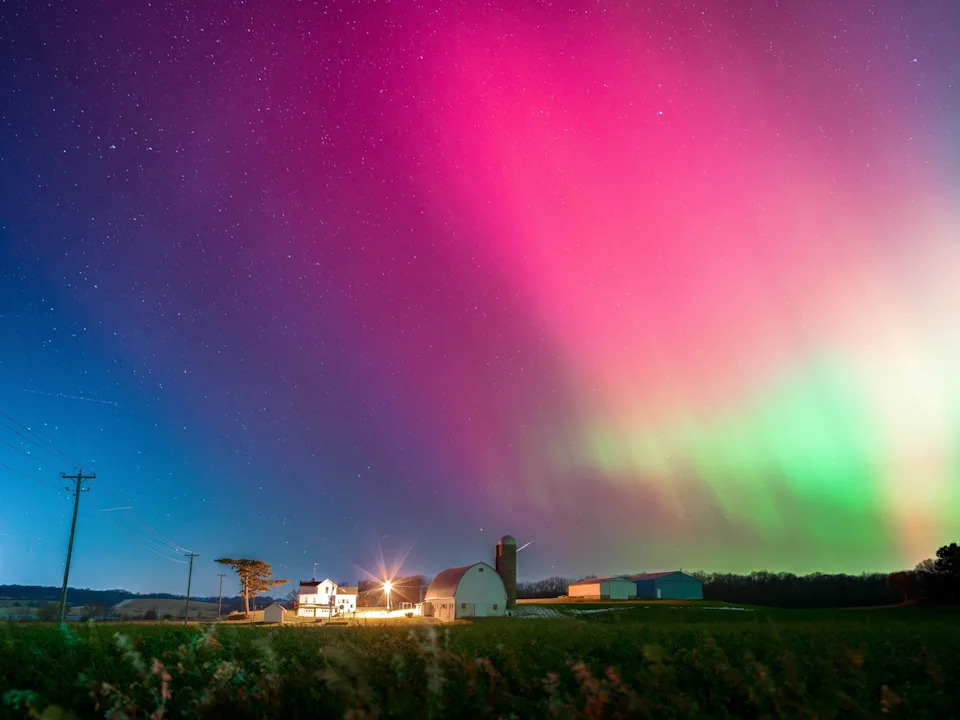
Ross Harried/NurPhoto via Getty Images – PHOTO: The Aurora Borealis lights up the night sky over Monroe, Wisconsin, on November 11, 2025.
The increase of northern lights activity is expected to continue throughout the month due to the upcoming spring equinox. The weeks before and after the spring and fall equinox are known as “aurora season,” according to EarthSky.org.
Spring equinox in the northern hemisphere will begin on March 20 as the sun crosses the celestial equator, in which geomagnetic storms are more likely due to the way solar wind interacts with Earth’s magnetosphere.
MORE: ‘Severe’ geomagnetic storm could make northern lights visible in southern US
During this time, the north-pointing magnetic field from Earth and the south-pointing magnetic field from the sun — which is carried toward Earth by solar wind — can cancel each other out.
This opens up a hole in Earth’s magnetic field and allows the solar wind to flow easily toward Earth’s magnetic poles and produce auroras — known as the “Russell-McPherron Effect” after a 1973 paper published in the Journal of Geophysical Research by UCLA geophysicists Christopher Russell and Robert McPherron.
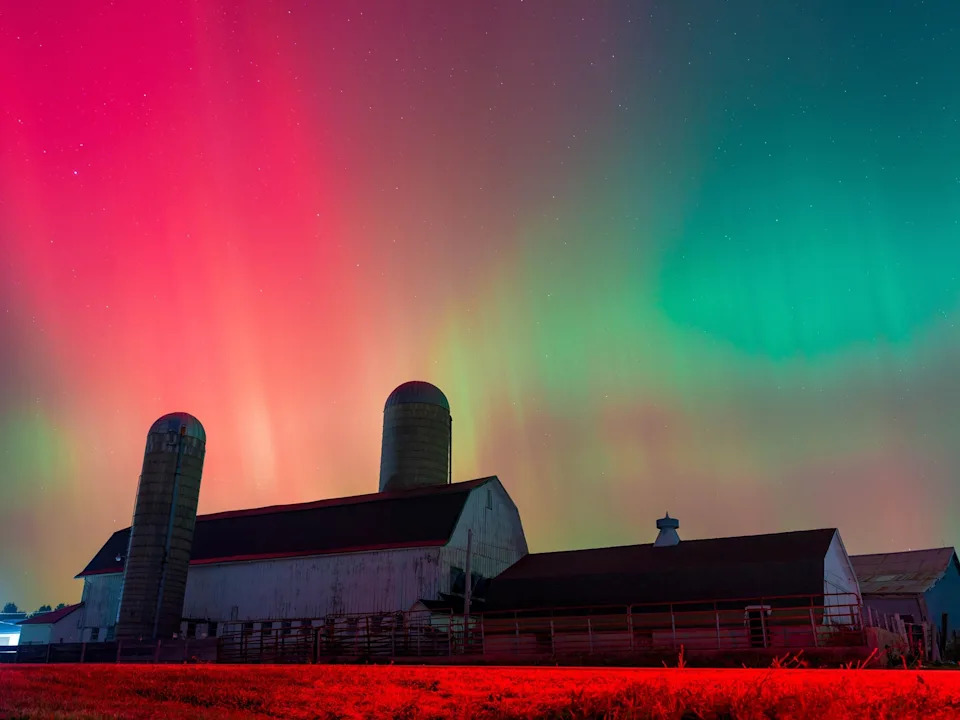
Ross Harried/NurPhoto via Getty Images – PHOTO: The Aurora Borealis lights up the night sky over Monroe, Wisconsin, on November 11, 2025.
This phenomenon makes the potential for auroras more likely in the weeks leading up to the equinox, the scientists found.
Whether the auroras will actually be visible will depend on how the coronal hole high-speed stream arrives, its magnetic orientation and how cloudy it is locally.
MORE: NASA to launch 2 new satellites that will help forecast solar storms
The best time to see the northern lights in the U.S. is generally between 10 p.m. and 4 a.m. local time, and traveling to the darkest location possible is recommended for the best viewing, according to NOAA.
The spring equinox comes as the solar maximum comes to a close. The sun’s 11-year cycle peaked around late 2024 and has continued to emit strong solar activity and geomagnetic storms, leading to an increase in aurora displays.