

Listen to this article
Estimated 4 minutes
The audio version of this article is generated by AI-based technology. Mispronunciations can occur. We are working with our partners to continually review and improve the results.
Quirks and Quarks54:00Filming a black hole in action, and more…
On this week’s episode of Quirks & Quarks with Bob McDonald:
How astronomers are capturing the first ever video of a black hole
Quirks and Quarks17:57How astronomers are capturing the first ever video of a black hole
You may have seen Black Hole, the image, captured by Event Horizon Telescopes around the world, but have you heard of the upcoming Black Hole, The Movie? This week, astronomers launched a new campaign to capture video footage of the supermassive black hole pulsing at the heart of the Messier 87 galaxy. By capturing its movements, astronomers hope to answer big questions about the nature of black holes and the role they play in shaping our universe — and show that black holes are more than the cosmic “pits of despair” we often make them up to be.
We spoke with:
Sera Markoff is the new Plumian professor at Cambridge University and a Professor of Theoretical Astrophysics at the University of Amsterdam. Vincent Fish is a research scientist at MIT’s Haystack Observatory. They both sit on the science board of the Event Horizon Telescope, the global telescope array that is currently capturing the data. 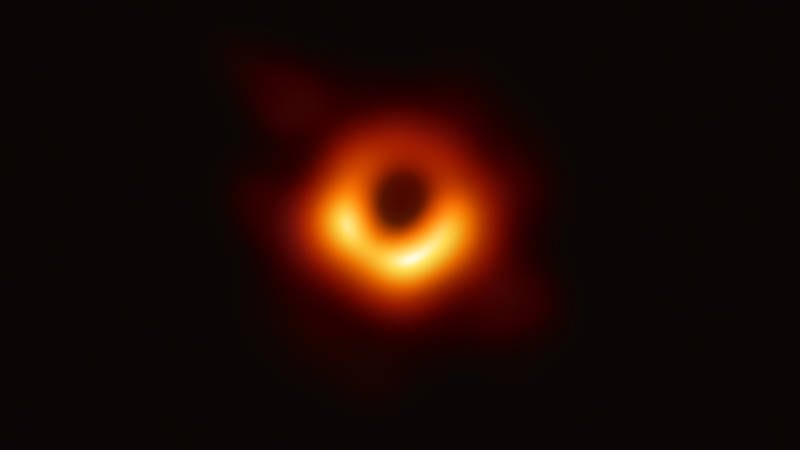 An image showing the silhouette of the supermassive black hole that resides in the centre of the galaxy M87, outlined by emission from hot gas swirling around it under the influence of strong gravity. (National Science Foundation/Getty Images)Sunlight can help recycle plastic waste into vinegar
Quirks and Quarks6:15Sunlight can help recycle plastic waste into vinegar
Scientists from the University of Waterloo have harnessed the power of the sun to power a chemical process inspired by how fungi break down wood to offer a new potential solution to managing global plastic pollution. Their process turns plastic waste into reusable acetic acid, the main ingredient of vinegar, without adding any extra carbon dioxide to the atmosphere. Yimin Wu is the Tang Family Chair in New Energy Materials and Sustainability at the University of Waterloo and oversaw this research that was published in the journal Advanced Energy Materials.
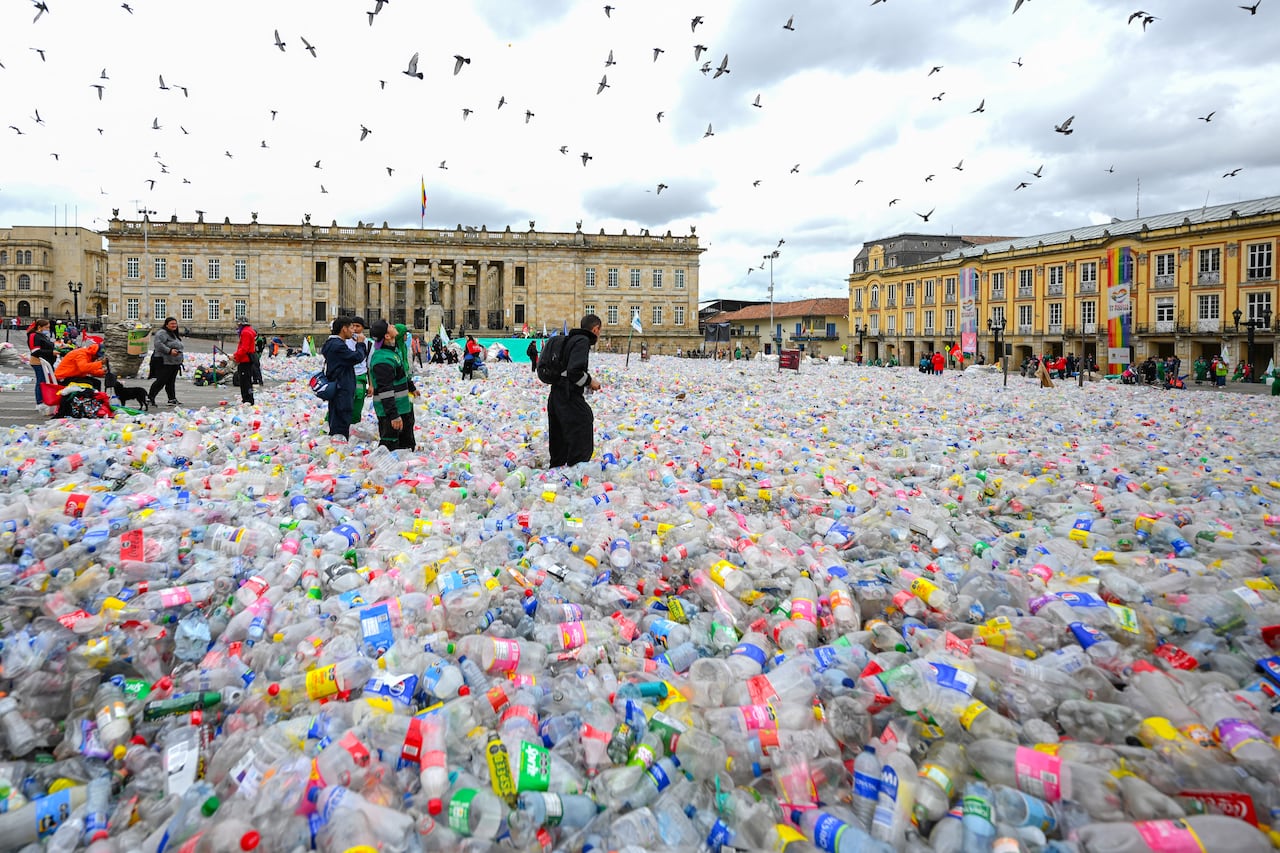 New technology harnesses the sun to transform plastic into acetic acid, also known as vinegar. (Luis Acosta/AFP/Getty Images)Ancient kangaroos were hopping giants
Quirks and Quarks9:17Ancient kangaroos were hopping giants
The giant ancestors to the modern day kangaroo that went extinct many tens of thousands of years ago were twice the size as the largest modern day kangaroo, reaching up to 250 kilograms in weight. Previous research suggested their ankles couldn’t sustain their weight to hop effectively, but now new research shows physical differences in the structure of their hindlimbs and achilles tendon that would have allowed them to hop, when needed. Megan Jones led this study and is a PhD candidate at the University of Manchester, England and at the University of Melbourne, Australia. Her research was published in the journal Scientific Reports.
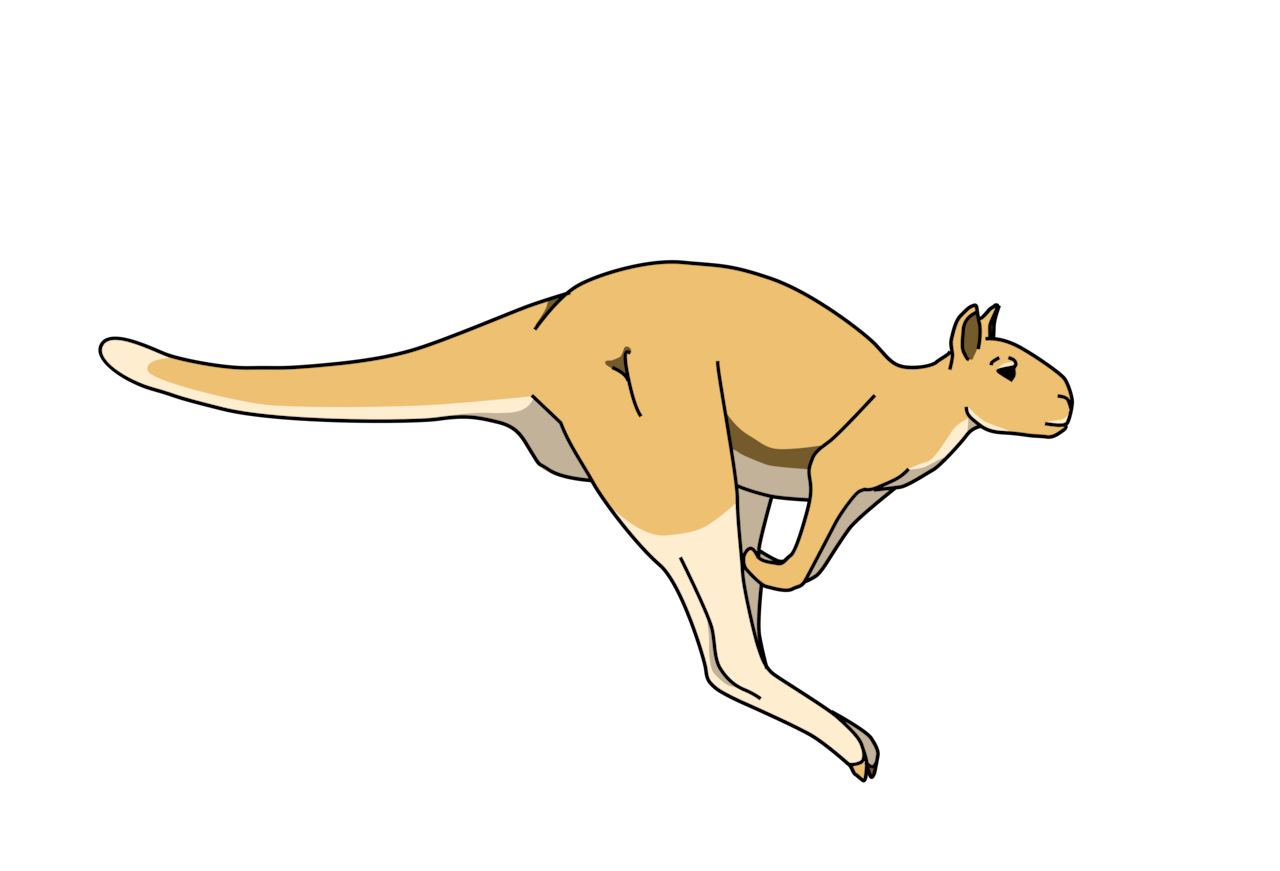 An image by Megan Jones depicting a Sthenurine which is an ancient giant ancestor to the modern day kangaroo. New research suggests this 250 kg beasts could hop. (Megan Jones)How monogamy helped termite colonies number in the millions
Quirks and Quarks9:20How monogamy helped termite colonies number in the millions
Termites are one of the most successful animals in the world, with colonies numbering in the millions. Scientists including Nathan Lo from the University of Sydney have found that monogamy is a key part of such highly complex insect societies. Once the termite king and queen became monogamous, it became beneficial for sterile termite workers to sacrifice their own reproduction to care for their siblings, allowing for rapid growth in the colony. The research was published in the journal Science.
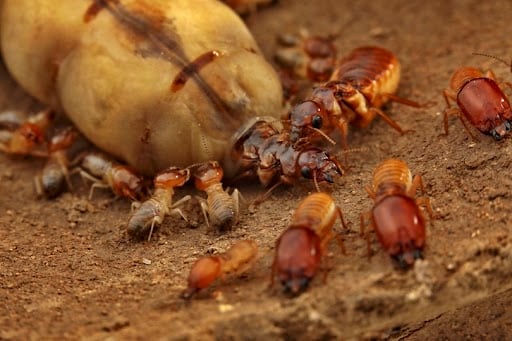 A termite queen is being groomed by workers, with the king and solider termites standing by. (Jan Sobotnik/University of Sydney)Our infant universe’s primordial soup was soupy, according to new study
Quirks and Quarks8:40Our infant universe’s primordial soup was soupy, according to new study
In the earliest moments after the Big Bang, our universe and everything it would become were part of a primordial soup that later cooled and expanded into the universe we live in today. Scientists working out of the Large Hadron Collider in Switzerland, including Vanderbilt University physicist Yi Chen, smashed atoms together to recreate primordial soup in order to see how soupy the first few millions of a second in our early universe truly was. The research was published in the journal Physics Letters B.
 An artist’s rendition of a quark zooming through quark-gluon plasma (Jose-Luis Olivares/MIT)