
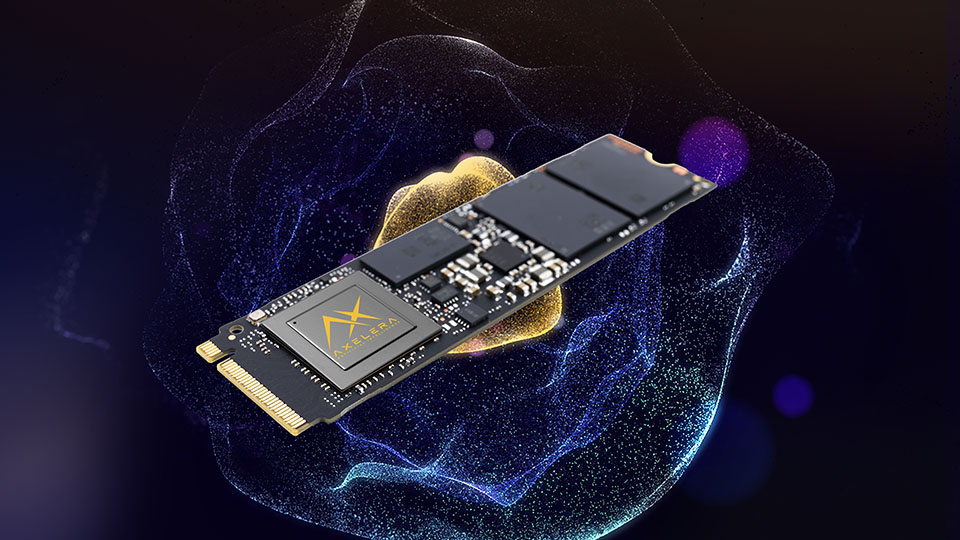
PARIS – As the satellite industry shifts from transmitting raw data to providing real-time “orbital answers,” the European Space Agency (ESA) and Axelera AI have solidified a strategic partnership to integrate advanced Artificial Intelligence (AI) hardware into future European space infrastructure.
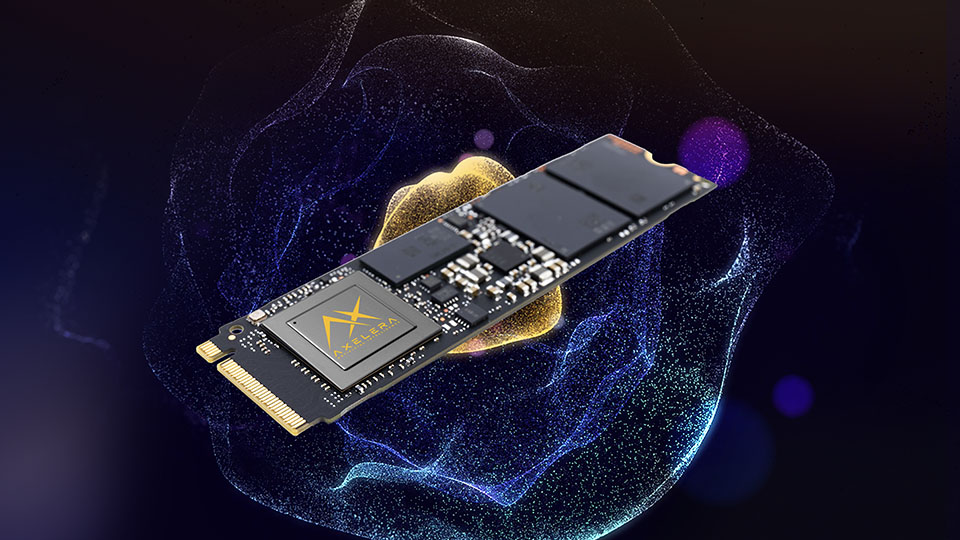
The collaboration centers on the Metis™ inference accelerator, a high-performance, low-power AI platform designed to overcome the computational and environmental constraints of deep space missions.
The Shift to On-Board Processing
Traditionally, Earth observation (EO) satellites have acted as “passive pipes,” relaying massive datasets to ground stations for processing. However, the proliferation of high-revisit constellations and hyperspectral sensors has created a data bottleneck. By embedding AI at the “orbital edge,” satellites can now perform real-time autonomous tasks such as:
Cloud Masking: Automatically discarding images obscured by cloud cover to save downlink bandwidth.
Vessel & Wildfire Detection: Identifying and alerting authorities to illegal fishing or emerging fires within seconds.
Onboard Compression: Utilizing AI-driven algorithms to compress data by factors of 100x without losing critical features.
This trend was recently validated by the operational success of Φ-sat-2, an ESA nanosatellite launched in late 2024, which serves as an in-orbit testbed for multiple AI applications running directly on high-performance processors.
Technical Barriers: Radiation Hardening and Power
The primary challenge in “unlocking” space-based AI lies in the harsh radiation environment, which causes Single Event Effects (SEE) in standard commercial hardware. Axelera AI and ESA are focusing on “Radiation Hardening by Design” (RHBD) and software-level mitigation.
Sovereign Technology: Axelera provides a European-made, high-performance alternative to proprietary U.S.-based AI accelerators.
Frugal Learning: ESA’s Φ-lab is researching “frugal AI” architectures—neuromorphic networks that mimic the human brain to maximize processing speed while minimizing energy consumption (under 5W per module).
Industrial Redundancy: Similar to the NanoXplore 28nm FPGAs, which use 12-transistor cells for radiation resilience, the Axelera partnership aims to qualify high-density AI chips for decade-long mission lifespans.
Executive Perspectives
“We chose Axelera because of their sovereign technology and long-term availability, bringing fantastic capabilities to the ESA missions,” said Gianluca Furano, Senior On-Board Computer Engineer at ESA. “With missions that may end up staying in space for over a decade, we must choose technology that can perform under non-permissive environments without human intervention.”
Expansion of the AI Ecosystem
To accelerate the commercialization of these technologies, ESA officially launched Φ-lab Ireland on February 13, 2026. Headquartered in Mullingar, the facility serves as a national hub for space-enabled AI and advanced manufacturing. Early supported companies include Ubotica Technologies and MBRYONICS, both focused on the intersection of AI at the edge and optical communications.
Parallel to this, the ESA/IBM Research Europe release of the TerraMind foundation model provides the software backbone for these hardware accelerators, allowing for cross-sensor data fusion—such as combining SAR and optical data—directly in orbit.