
Astronomers are studying the planet HD 137 010 b. It is similar to Earth and has orbital parameters close to those of our home world. However, due to the star’s slightly lower luminosity, the surface temperature is significantly below the freezing point of water. This makes scientists wonder what a truly habitable planet might look like.
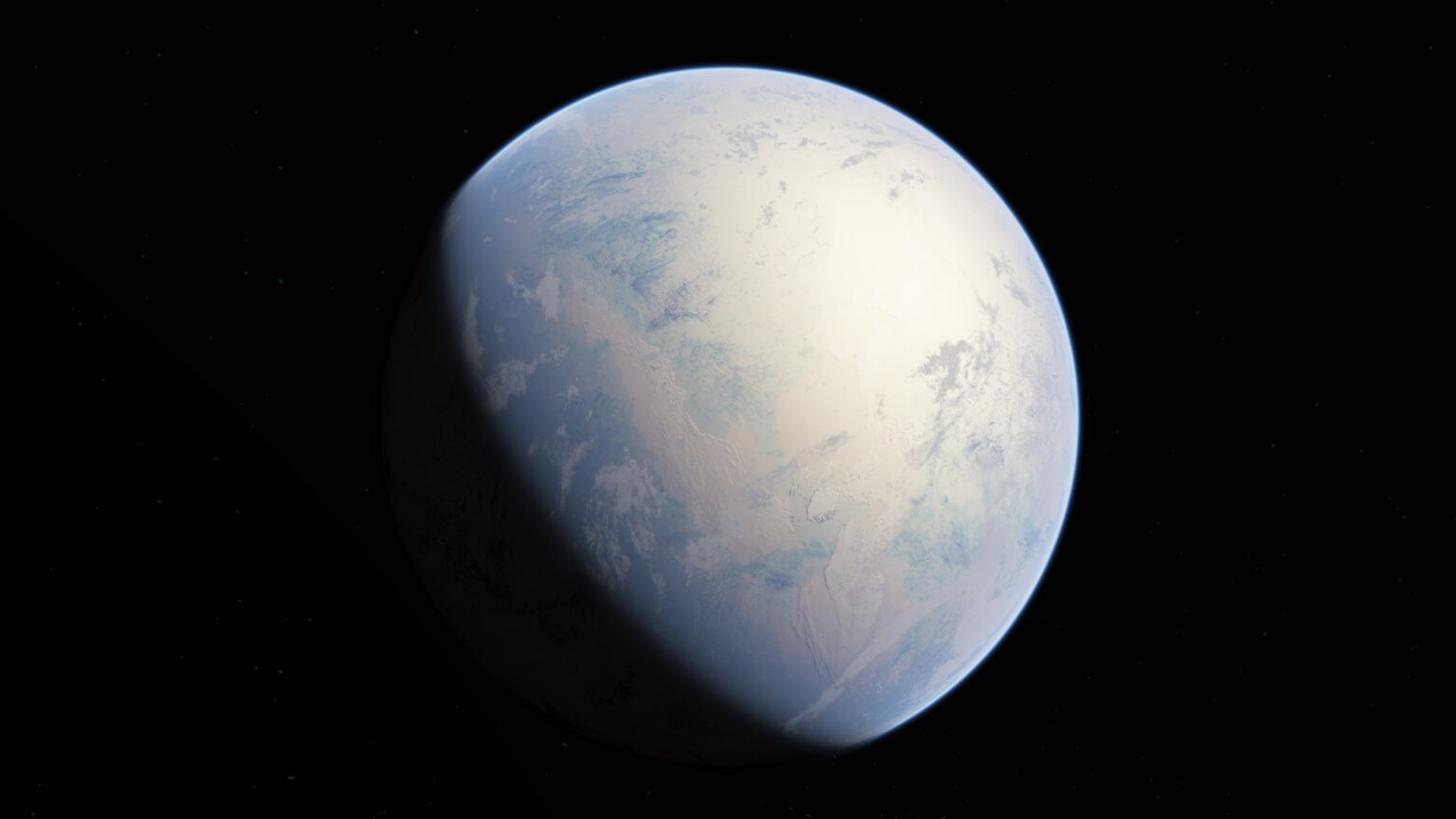 Planet HD 137010 b. Source: phys.org
Planet HD 137010 b
Is there anywhere in the Universe, apart from Earth, where intelligent beings similar to us could exist, or at least conditions in which Earth life would feel more or less comfortable? Researchers from Northeastern University in the United States asked themselves this question after studying the exoplanet HD 137010 b.
The fact is that HD 137010 b is quite close to Earth in size, and a decade ago, this would have made everyone talk about it. However, there are now more than 6,000 confirmed exoplanets, so it is no longer such a rarity.
However, in addition, the star HD 137010 is sun-like. And the planet’s orbit is circular, and its orbital radius is quite close to that of Earth. It would seem that conditions on it should be very similar to those on Earth, but instead of the average temperature of 15.5°C found here, the temperature on HD 137010 b is 90° below the freezing point of water.
What is an Earth-like planet?
The reasons why 137010b is so different from Earth are actually no secret to scientists. The whole reason is that it is similar to our planet, but not identical to it. Slightly less luminosity, a slightly larger orbital radius, and already the surface temperature becomes significantly lower than ours.
This is usually an estimate made from a distance of 500 light years. The planet may be significantly warmer, but the water there is still likely to be frozen, so if there is any life there, it is probably some kind of algae. All of this makes scientists wonder how similar the planet is to Earth, so that we can really count on the existence of some organisms on it.
And how often do Earth-like worlds actually occur in the Universe? To what extent can we assess conditions on them remotely? Statistics do not provide an answer to this question, despite the large number of open worlds. However, scientists believe that the existence of 137010b still gives hope for the existence of a habitable world. After all, if there is one such planet, there should be others.
According to phys.org