
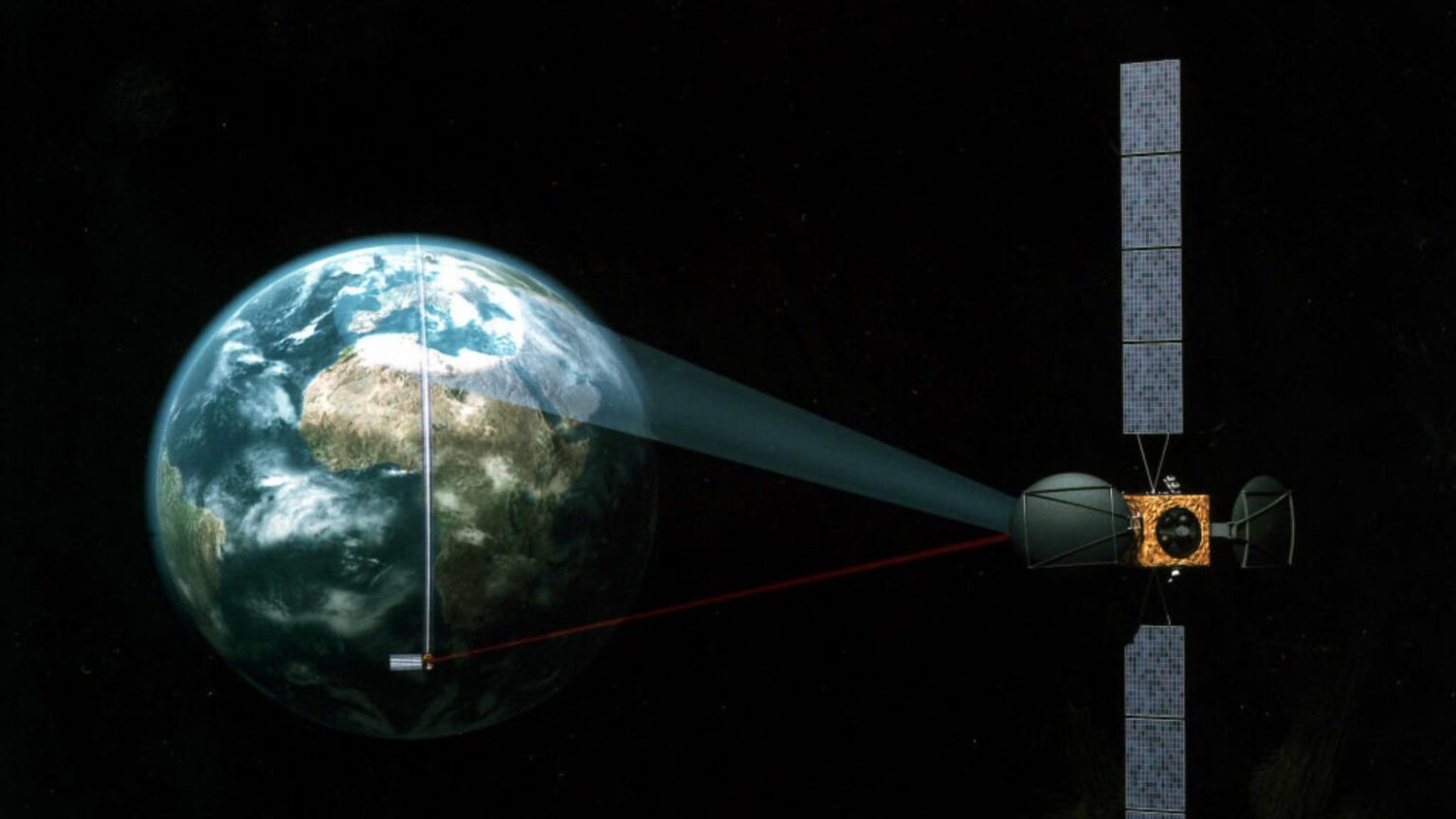
The quest for high-speed satellite communication has intensified.
Both the European Space Agency (ESA) and China’s Institute of Optoelectronics have reported successful gigabit-speed laser links to high-orbiting satellites.
It showcases that laser-thin connections can now span distances once thought too unstable for high-speed data.
Solving the dead zone issue
Laser communication is finicky. Unlike radio waves, which spread out like a wide net, a laser needs to hit a target moving at thousands of kilometers per hour while fighting through the wobbles of the atmosphere.
ESA established a laser link between an aircraft and a geostationary satellite.
On February 26, the ESA announced that an Airbus-built terminal successfully locked onto the Alphasat TDP 1 satellite, 36,000 km (22,000 miles) above the Earth.
The link maintained a 2.6 gigabits per second for several minutes without a single dropped packet. As per ESA, speeds like this turn a high-definition feature film into a file that can be transferred in mere seconds, rather than minutes.
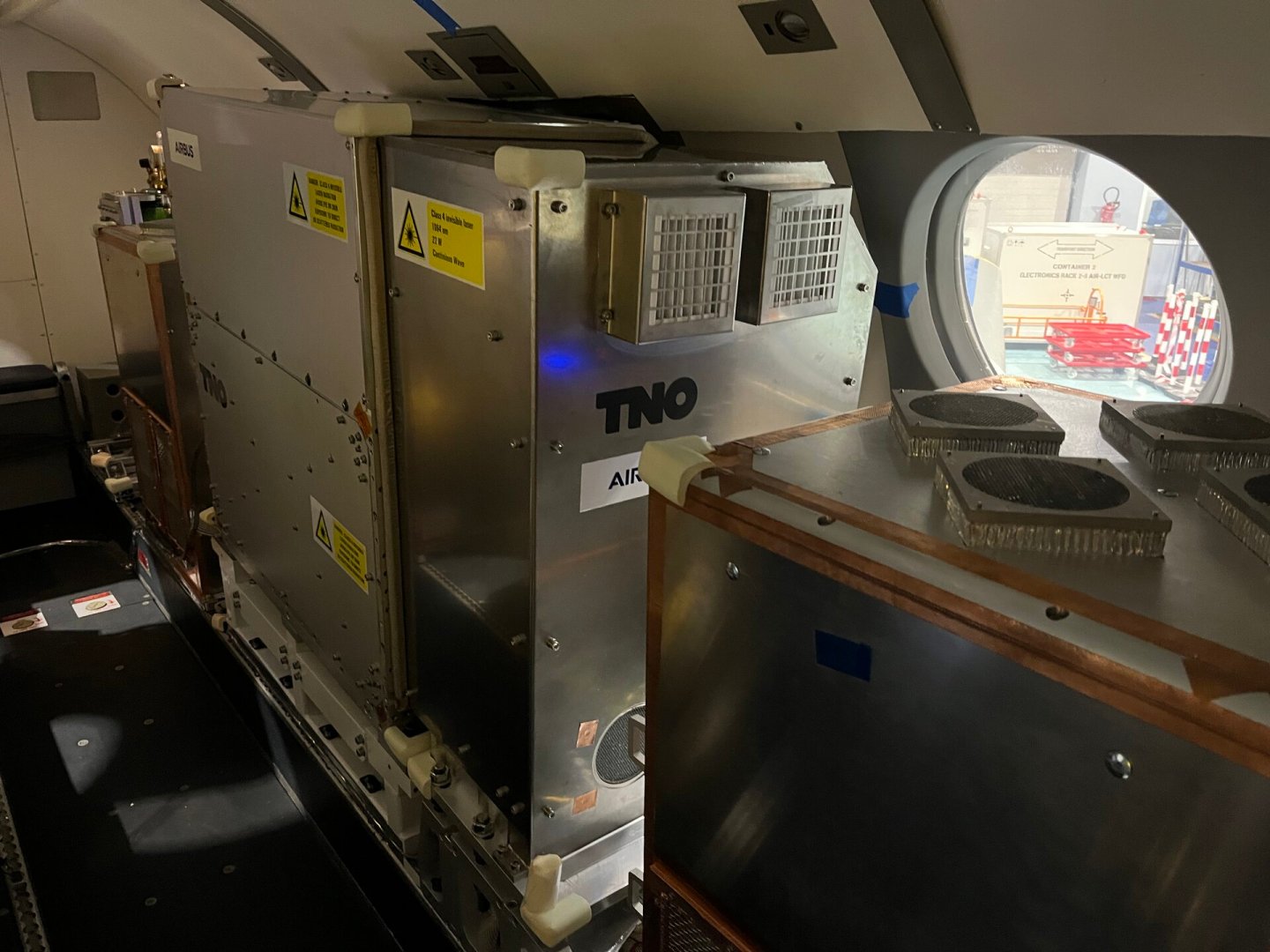 Airbus’ UltraAir laser terminal. ESA
“Establishing laser links between moving targets at this distance is technically very challenging. Continuous movements, platform vibrations, and atmospheric disturbances require extreme precision,” said François Lombard, Head of Connected Intelligence at Airbus Defence and Space.
This development could be the end of the digital “dead zone,” promising high-speed connectivity for anyone moving through the world’s most isolated regions.
Whether in the cabin of a long-haul flight, on a research vessel in the middle of the Atlantic, or in a vehicle crossing a remote desert, travelers can expect a future of uninterrupted, gigabit-level internet that follows them across every horizon.
China’s three-hour marathon
Not to be outdone, China’s Institute of Optoelectronics revealed its own development just days later, on March 2.
While its speed was a more modest 1 Gbps, the tech managed to cover 40,000 km (24,850 miles).
The Chinese team used a 1.8-meter laser ground station to capture light from an unnamed satellite. It used a “high-order adaptive optics system” to clean up signal distortion caused by air turbulence.
The connection between the ground station and the satellite was made in just four seconds and maintained for three hours.
As per the announcement, the Institute envisions these high-speed links transforming satellites from passive “data relays” into “intelligent processing hubs” capable of handling complex, real-time instructions.
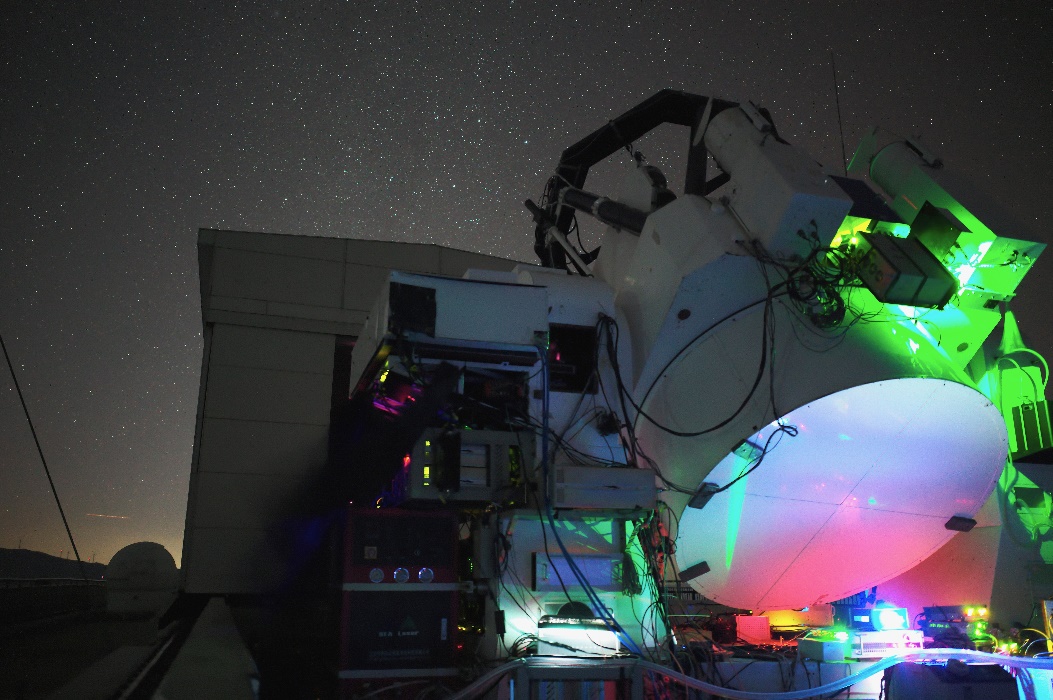 1.8 -meter laser communication ground station at Lijiang Gaomeigu Observatory.
The Chinese researchers remained tactfully silent on the military front — perhaps choosing scientific decorum over a discussion of battlefield utility.
While geostationary satellites are winning in terms of distance, Low-Earth Orbit (LEO) is winning in terms of raw power.
In January 2026, China claimed a new milestone in LEO by achieving a 120 Gbps laser link, doubling its previous record.
Meanwhile, SpaceX is preparing to launch its third-generation Starlink satellites, which are designed to push the envelope even further.
These next-gen units are expected to provide terabit-per-second downlink capacity and more than 200 Gbps uplink capacity.
The ultimate goal of these laser technologies is to solve the unique problems of space networking, such as extreme latency and intermittent connectivity.
Improving laser reliability ensures that data isn’t lost during these massive transit gaps, paving the way for a more connected solar system.