
Credit: Don Grall / Getty Images
So far, 2026 has offered up some celestial spectacles, including a total lunar eclipse and a planetary parade. But the beginning of the year has been devoid of major meteor showers. That changes starting in April when the Lyrids will shoot across the night sky.
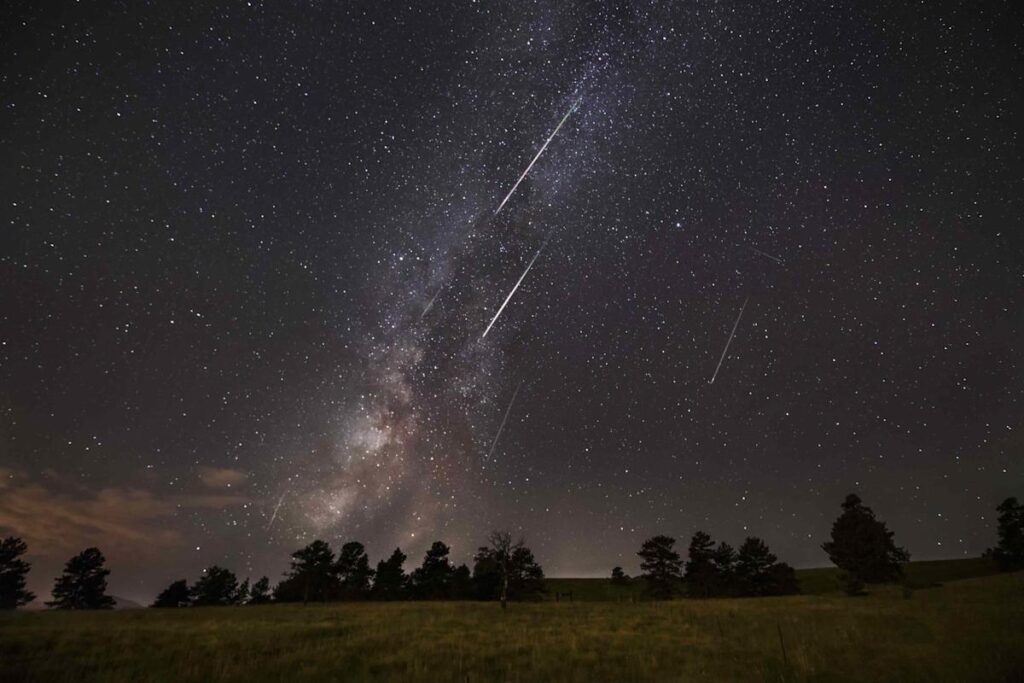
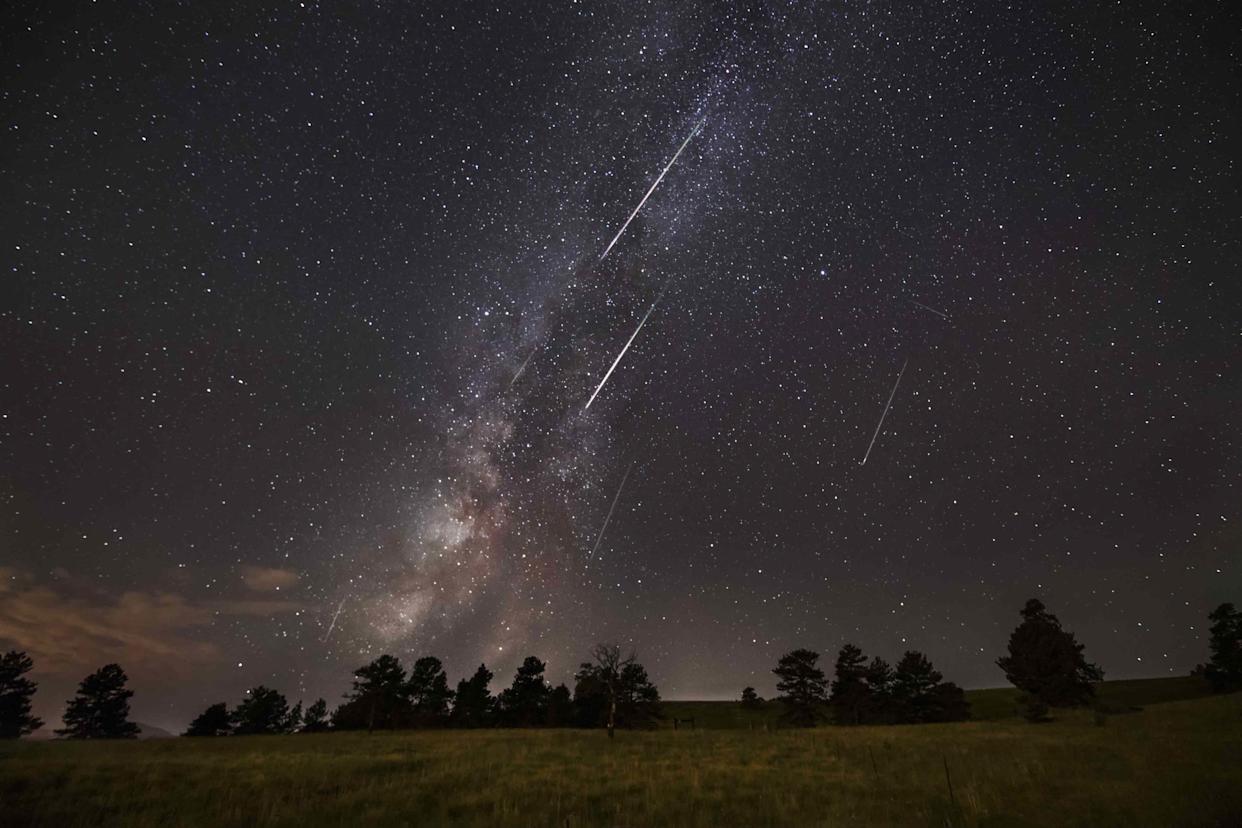
Meteor showers occur when Earth passes through the dust and debris left behind by comets or asteroids. These particles enter Earth’s atmosphere at high speeds, producing streaks of light as they burn up. To get the best views of any of these happenings, you’ll want to find a dark spot far from light pollution.
To help you know when and where to look, we’ve rounded up some of the major meteor showers of the year below.
The Lyrids
The Lyrids are the result of Earth passing through the tail of comet C/1861 G1 Thatcher. They display a maximum of about 18 meteors per hour, according to Space.com, but they’re known for surges that can sometimes bring rates of up to 100 per hour.
When: The Lyrids are active from April 17 to April 26 every year.
Best time to see them in 2026: This meteor shower is expected to peak early in the morning on April 22. The moon will be 27 percent full, the American Meteor Society reports, which means moonlight won’t interfere with your shooting star spotting.
The Eta Aquariids
The Eta Aquariids are the result of Earth passing through debris left behind by Halley’s Comet. The rate of this shower is about 60 meteors per hour, and is best seen in latitudes in the southern half of the U.S. or even farther south in the Southern Hemisphere.
When: The Eta Aquariids are active from mid-April to mid-May.
Best time to see them in 2026: This annual spectacle will peak during the hours before dawn on May 5. Because of a bright waning gibbous moon on that night, many fainter meteors will be washed out, particularly in the northern latitudes. However, the fast-moving meteors can still produce bright streaks, especially in the hours prior to dawn.
The Perseids
Considered one of the most prolific showers of the year, the Perseid meteor shower produces rich, bright streaks. The shower’s radiant rises in the northeast by late evening and climbs higher through the night, making the hours before dawn the most productive. This shower is associated with the comet Swift–Tuttle.
When: The Perseids are active from mid-July to late-August.
Best time to see them in 2026: The Perseids will peak on the night of August 12, before dawn on August 13. The peak takes place under a new moon, which means there will be no moonlight to interfere with your viewing, so you can expect dark skies that will allow you to see even faint meteors.
The Draconids
The Draconids take place every year at the beginning of October. The shooting stars form when Earth passes through debris left behind by Comet 21P/Giacobini-Zinner. This shower can produce up to 10 meteors per hour, but you can only catch that many under a dark sky.
When: The Draconids are active from October 6 to October 10
Best time to see them in 2026: The Draconids are set to peak around October 8 under a very thin crescent moon, meaning moonlight interference will be minimal. Dark skies will improve the chances of spotting any brief outbursts or brighter meteors.
The Orionids
The Orionids are linked to the debris from Halley’s Comet and occur every autumn. Orionid meteors are known for their brightness and speed, leaving behind glowing “trains” (incandescent bits of debris), which last for several seconds to minutes.
When: The Orionids are active from early October to mid-November.
Best time to see them in 2026: The meteor shower will peak overnight around October 21 and 22. The best time to view the Orionids is around 2 a.m. when the radiant is highest in the sky. However, this year, the Orionids peak under a bright waxing gibbous moon, which will wash out many fainter meteors.
The Taurids
The Taurids consist of the Southern Taurid and the Northern Taurid meteor showers, and as the names suggest, the meteors appear to originate from the constellation Taurus.
When: The Southern Taurids are active from mid-September to mid-November 12, while the Northern Taurids are active from about mid-October to early December.
Best time to see them in 2026: The Southern Taurids will peak on November 5. The Northern Taurids will peak on November 9. The Southern Taurids are often responsible for an increased number of fireball reports from September through November, according to the American Meteor Society.
The Leonids
Named after the constellation Leo, which is where the meteors appear to originate from, this meteor shower occurs when Earth passes through a trail of dust and particles left behind by the 55P/Tempel-Tuttle comet.
When: The Leonids are active from early to late November.
Best time to see them in 2026: The peak is predicted to occur on November 18. Watch late on the night of November 17 until dawn on November 18. The first quarter moon falls on November 17 and might make it harder to spot fainter meteors.
The Geminids
Unlike most meteor showers, which originate from comets, the Geminids originate from the asteroid 3200 Phaethon. According to NASA, the bits and pieces that break off asteroid 3200 Phaethon to form the Geminid meteors are several times denser than the debris produced by comets.
When: The Geminids are active from mid-November to late December.
Best time to see them in 2026: This shower is set to peak on December 14. The bold, bright, and sometimes colorful Geminids are one of the Northern Hemisphere’s best showers, especially in years when there’s no moon. This year, a waxing crescent moon will not interfere with meteor watching.
Read the original article on Martha Stewart