
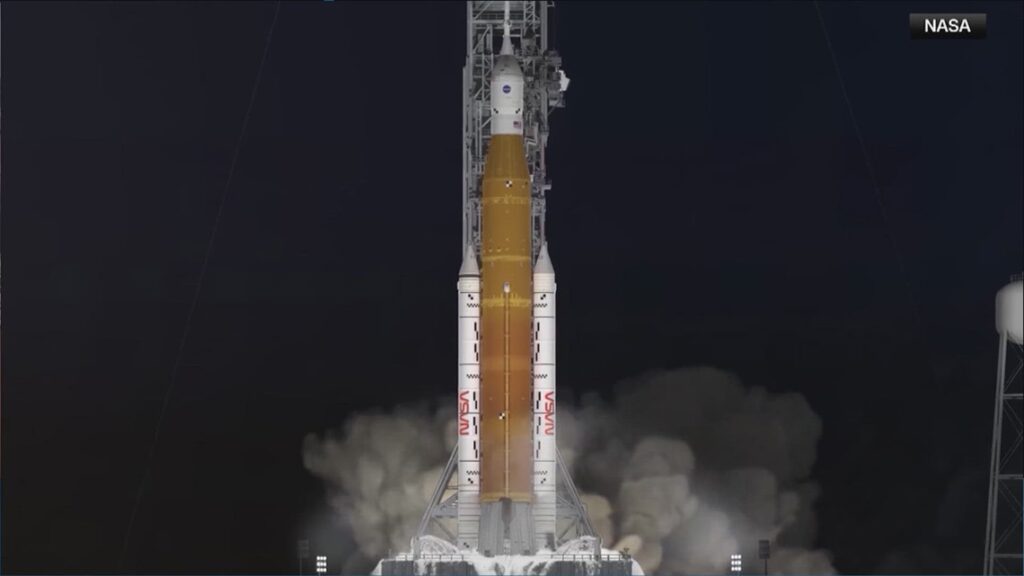
The space agency plans to roll the rocket and spacecraft back out to the launch pad later this month.
CAPE CANAVERAL, Fla. — Engineers have identified and repaired a helium flow problem that cropped up during a recent test of NASA’s Artemis II rocket, keeping the agency on track for a potential April launch.
Technicians discovered the issue after a Feb. 21 wet dress rehearsal of the Space Launch System rocket and Orion spacecraft, which are being prepared in the Vehicle Assembly Building at Kennedy Space Center. A seal inside a quick disconnect — the fitting through which helium flows from ground systems into the rocket — had become dislodged and was blocking the pathway to the upper stage.
The team removed the quick disconnect, reassembled the system and ran helium through at a reduced flow rate to confirm the fix. Engineers are also investigating what caused the seal to shift in order to prevent a recurrence.
While the helium repair was underway, technicians have been refreshing other systems across the vehicle. Work includes activating a new set of flight termination system batteries ahead of end-to-end retesting, replacing flight batteries on the upper stage, core stage and solid rocket boosters, and charging batteries in the Orion launch abort system.
A separate effort to replace a seal on the core stage liquid oxygen line feed system began March 2. Once that work is complete, teams will reassemble the oxygen tail service mast umbilical plate and conduct integrity tests to verify the seal.
NASA plans to roll the rocket and spacecraft out to the launch pad later this month. Artemis II, which will send four astronauts on a flight around the Moon, is targeting launch in April.