

Sign up for our newsletter and get our latest content in your inbox.
A laser beam no wider than a pencil has linked a fast-moving aircraft to a satellite 36,000 kilometres above Earth at data rates previously reserved for fibre networks on the ground.
In a world-first demonstration, the European Space Agency (ESA), Airbus Defence and Space, the Netherlands Organisation for Applied Scientific Research (TNO) and German payload specialist TESAT established a stable optical connection between an aircraft and the Alphasat TDP-1 satellite in geostationary orbit.
During test flights from Nimes, southern France, Airbus‘ UltraAir laser terminal transmitted data at 2.6 gigabits per second while maintaining an error-free link for several minutes.
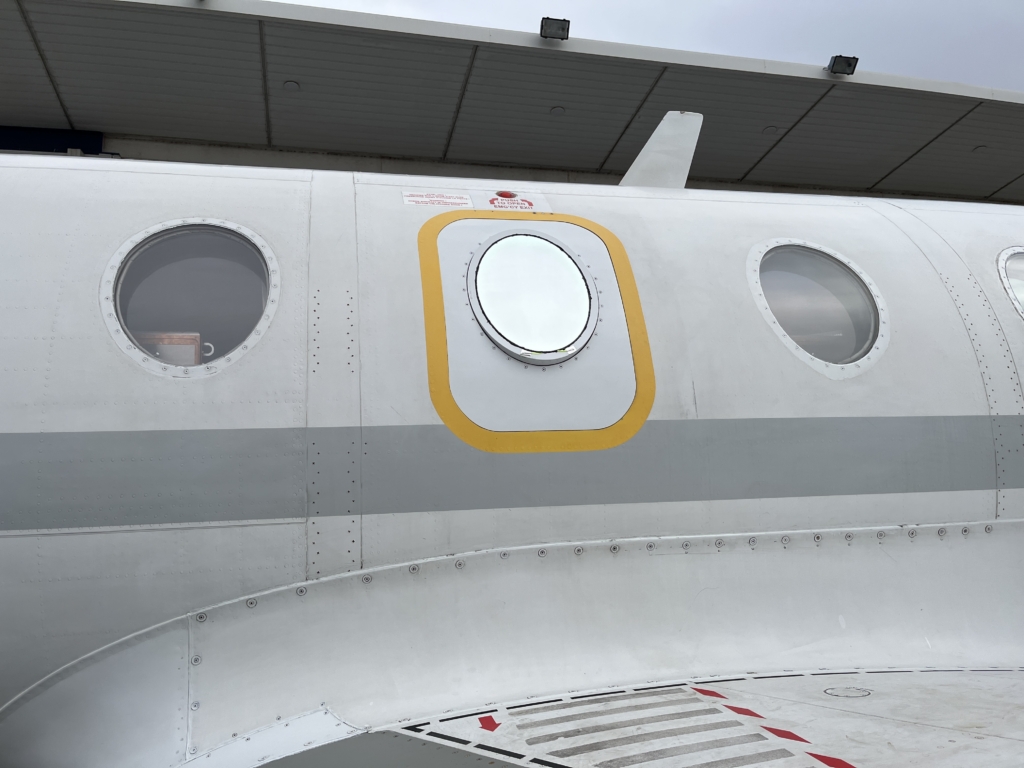 Photo: ESA
For aviation and maritime connectivity and for defence users seeking secure beyond-line-of-sight communications, the implications are significant.
How ESA and Airbus held a laser link steady across 36,000 km
Establishing a laser link between two static ground terminals is demanding enough. Doing so between a moving aircraft and a satellite fixed in geostationary orbit requires far greater precision.
At 36,000 km above Earth, the satellite appears stationary from the ground. The aircraft, by contrast, is subject to vibration, air turbulence and constant movement. The system must account for atmospheric distortion, cloud layers and thermal variations, while keeping the optical beam precisely aligned.
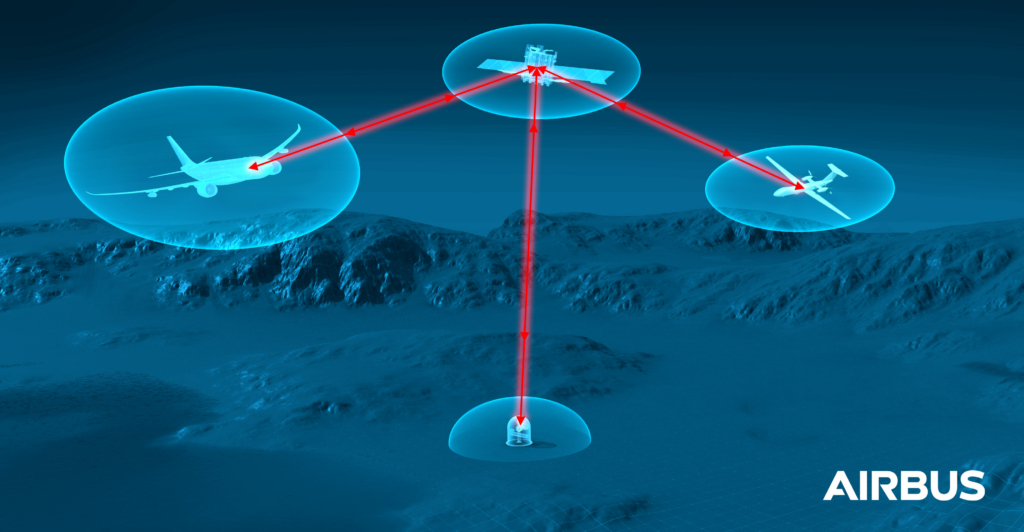 Photo: Airbus
François Lombard, Head of Connected Intelligence at Airbus Defence and Space, described the scale of the technical challenge:
“Establishing laser links between moving targets at this distance is technically very challenging. Continuous movements, platform vibrations and atmospheric disturbances require extreme precision.”
The aircraft’s UltraAir terminal managed to lock onto the satellite and sustain a stable connection long enough to demonstrate sustained high-throughput transmission. At 2.6 Gbps, an HD film can be downloaded in seconds.
Laser communications are reshaping satellite connectivity
Global data traffic continues to surge. Satellite networks are under increasing pressure as radio-frequency (RF) spectrum becomes crowded and tightly regulated. Traditional RF bands are facing bottlenecks, particularly in lower orbits.
ESA’s documentation on laser communications explains that optical links offer a decisive advantage in this environment.
Because laser beams diverge far less than radio waves, they can transmit higher volumes of data over longer distances with improved security and reduced risk of interception. Optical systems also avoid many of the licensing constraints associated with RF transmissions.
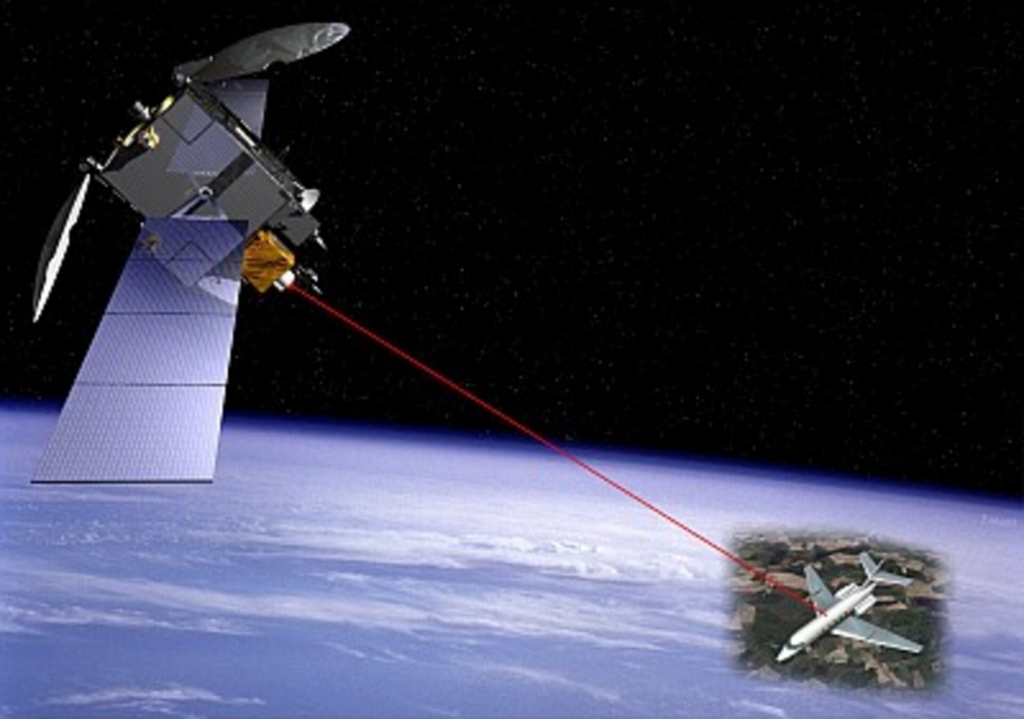 Photo: ESA
In practical terms, lasers enable more capacity, greater resilience and lower probability of detection, which are particularly relevant for governmental and defence applications.
Laurent Jaffart, Director of ESA Resilience, Navigation and Connectivity, said the demonstration shows how optical systems can underpin secure communications across Europe and beyond.
“This achievement demonstrates how optical communications can transform secure connectivity for our Member States. Particularly by working to resolve the technical challenges that come with establishing fast laser communications, capable of evading interference and detection in demanding conditions.”
From SpaceDataHighway to aircraft: Europe’s laser communications evolution
The airborne demonstration does not stand in isolation. Europe has been developing operational laser relay capabilities for more than a decade.
ESA’s European Data Relay System (EDRS), often referred to as the “SpaceDataHighway”, uses geostationary relay satellites to receive data from low-Earth orbit (LEO) spacecraft via laser links and transmit it to ground stations without waiting for a traditional downlink window.
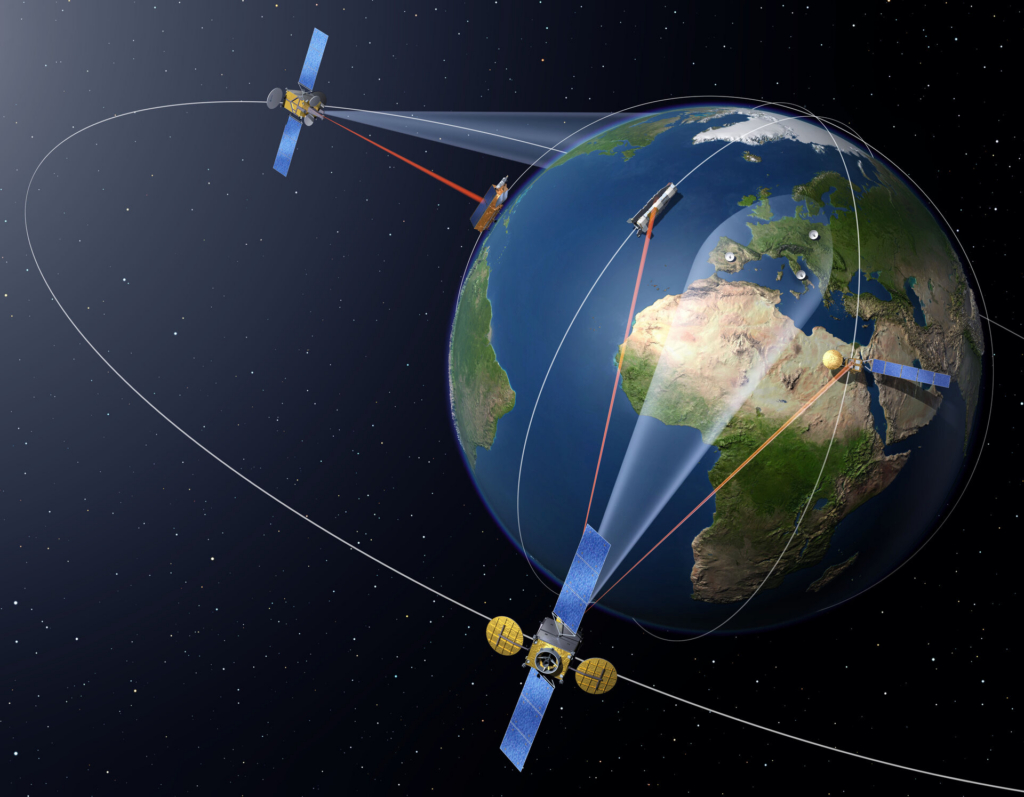 Photo: ESA
LEO satellites orbit Earth roughly every 100 minutes but may only have around 10 minutes of line-of-sight contact with a given ground station during each pass. EDRS solves this bottleneck by allowing continuous optical relay via GEO nodes, dramatically increasing contact time and reducing latency.
The technical feat behind EDRS illustrates the precision required. Laser terminals must locate and lock onto targets across distances approaching 45,000 km, sometimes with one platform travelling at 8 km per second relative to Earth.
The new aircraft-to-GEO link effectively extends that concept into the airborne domain.
How aircraft-to-satellite laser links could transform aviation and maritime connectivity
The immediate applications are clear. High-capacity, secure broadband for aircraft has long been constrained by bandwidth limitations and susceptibility to interference.
Optical satellite links could offer a pathway to resilient connectivity for:
Commercial aviation passengers
Military aircraft operating beyond contested airspace
High-Altitude Pseudo Satellites (HAPS)
Vehicles in remote terrestrial regions
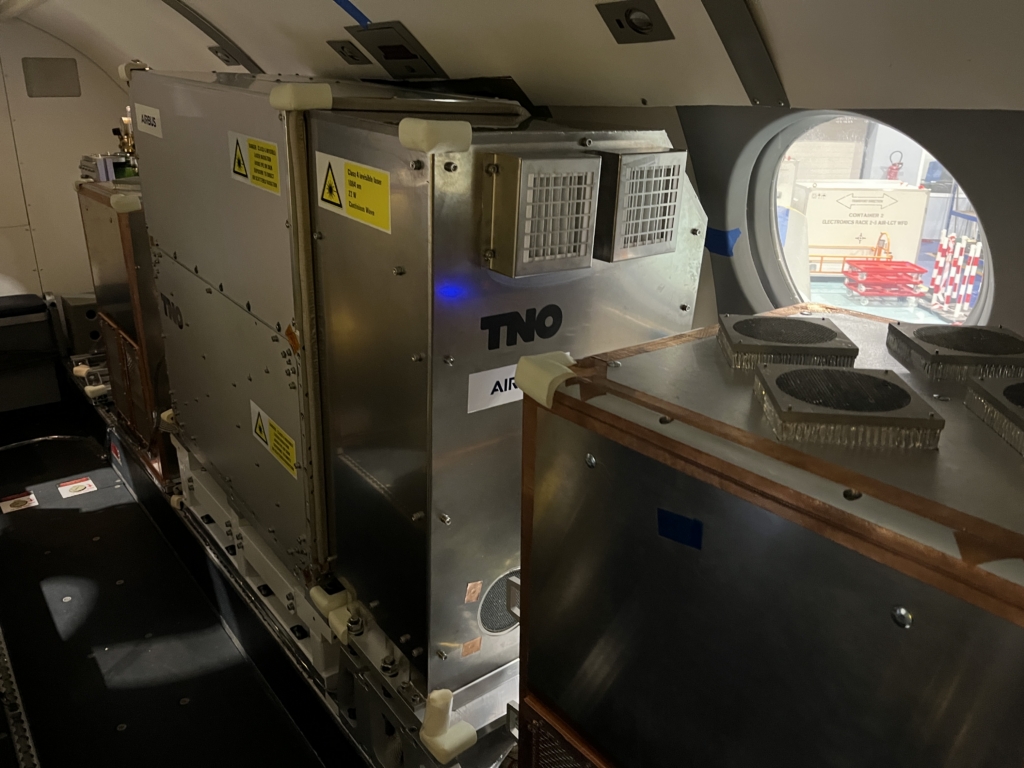 Photo: ESA
“Optical communications between airborne users and satellite networks, like ESA’a High-thRoughput Optical Network (HydRON), are high on ESA’s agenda,” says Harald Hauschildt, Head of ESA’s Optical and Quantum Communication Office. “High-data-rate, low-latency links that connect High-Altitude Pseudo Satellites and aircraft are equally demanded for commercial and resilience-driven applications.”
HydRON, ESA’s proposed high-throughput optical network, aims to integrate airborne and space-based nodes into a scalable architecture capable of handling growing data demand.
UltraAir and LaserPort: Europe’s optical satellite infrastructure
The airborne UltraAir terminal forms part of a wider European optical communications ecosystem.
Airbus Netherlands develops LaserPort Optical Ground Stations capable of establishing bi-directional links with LEO, MEO and GEO satellites at rates ranging from 2.5 Gbps to 100 Gbps and scalable towards terabit-class throughput.
These systems support trunking, feederlink and data relay applications, offering licence-free operation and reduced cost per transmitted bit compared to RF systems.
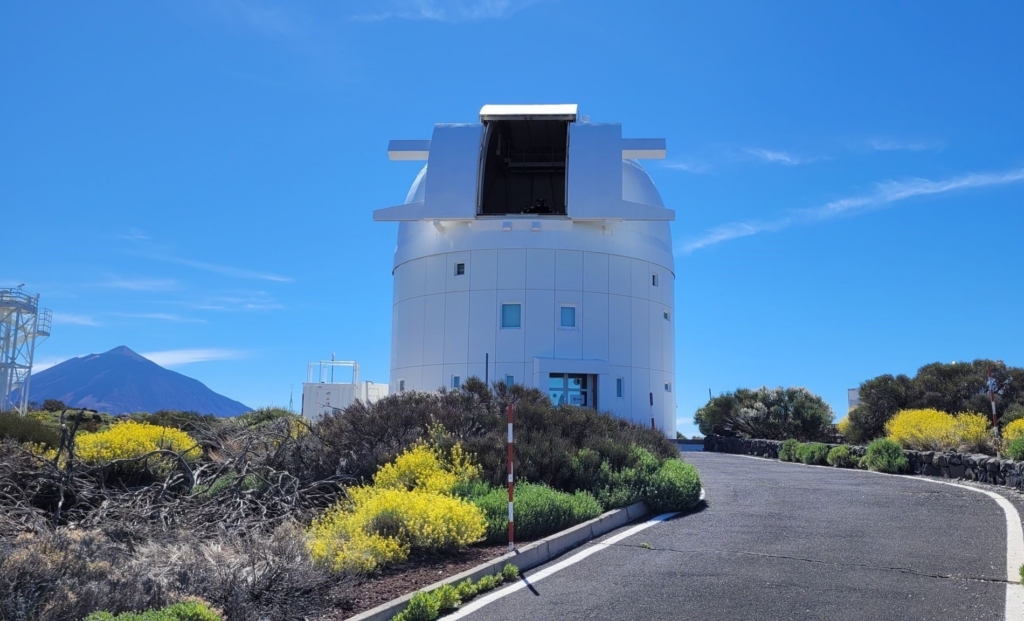 Photo: Airbus
Earlier demonstrations, such as the CREOLA project, successfully maintained a bi-directional optical feeder link at 9 Gbps over several days.
Current projects under ESA’s ARTES programme include HydRON Element #1, aimed at delivering 100 Gbps bi-directional optical ground links to LEO satellites.
The UltraAir airborne terminal itself was developed under ESA’s Optical and Quantum Communications programme, ScyLight, which sits within the broader ARTES framework and is supported by national agencies including the Netherlands Space Office (NSO) and Germany’s DLR.
Security and defence implications of aircraft-to-GEO laser communications
Beyond passenger broadband, the strategic dimension is evident.
Kees Buijsrogge, Director of Space at TNO, framed the breakthrough in geopolitical terms:
“This breakthrough proves that our industry strengthens Europe’s security and its autonomy by leading strategic technology in the field of secure laser communications.”
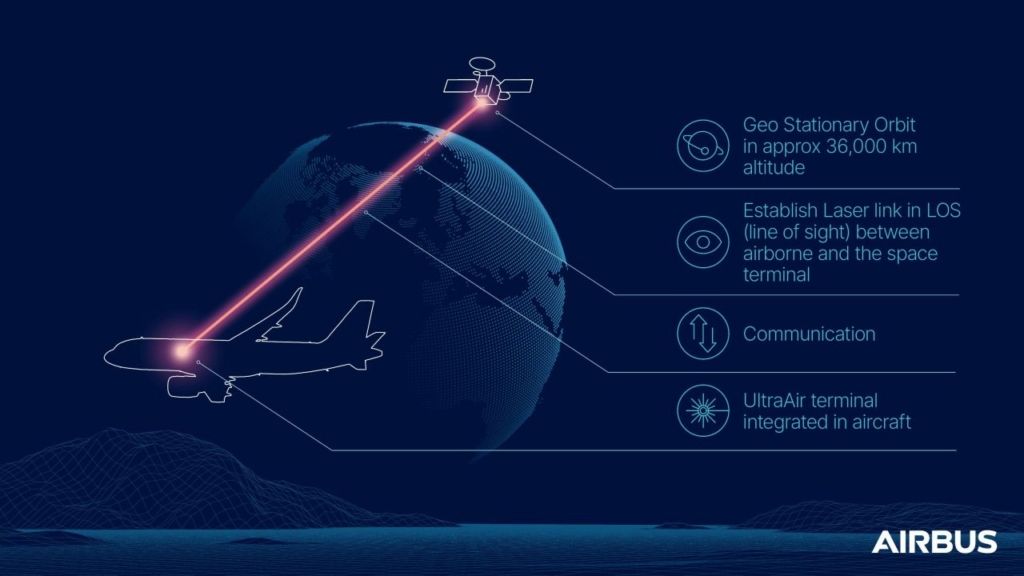 Photo: Airbus
Laser communications are inherently difficult to detect or intercept due to their narrow beam divergence and the invisibility of applicable wavelengths. For defence users operating in contested environments, this offers advantages in resilience and operational security.
Hybrid RF and optical satellite networks: What comes next?
Radio-frequency communications will remain central to space infrastructure for years to come. However, the steady maturation of optical technology suggests a complementary transition is underway.
As data demand accelerates, driven by Earth observation, autonomous systems, defence networks and commercial broadband, satellite architectures will increasingly rely on hybrid RF-optical networks.
The successful aircraft-to-GEO demonstration shows that high-capacity optical links are no longer confined to satellite-to-satellite relay. They can now extend to fast-moving airborne platforms.
Featured image: ESA
Sign up for our newsletter and get our latest content in your
inbox.