
Back to Article List
Today in the history of astronomy, ESA’s comet-chaser starts its journey.
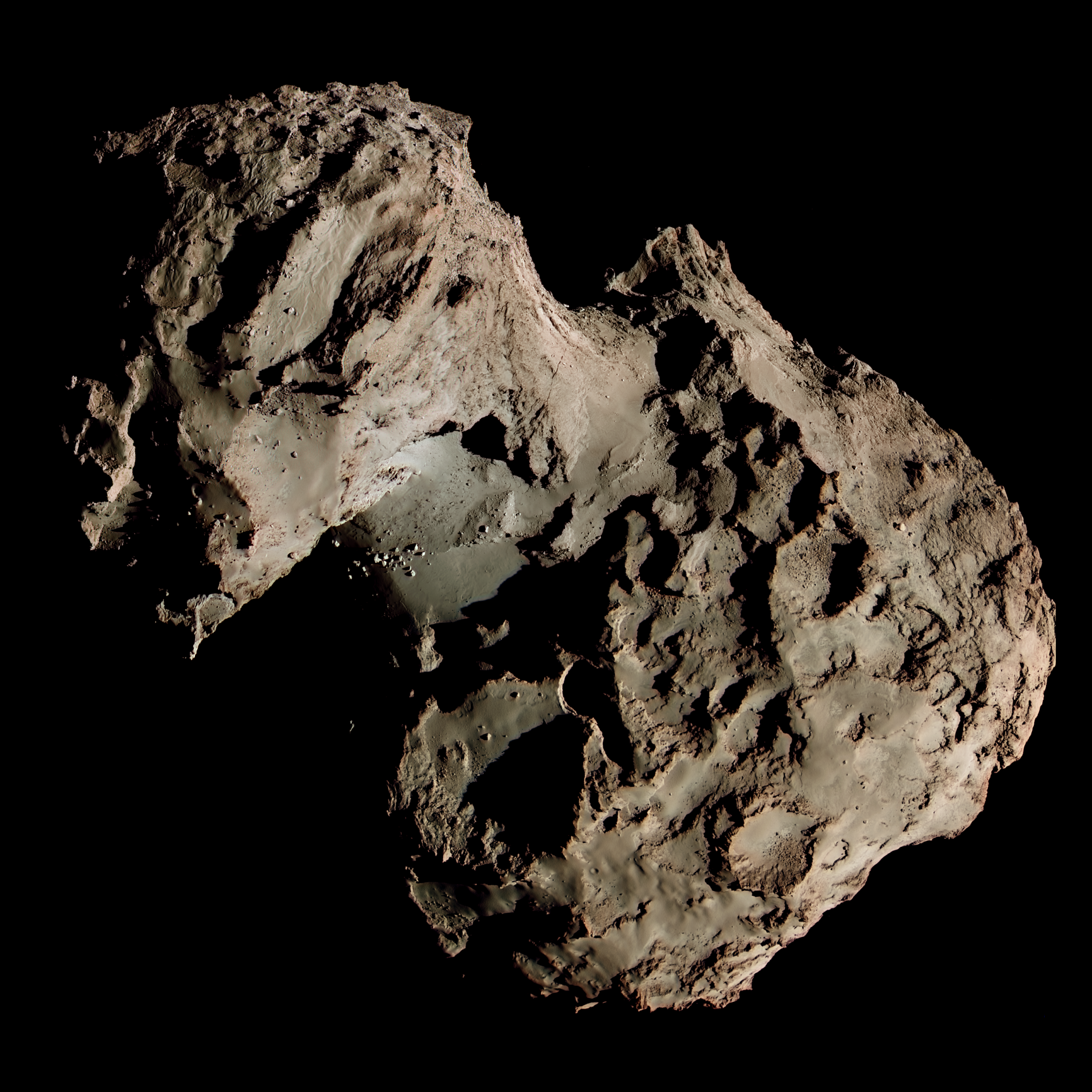
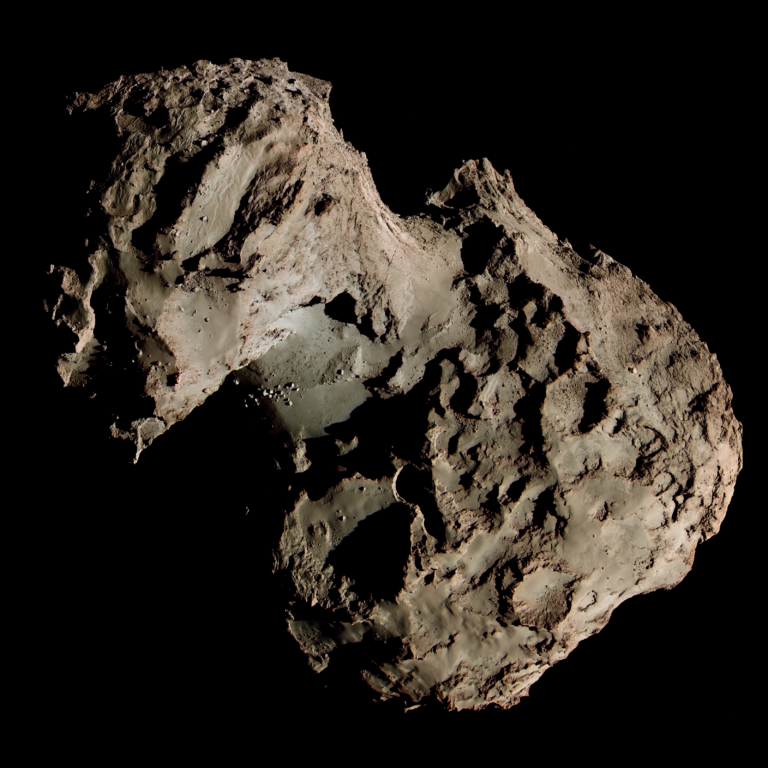
Rosetta imaged Comet 67P/Churyumov-Gerasimenko in March 2015. Credit: ESA/Rosetta/MPS for OSIRIS Team MPS/UPD/LAM/IAA/SSO/INTA/UPM/DASP/IDA – CC BY-SA 4.0/Wikimedia Commons
On March 2, 2004, the Rosetta-Philae spacecraft launched from French Guiana, with the goal of rendezvousing with a comet to learn more about the early solar system. The European Space Agency mission would need 10 years, three gravity assist flybys of Earth, and one gravity assist from Mars to get the spacecraft to its target. But in August 2014, Rosetta successfully slipped into orbit around Comet 67P/Churyumov-Gerasimenko and, a few months later, deployed the Philae lander to its surface. Over the course of over two years and using 21 scientific instruments, the orbiter and lander returned more than 100,000 images and 220 GB of data. On Sept. 30, 2016, the Rosetta mission was completed when the orbiter was sent into a controlled, intentional impact with the comet.