
NASA is accelerating its Artemis program with plans to achieve lunar landings every year thereafter, beginning after 2028, following the addition of a new mission slated for 2027. The agency will standardize vehicle configuration and prioritize consistent testing to establish a sustained presence on the Moon, building upon the forthcoming Artemis II and III missions. Artemis III will now focus on comprehensive system and operational testing in low Earth orbit to prepare for the 2028 landing, including rendezvous and docking procedures with commercial landers from SpaceX and Blue Origin. “NASA must standardize its approach, increase flight rate safely, and execute on the President’s national space policy,” said NASA Administrator Jared Isaacman. “With credible competition from our greatest geopolitical adversary increasing by the day, we need to move faster, eliminate delays, and achieve our objectives.”
Artemis II SLS Helium Issue & VAB Troubleshooting
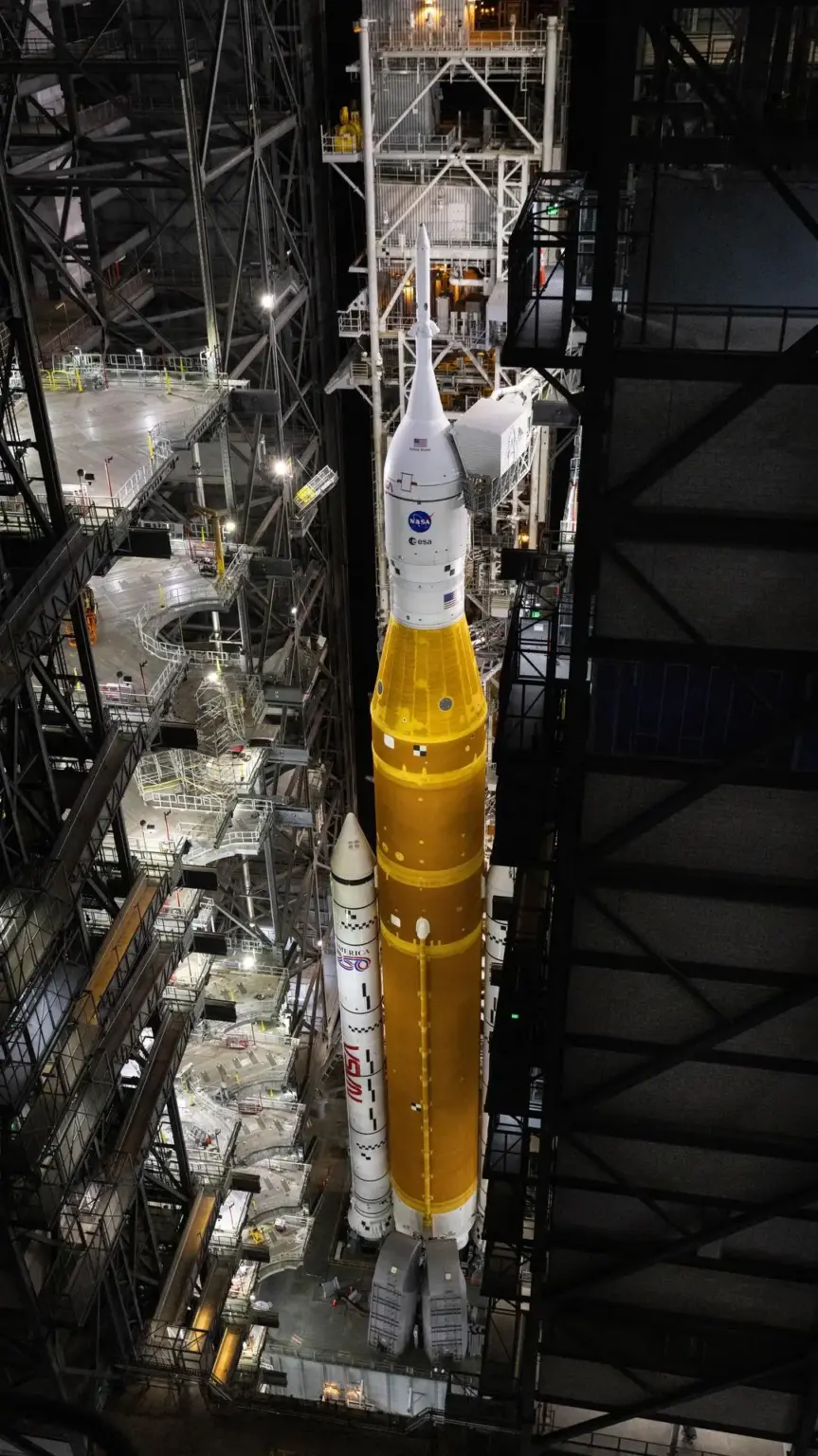
The Artemis II Space Launch System rocket arrived at the Vehicle Assembly Building (VAB) at Kennedy Space Center on February 25, 2026, necessitating troubleshooting of helium flow to the interim cryogenic propulsion stage, a critical upper stage component. This unexpected halt to preparations underscores the complexities inherent in assembling and validating the massive SLS for crewed lunar missions, even after the uncrewed success of Artemis I. Teams immediately initiated work on the helium issue upon the rocket’s arrival, alongside planned battery replacements in the flight termination system and comprehensive range safety testing. This pause for repairs comes as NASA revealed plans to increase the frequency of Artemis missions, aiming for surface landings every year thereafter and a standardized vehicle configuration.
According to NASA Associate Administrator Amit Kshatriya, “After successful completion of the Artemis I flight test, the upcoming Artemis II flight test, and the new, more robust test approach to Artemis III, it is needlessly complicated to alter the configuration of the SLS and Orion stack to undertake subsequent Artemis missions.” The agency intends to leverage learnings from the Apollo program, prioritizing system reliability and crew safety in a phased approach to capability building. The decision to maintain a ‘Block 1’ configuration for the SLS upper stage and pad systems reflects a commitment to minimizing risk and maximizing the value of each flight. Boeing, a key partner in the Artemis program, affirmed its readiness to meet the increased production demands, stating, “The SLS core stage remains the world’s most powerful rocket stage, and the only one that can carry American astronauts directly to the moon and beyond in a single launch.” NASA anticipates the Artemis II launch in the weeks ahead.
2027 Artemis III Mission: Systems Testing & Docking
Following the arrival of the Artemis II SLS rocket and Orion spacecraft inside the Vehicle Assembly Building on February 25th for helium flow troubleshooting, NASA has outlined an expanded role for the 2027 Artemis III mission. Rather than immediately proceeding with a lunar landing attempt, Artemis III will now function as a comprehensive systems test in low Earth orbit, designed to validate operational capabilities crucial for subsequent missions. This revised approach acknowledges the need for a more robust verification process before committing to a surface landing in 2028. A key element of this updated mission profile will be a rendezvous and docking exercise involving the SpaceX and Blue Origin commercial landers, allowing for in-space testing of integrated systems. These tests will encompass life support, communications, and propulsion, alongside evaluations of the new Extravehicular Activity (xEVA) suits, all intended to refine procedures and identify potential issues before lunar surface operations commence. NASA intends to finalize specific objectives for Artemis III following detailed reviews with industry partners, signaling a commitment to a phased and iterative development process. This acceleration of the Artemis program, aiming for surface landings every year thereafter, is underpinned by a workforce directive focused on rebuilding core competencies within the civil servant workforce and fostering closer collaboration with commercial partners. The agency’s revised strategy includes adding a mission in 2027, designed to rigorously test systems and operational capabilities in low Earth orbit before Artemis IV’s 2028 landing.
Boeing is a proud partner to the Artemis mission and our team is honored to contribute to NASA’s vision for American space leadership.
Steve Parker, Boeing Defense, Space & Security president and CEO
Civil Servant Workforce Expansion for Increased Launch Reliability
NASA’s ambition to establish a sustained lunar presence necessitates a significant bolstering of its internal expertise, a strategy now being actively implemented alongside the accelerated Artemis program. Recognizing the critical need for increased reliability and launch frequency, the agency is prioritizing the rebuilding of core competencies within its civil servant workforce, moving towards greater in-house development and collaborative work with industry partners. This shift aims to mitigate risks and ensure a more predictable cadence for future missions, with landings occurring every year thereafter following the 2028 mission.
I’m grateful to Administrator Isaacman for taking this bold step and moving quickly to assure we have the support and resources needed to launch Artemis astronauts to the Moon every year.
Lori Glaze, acting associate administrator for Exploration Systems Development Mission Directorate at NASA Headquarters