
“The entire sequence of Artemis flights needs to represent a step-by-step build-up of capability, with each step bringing us closer to our ability to perform the landing missions. Each step needs to be big enough to make progress, but not so big that we take unnecessary risk given previous learnings,” Kshatriya said in the NASA press release.
With the formal addition of Artemis 4 to the program, will that be the mission that becomes the updated Apollo 11, landing the first humans on the Moon since 1972? Or, will it be the new Apollo 10, instead?
Back in May of 1969, roughly two months before Apollo 11, NASA astronauts Thomas Stafford, John Young, and Eugene Cernan conducted a full dress rehearsal of the Moon flight and landing. During the mission, Stafford and Cernan approached within 14 kilometres of the lunar surface. Their goal was to ensure that all of the spacecraft systems, and the planned procedures for the landing, would work. They then returned to the orbiting Command Module, without touching down, and the trio made the journey back to Earth.
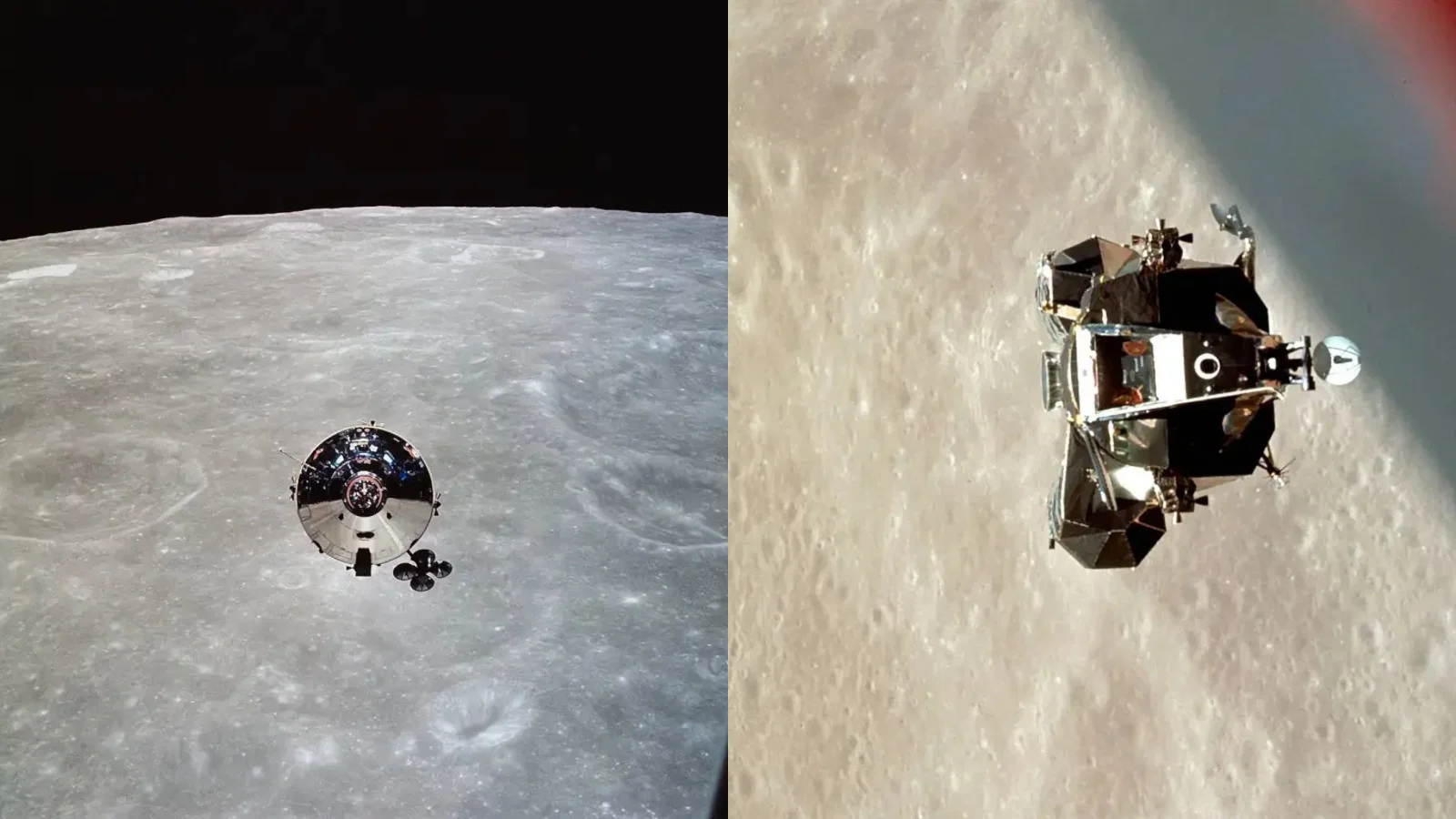
Views of the Apollo 10 Command Module (left) and Lunar Module (right), captured by the crew after the two segments of the spacecraft had separated while in lunar orbit. (NASA)
READ MORE: Artemis 2 may launch soon, shattering a 55-year-old spaceflight record
Given the difficulties we’ve already seen with robotic landing attempts at the lunar south pole, it might become necessary to plan a similar Artemis test flight. It would then fall to subsequent Artemis crews to perform the actual landings.
According to NASA, they will release the updated plans for Artemis 3 in the near future. Mission profiles for Artemis 4 and beyond should follow sometime after. In the meantime, it appears as though we may be seeing a crewed launch to the Moon once every year, at least for the next few years.
“I’m grateful to Administrator Isaacman for taking this bold step and moving quickly to assure we have the support and resources needed to launch Artemis astronauts to the Moon every year,” Lori Glaze, acting associate administrator for Exploration Systems Development Mission Directorate at NASA Headquarters, said in the press release. “Our team is up to the challenge of a successful Artemis II mission, and soon thereafter, enabling a more frequent cadence of Moon missions.”
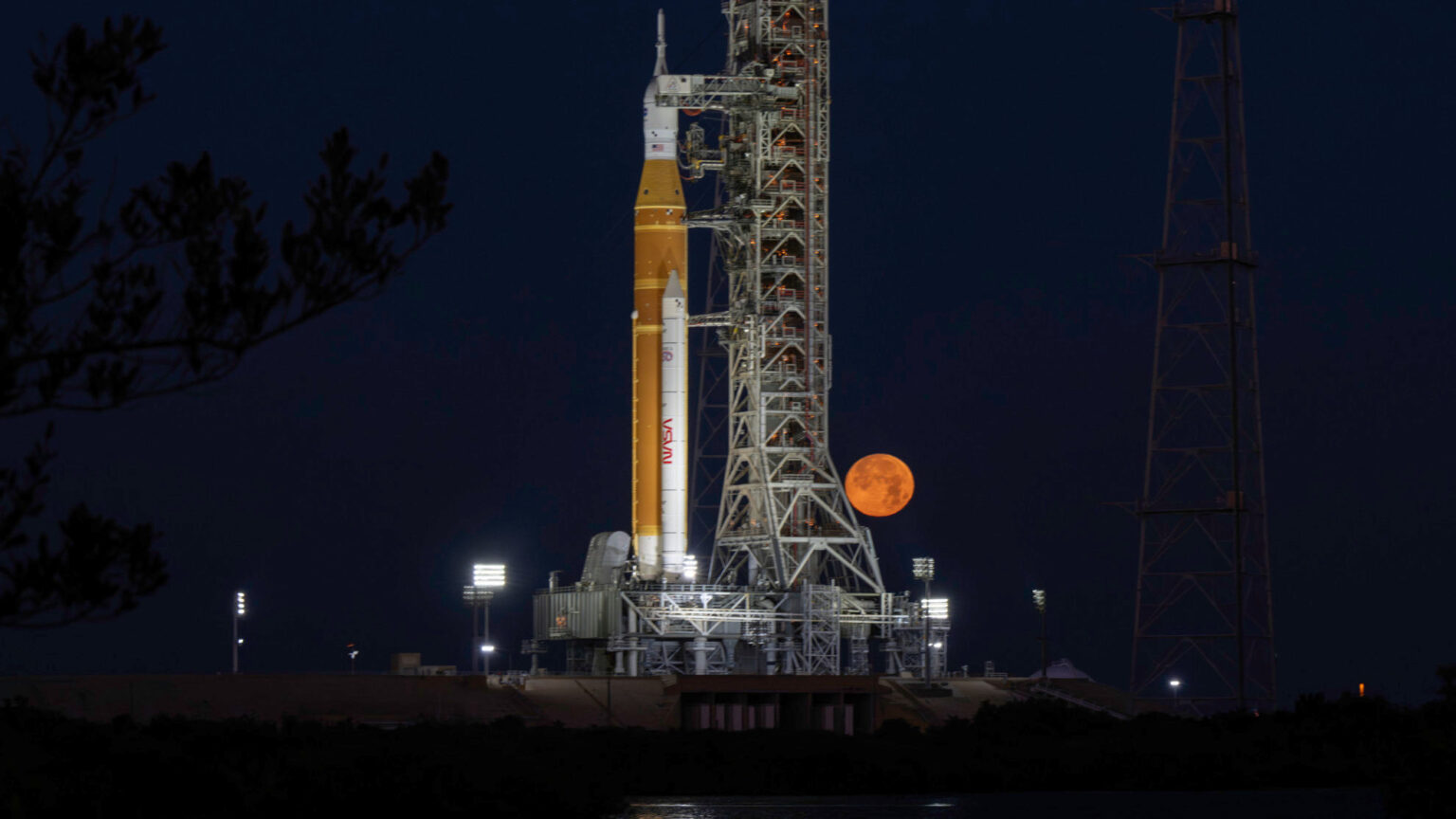
(Thumbnail image shows NASA’s Artemis 2 SLS rocket on the launch pad on February 1, 2026, with the Full Moon setting behind it, courtesy NASA photographer Jim Ross)
Watch below: Total lunar eclipse will turn Moon blood red across Canada Tuesday morning