
Applications
17/02/2026
276 views
2 likes
Faster, more secure connections from space could one day make broadband on planes, ships and even remote roads as easy as turning on a light. The European Space Agency (ESA), Airbus Defence and Space, the Netherlands Organisation for Applied Scientific Research (TNO) and German payload manufacturer TESAT (as subcontractor) successfully connected an aircraft to a geostationary satellite using laser communications, bringing people closer to seamless, high‑speed connections in daily life.
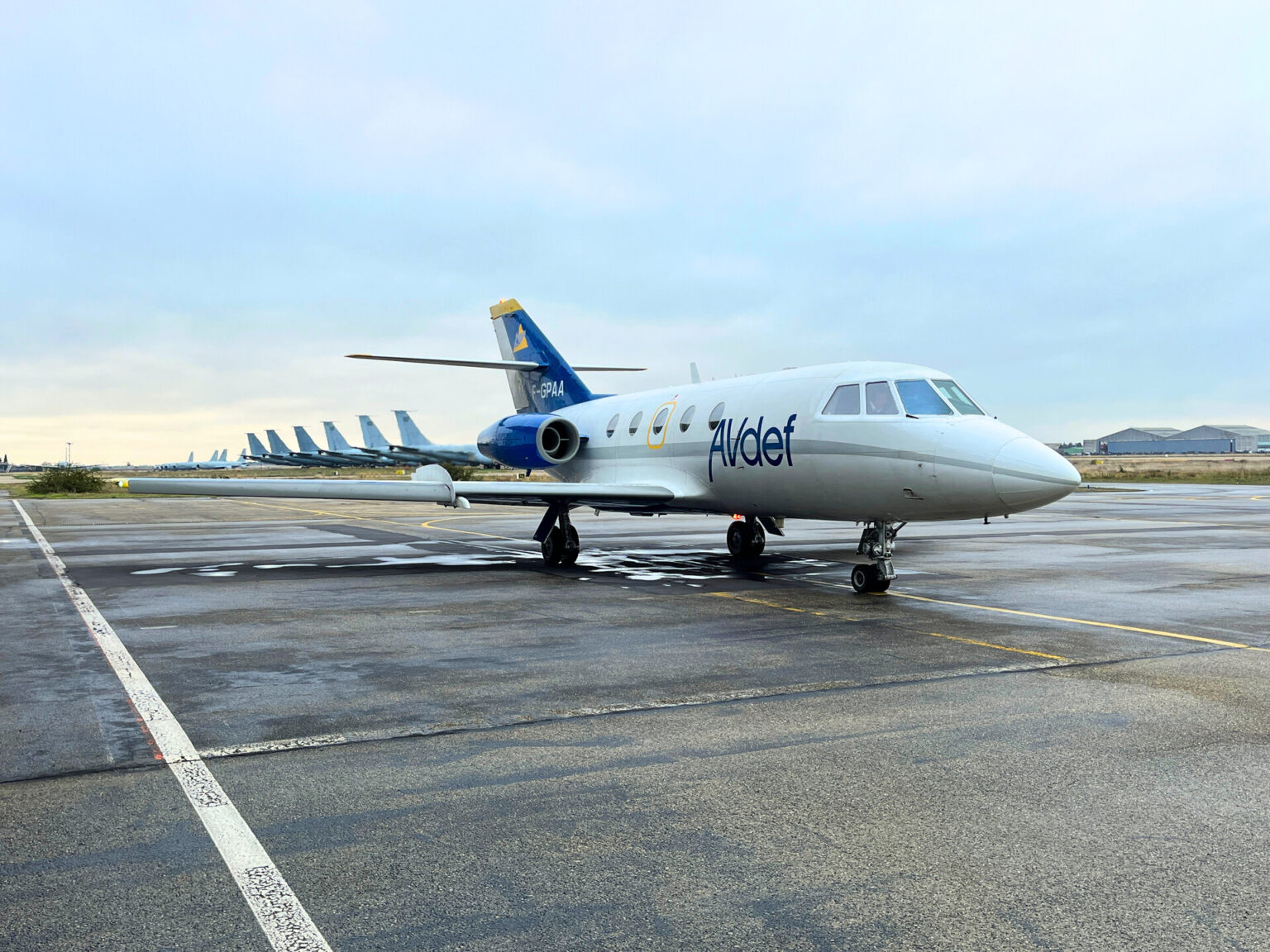
During test flights in Nimes, France, Airbus’ UltraAir laser terminal maintained an error‑free connection while transmitting data at 2,6 gigabits per second for several minutes. At such speeds, downloading an HD film takes only seconds.
Laser communications offer a powerful alternative at a time when space is becoming crowded and radio frequencies increasingly scarce. Because laser beams spread far less than radio waves, they provide more secure links and can carry much more information.
Airbus’ UltraAir laser terminal inside the aircraft
In this demonstration, the aircraft’s terminal stayed connected to the Alphasat TDP‑1 satellite 36 000 km above Earth. Achieving such accuracy with a fast‑moving aircraft, while simultaneously dealing with clouds and atmospheric differences, is a major challenge, yet the system provided reliable connectivity throughout the test.
These developments entail a future where travellers could enjoy reliable, high‑speed internet while flying, and where people on ships or in vehicles crossing remote regions can stay connected without interruption. Europe’s investment in laser‑based communications is laying the foundations for everyday technologies that depend on strong and dependable links.
Airbus’ UltraAir laser terminal seen from the outside of the aircraft
The UltraAir laser terminal was developed through ESA’s programme for Optical and Quantum Communications – ScyLight – which supports research, development and evolution of optical and quantum communication. ScyLight belongs to ESA’s larger Advanced Research in Telecommunications Systems (ARTES) programme. As part of ScyLight, the project has also been supported by the Netherlands Space Office (NSO) and the German Aerospace Agency (DLR).
“This achievement demonstrates how optical communications can transform secure connectivity for our Member States. Particularly by working to resolve the technical challenges that come with establishing fast laser communications, capable of evading interference and detection in demanding conditions,” said Laurent Jaffart, Director of ESA Resilience, Navigation and Connectivity. “Collaboration drives innovation, and this milestone will strategically deliver benefits to future missions, where speed and security of data transmission is paramount. For Europe and beyond.”
“This breakthrough proves that our industry strengthens Europe’s security and its autonomy by leading strategic technology in the field of secure laser communications,” said Kees Buijsrogge, Director of Space at TNO.
“Establishing laser links between moving targets at this distance is technically very challenging. Continuous movements, platform vibrations and atmospheric disturbances require extreme precision,” said François Lombard, Head of Connected Intelligence at Airbus Defence and Space. “This milestone is a further development of our long successful laser communication history; it opens the door to a new era of laser satellite communications to meet defence and commercial needs in the next decades.”
“Optical communications between airborne users and satellite networks, like ESA’s High-thRoughput Optical Network (HydRON), are high on ESA’s agenda,” said Harald Hauschildt, Head of ESA’s Optical and Quantum Communication Office. “High-data rate, low-latency links that connect High-Altitude Pseudo Satellites (HAPS) and aircraft are equally demanded for commercial and resilience driven applications.”
Like