
In a world that feels increasingly unpredictable, secure satellite communications have become essential. They are no longer just technical tools in the background, but a core part of how Europe keeps people safe. From coordinating emergency response and civil protection to supporting military missions and managing borders, EU Member States need reliable and uninterrupted connections to act quickly and effectively. For the European Union, secure communications are not just practical, they are a matter of sovereignty.
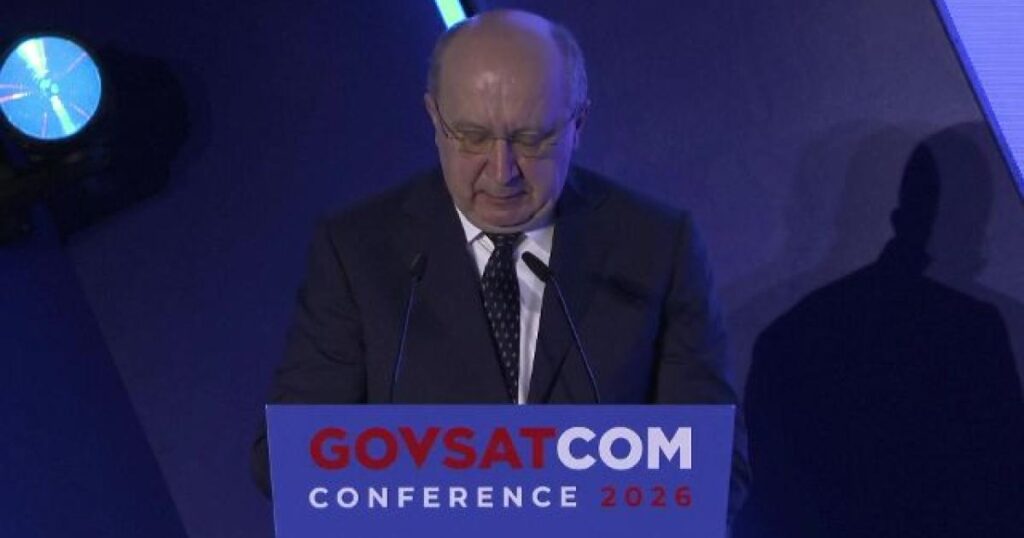
Against this backdrop, the European Commission attended the GOVSATCOM event in Luxembourg, which brought together more than 2000 participants from the public and private sectors to discuss trends and challenges in satellite communications. The message was clear: Europe is moving decisively to strengthen its secure connectivity.
EU GOVSATCOM is now live!
The Commissioner for Defence and Space Andrius Kubilius underscored during his opening remarks that “Without secure connectivity there is no defence. And without you there is no secure connectivity.”
“Last month we started GOVSATCOM operations. That means all Member States can now have access to sovereign satellite communication, military and governmental, secure and encrypted, built in Europe, operated in Europe, under European control. This is only the first step in satellite connectivity,” the Commissioner remarked.
‘’In January, we also reached a key milestone by bringing into use the Ka military frequencies, demonstrating that we are serious and confident about IRIS². I am fully committed to delivering the first simplified version of the IRIS² system by 2029, and the full system soon after, in line with our goal of achieving defence readiness by 2030. On this occasion, I also want to extend a big thank you to our industrial partners who are delivering IRIS2’’ the Commissioner highlighted.
Watch this: IRIS²: Connecting Europe, Connecting the World. Securely.
Towards a European Space Shield
Looking further ahead, the Commissioner explained that the Commission will present a plan for a Space Shield later this year. The initiative aims to pool and share national capabilities alongside dedicated European assets, including GOVSATCOM, the Public Regulated Service of Galileo, and IRIS². Its objective is to establish a coherent framework that enhances resilience, reduces dependencies, and ensures that Europe can act independently when it matters most.
With delivery targeted as early as 2027, the Space Shield will be clearly defined and carefully coordinated with Member States. The EU’s role is to support and complement national defence efforts and not to replace them.
How does GOVSATCOM work?
GOVSATCOM is built on pooling and sharing. It brings together existing satellite communication capacities and services owned by certain Member States, in particular governmental and military satellites. These resources are then made available to authorised European governmental users, including those Member States that do not possess their own satellite capacity and would otherwise depend on non-EU or commercial providers for sensitive communications.
Over time, this pool will be reinforced through the procurement of commercial capacities that meet strict security requirements. The system is also open to authorised third countries, including Norway and Iceland, with Ukraine expected to join at a later stage. EU institutions and agencies, such as the European External Action Service and Frontex, can also use the service.
Access to these resources is provided in a secure and anonymous manner through a dedicated ground infrastructure known as the GOVSATCOM Hub. The Hub’s functions are overseen by the EU Agency for the Space Programme, EUSPA.
In a world where connectivity can determine the outcome of a crisis, secure satellite communications are becoming a cornerstone of Europe’s strategic autonomy. With GOVSATCOM now operational and IRIS² on the horizon, the EU is laying the foundations for a more secure and sovereign future in space.
GOVSATCOM in a nutshell [VIDEO]