
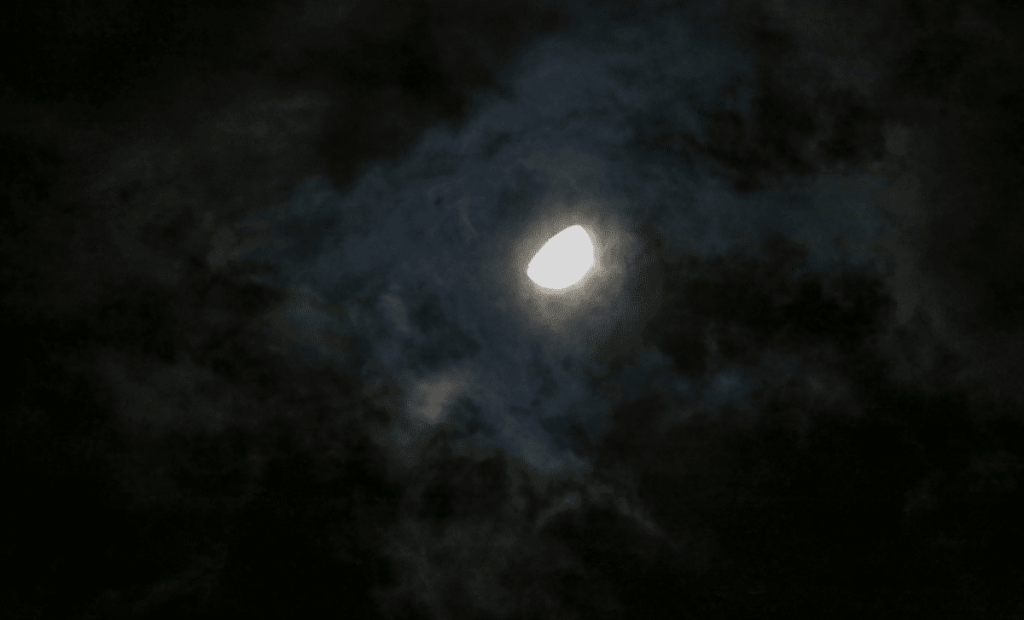
Tonight, the night sky offers a magnificent spectacle for stargazers, especially those keen to witness the moon’s dance through the stars of the Taurus constellation. As shared by Space.com, February 25, 2026, will feature the waxing gibbous moon passing through the horns of Taurus, providing an enchanting sight for observers. The moon will be positioned between two bright stars, Elnath and Zeta Tauri, which form the tips of the celestial bull’s horns, offering a unique opportunity to spot one of the most notable constellations in the winter sky.
The Waxing Gibbous Moon in Taurus
Tonight, the moon will be in its waxing gibbous phase, making it a perfect time to observe its surface features. The moon will be traveling through the constellation Taurus, positioned high in the southern sky. Its location places it between two key stars: Elnath and Zeta Tauri, which mark the tips of the bull’s horns. These stars are not just visually striking; they hold significant cultural and astronomical importance.
The waxing gibbous phase occurs when the moon is between 50% and 100% illuminated, offering a striking view with its bright, nearly full appearance. As the moon moves through the southern sky, it will shine brightly, offering an incredible sight for those in both the northern and southern hemispheres. This phase of the moon is also a great time to spot surface features, including craters and mountain ranges, thanks to the sunlight casting long shadows across the lunar surface.
As you gaze up at the sky, it’s hard to miss the moon’s presence as it hovers between the two prominent stars of Taurus. This makes it an ideal moment for stargazers to familiarize themselves with this section of the sky.
A Cosmic Bull: The Significance of Taurus
According to Space.com, Taurus, the Bull, is one of the oldest known constellations, dating back to ancient times. In mythology, the bull is often associated with strength, power, and fertility, appearing in various cultures’ tales across the ages. For example, in Greek mythology, Taurus is linked to the story of Zeus, who transformed into a bull to carry off Europa. This constellation is also one of the zodiac signs, symbolizing people born between April 20 and May 20.
What makes Taurus even more fascinating is the number of interesting celestial objects it hosts, including the Pleiades star cluster and Aldebaran. The Pleiades, also known as the “Seven Sisters,” is a tight grouping of stars that is easily visible to the naked eye. Aldebaran, a red giant star, is the eye of the bull, and its vibrant color contrasts beautifully with the surrounding stars of the constellation.
On the evening of February 25, 2026, the moon will shine near these key features, drawing attention to the grandeur of the Taurus constellation. The moon’s path through this stellar region will make it an even more special sight, linking the celestial bull to one of the brightest lunar phases.
Aldebaran: The Eye of the Bull
Aldebaran is one of the most prominent stars in the night sky and is often referred to as the “eye of the bull” due to its location within the Taurus constellation. It is a red giant star, significantly larger and brighter than our Sun, yet it is only around 65 light-years away from Earth. Although Aldebaran is classified as an orange giant, its reddish hue makes it stand out among other stars in the night sky.
Tonight, as the moon makes its way through Taurus, it will sit just below Aldebaran, creating a striking visual contrast. The moon’s bright light will wash out some of the fainter stars around Aldebaran, but this will only make the “eye of the bull” appear even more luminous. Stargazers should take the opportunity to appreciate the beauty of this star, which has guided astronomers and skywatchers for millennia.
Not only is Aldebaran visually stunning, but it also plays an important role in celestial navigation and astronomy. Its position in the sky has made it a valuable reference point for early astronomers seeking to chart the stars and understand the structure of our galaxy.
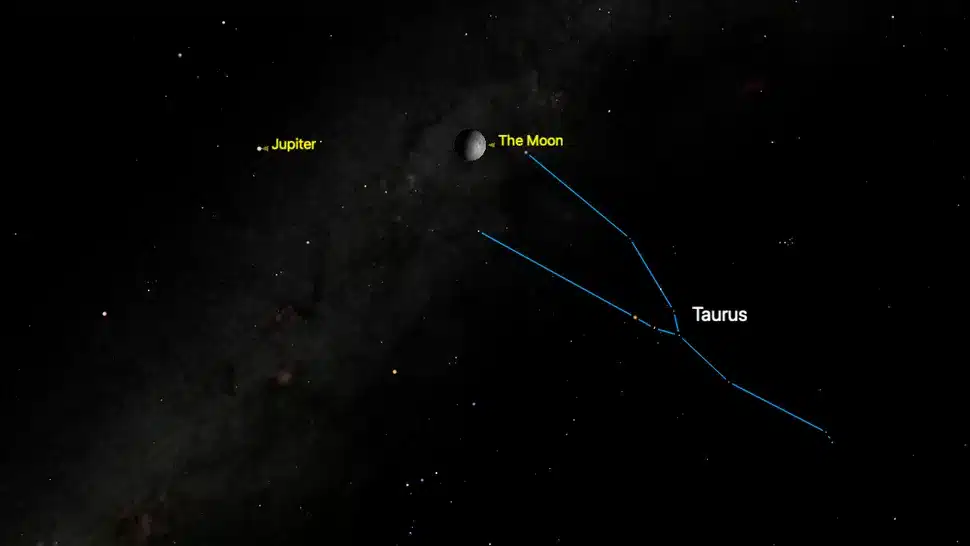 See the moon near Aldebaran on Feb. 25. (Image credit: Starry Night.)
The Pleiades Star Cluster: A Dazzling Sight
The Pleiades, also known as the Seven Sisters, is another highlight of tonight’s sky. This open star cluster is one of the most easily recognizable groups of stars, and it holds significant importance in many cultures. The Pleiades is composed of hundreds of stars, but only six or seven are visible to the naked eye. The cluster lies approximately 444 light-years away from Earth and is one of the closest star groups to our planet.
The moon will be positioned to the west of the Pleiades, creating a beautiful celestial alignment. The bright light of the waxing gibbous moon will overshadow some of the fainter stars in the cluster, but the main stars of the Pleiades should still be visible, especially to those with binoculars or a telescope. This event offers an excellent opportunity for stargazers to enjoy the Pleiades in a way they may not often get to see it, framed by the moon and the stars of Taurus.