
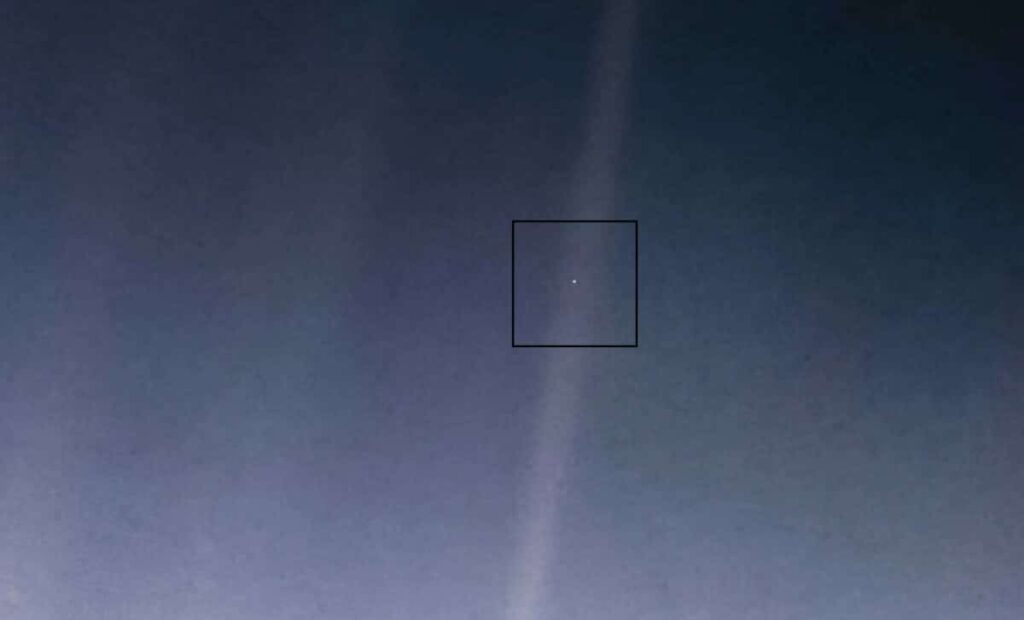
Using the historic Dwingeloo Radio Observatory, the team managed to capture one of the faintest transmissions ever recorded from a human-made object in deep space.
Launched in 1977, the Voyager probes have operated for nearly half a century, completing flybys of major planetary bodies before heading toward interstellar space. Voyager 1, the first to launch, is now about 171 astronomical units from Earth, with one astronomical unit defined as the average distance between Earth and the Sun.
On November 13 this year, Voyager 1 is expected to reach a new milestone: one full light day from Earth. Once that threshold is crossed, any communication with the spacecraft will require at least a full day for a signal to travel one way. The distance alone underscores the scale of the recent amateur detection.
A Signal Barely Stronger Than Silence
According to NASA, Voyager’s signal reaches Earth at a power level of just 10 exponent -16 watts, roughly one part in 10 quadrillion. The agency notes that a modern digital watch operates at a power level 20 billion times greater than the power striking a Deep Space Network antenna from Voyager, as reported by IFLScience.
Despite those odds, the Amateur Radio in Space (AMSAT) group used the Dwingeloo Radio Telescope in the northeastern Netherlands to detect the spacecraft’s carrier signal. The group had previously picked up Voyager 1 in 2006, when it was 14.7 billion kilometers away. Since then, the spacecraft has traveled billions of kilometers farther, making the signal significantly weaker.
“In all these years, Voyager has traveled a lot of distance,” Thomas Telkamp, an active volunteer at the Dwingeloo Radio Telescope, said at the AMSAT symposium. “So the signal is really weaker at this point than it was years ago.”
Engineering Around the Limits of a Historic Telescope
The Dwingeloo telescope was not originally designed to receive Voyager’s 8.4 GHz telemetry. According to the C.A. Muller Radio Astronomy Station (CAMRAS), a new antenna had to be mounted because the dish was built for lower frequencies.
Voyager 1 said hello from 170 AU, yesterday
by
u/Busy_Yesterday9455 in
spaceporn
At higher frequencies, the mesh surface of the dish becomes less reflective, making the reception of faint signals even more difficult. That technical constraint added another layer of complexity to the effort.
To isolate the extremely weak carrier signal from background noise, the team relied on orbital predictions of Voyager 1. According to CAMRAS, they corrected for the Doppler shift caused by the motion of both Earth and Voyager 1. Once adjusted, the signal became visible live in the telescope’s observation room, and later analysis confirmed that the Doppler shift matched that of Voyager 1.
An Aging Spacecraft Still Answering From Deep Space
While Voyager 1 remains operational, the spacecraft has shown signs of age. A diminishing fuel supply has forced NASA to shut down some scientific instruments to keep core systems running. There have also been technical glitches, including a period when Voyager 1 transmitted a garbled pattern of zeros and ones due to corrupted memory.
In another incident, the spacecraft shut down its main transmitter entirely. That issue was resolved in October 2024 when engineers switched temporarily to a backup transmitter that had not been used since 1981. Since then, communication with the spacecraft has been steady, with NASA’s Deep Space Network continuing to receive data from both Voyager probes.
Even so, the mission is gradually winding down. With fuel supplies running low, Voyager 1 is expected to power down permanently in the early 2030s. For now, though, more than 25 billion kilometers away, it is still whispering , and both NASA and a handful of determined amateurs are still listening.