
The comet was first spotted by amateur astronomers Alain Maury, Georges Attard, Daniel Parrott, and Florian Signoret, whose initials form the “MAPS” acronym. What makes this discovery extraordinary is the distance at which it was first detected: 2.056 astronomical units (over 300 million kilometers) from the Sun. This is a record-breaking distance for a sungrazing comet and hints that the object possesses a massive nucleus, estimated at approximately 2.4 kilometers wide.C/2026 A1: Perilous Journey of the Kreutz FamilyC/2026 A1 is a member of the Kreutz sungrazing family, a group of comets believed to be fragments of a massive parent body over 100 km wide that shattered centuries ago. Unlike standard comets, these objects dive deep into the solar atmosphere. On April 4–5, 2026, MAPS will reach its perihelion, skimming a mere 118,681 miles (191,000 kilometers) above the Sun’s surface. This extreme proximity causes intense solar heat to sublimate ices into gas, creating a brilliant glow, but it also risks shredding the comet apart entirely.
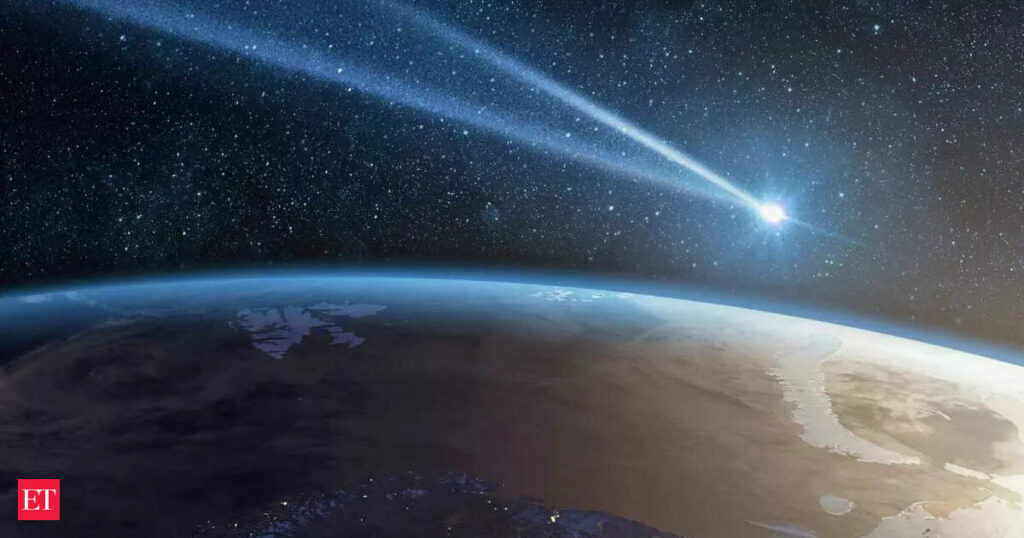
Sungrazing comet: Potential for a Rare Daylight SpectacleIf the comet manages to hold together during its close encounter, it could brighten so dramatically that it becomes visible during the daytime with the naked eye. Observers may witness a unique turquoise tail formed by exotic gases. Astronomers compare its potential to the famous C/2011 W3 (Lovejoy), which survived a similar passage in 2011 and became as bright as the planet Venus. Even if it fragments, solar observatories like SOHO are expected to capture spectacular imagery of its fiery dive through the corona.
Comet C/2026 A1: Viewing Tips for Observers in IndiaFor skywatchers in India, the best chances for a glimpse will occur in early April, specifically in the southern regions. The comet will likely appear low in the southwest sky approximately 30 to 45 minutes after sunset. While it may be visible to the naked eye, using binoculars or small telescopes is recommended to help cut through the solar glare near the horizon. Observers in northern India may find viewing more challenging due to potential horizon obstructions and clutter.
Add A Comment