
Applications
24/02/2026
18 views
0 likes
From adding timestamps to banking transactions to mapping the best route to a destination, satellite navigation plays a significant role in daily life. At the same time, attempts to interfere with and fake navigation signals are increasing. For the last seven months, a new verification service for Galileo has mitigated the threat of spoofing in the Open Service by confirming that the satellite navigation data used for positioning originated in the Galileo system.
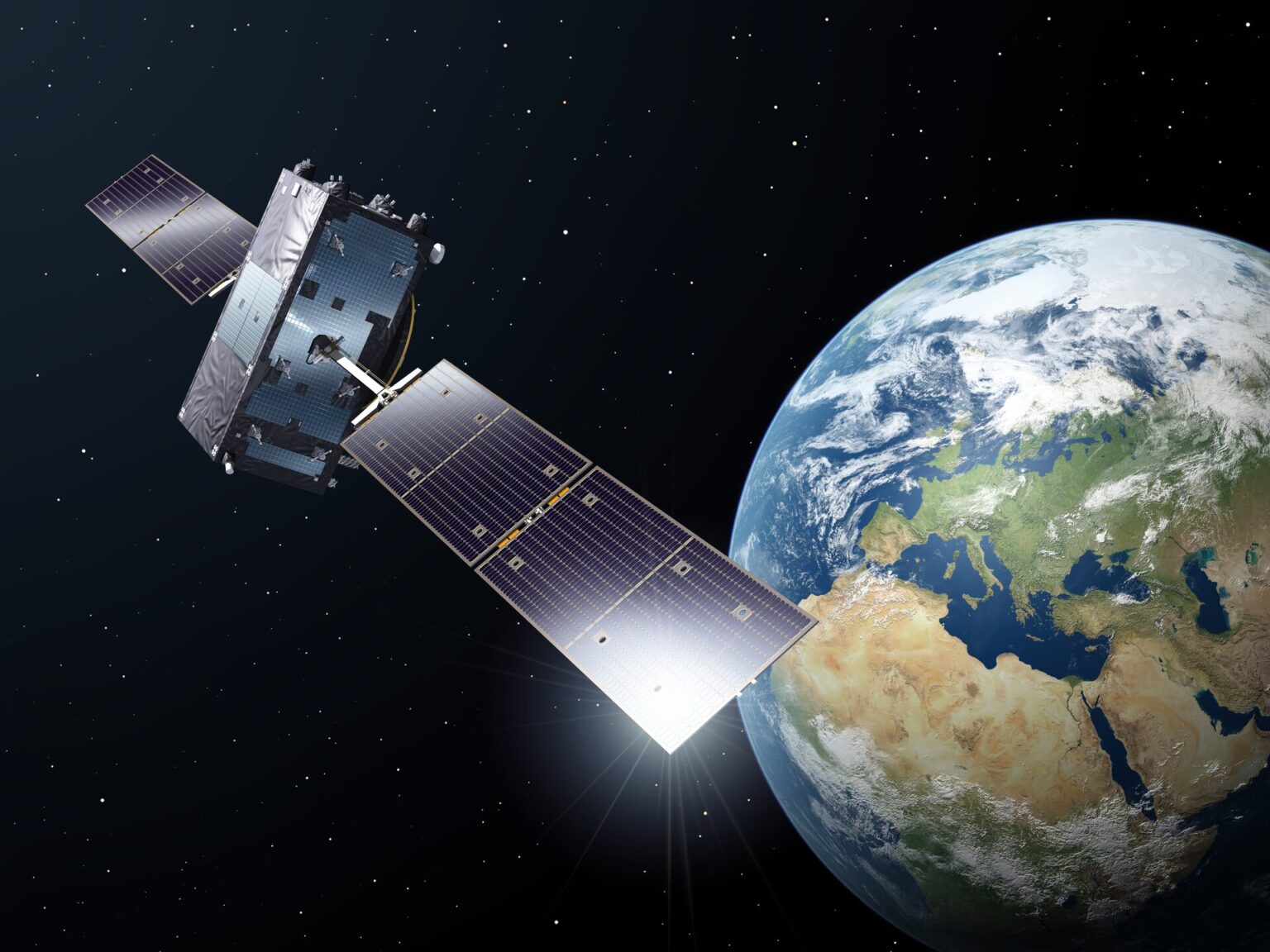
Galileo satellites are constantly sending signals with highly precise information about timing, satellite status and corrections. This information, transmitted openly and free of charge, is picked up by receivers to calculate their position.
Satellite position and time are always contaminated with errors from natural sources such as electrically charged particles in the ionosphere, which can interfere with or delay signals. Satellite systems are designed to account for these errors. However, errors introduced by humans to deceive receivers, known as spoofing, are more difficult to combat.
In spoofing attacks, malicious parties can change the signal or replace the navigation message without the user detecting the change. Falsified position, speed and direction can cause significant disruption and pose a real threat to satellite navigation users. Protecting satellite signals from spoofing is far from simple, but the newest Galileo service takes a huge step towards this goal.
The Open Service Navigation Message Authentication (OSNMA) mitigates the threat of spoofing by adding an authenticity stamp to the real signal from the satellite. The stamp acts as a digital signature that ensures the satellite navigation data obtained by a receiver are coming from the Galileo system. This is critical for applications where safety and trustworthiness are a priority, such as transport.
With close to 100% coverage around the world, OSNMA has a similar availability as Galileo’s Open Service. The authentication service is available to most receivers and can serve many applications, from consumer to professional, as all are susceptible to spoofing.
OSNMA is provided to users free of charge. Receivers that already process the navigation message from the Galileo Open Service can be upgraded to interpret the OSNMA information which is now embedded in the message. For many receivers, the upgrades for OSNMA processing only require software changes.
OSNMA Initial Service was declared by the European Commission (EC) on 24 July 2025 and the Service Definition Document was published by the EU Space Programme Agency (EUSPA) the same day.
Since OSNMA was declared operational in July, ESA has been continuously monitoring it with the Galileo Second Generation System Testbed. Thanks to a worldwide network of experimental sensor stations, the testbed has real-time access to OSNMA broadcasted by the Galileo satellites.
The testbed operations team can continuously verify the authentication of every Galileo satellite and confirm the correctness of the cryptographic material publicly broadcast by the satellites. Since the service declaration of OSNMA, this newcomer to the Galileo family has benefitted most of the navigation user communities in line with expectations.
A collective European effort
OSNMA is the result of over a decade of dedicated effort aimed at positioning Galileo at the forefront of satellite navigation.
It reflects the strength of collaboration among European institutions and industry. The implementation involves EUSPA, responsible for OSNMA operations via the European GNSS Service Centre in Torrejón, Madrid; the European Space Agency (ESA), which manages the Galileo core infrastructure; and numerous key industrial partners from across the European aerospace sector.
The European Commission’s Directorate-General for Defence Industry and Space (DG DEFIS) is responsible for overall Galileo Programme Management, including OSNMA.
The making of OSNMA
Before OSNMA was declared fit for service, it was extensively tested in a campaign led by EUSPA. During a public observation phase, the signal was broadcast openly for anyone to test. This allowed receiver manufacturers to validate their devices.
ESA also conducted extensive testing in its laboratory facilities to confirm the service performed well and could help protect against maliciously falsified navigation messages. But nothing is more valuable than tests in the real world.
The annual Norwegian Jammertest campaign provides a unique opportunity to test receiver equipment and services against threats like spoofing and jamming in a live, outdoor environment.
ESA attended previous editions of this test campaign with testbed vehicles to evaluate OSNMA’s performance in challenging environments. Receivers implementing OSNMA were able to successfully distinguish the authentic navigation message originating from the Galileo system from a maliciously modified navigation message.
Evolutions on the horizon
In addition to OSNMA, the Galileo Programme is exploring other solutions to mitigate the threat of spoofing in the future.
ESA, in partnership with the European Commission (EC) and EUSPA, is working to implement the Signal Authentication Service for Galileo First Generation, which will complement OSNMA and further increase the security of positioning.
Even more, Galileo Second Generation satellites will feature Signal Range Authentication for autonomous and connected devices in all relevant Galileo frequency bands.
Benefits across sectors
OSNMA will serve many applications that are sensitive to spoofing, including search and rescue, agriculture and the financial and transportation sectors.
The use of Galileo OSNMA is already mandated in Europe for the use in Smart Tachographs as of December 2025. The new Galileo service contributes to improved safety on European roads and will help authorities to ensure compliance of truck drivers with driving time and break regulations by making it more difficult to spoof the navigation signal.
Arctic practice rescue guided by emergency beacon
On top of safety-critical applications, OSNMA will increase the security of the obtained time by discarding spoofing signals. This will benefit telecommunication operators as it will lead to more reliable and secure time synchronisation.
A series of receivers with OSNMA implementation are already available on the market, covering applications ranging from agriculture, smart tachograph, surveying, timing to automotive and more.
Secure satellite navigation
The EC, EUSPA and ESA began exploring the concept for OSNMA in 2014. Design and development followed shortly after, culminating in the first authenticated position fix in 2021.
This authentication service is the first of its kind for any satellite navigation system worldwide. It represents an enormous leap forward in the race against spoofing in this interconnected world that increasingly relies on satellite navigation. More information on implementing OSNMA in a receiver is available on the European GNSS Service Centre website.
About Galileo
Galileo is currently the world’s most precise satellite navigation system, serving billions of smartphone users around the globe since entering Open Service in 2016. All smartphones sold in the European Single Market are now guaranteed Galileo-enabled. In addition, Galileo is making a difference across the fields of rail, maritime, agriculture, financial timing services and rescue operations.
The Galileo programme is managed and funded by the European Commission under the EU Space programme. Since its inception, ESA leads the design, development and qualification of the space and ground systems. ESA is also entrusted with research and development activities for the future of Galileo within the EU programme Horizon Europe. The EU Agency for the Space Programme (EUSPA) acts as the service provider, bringing the satellites into service and overseeing their operation and the market and application needs.
For more info about Galileo: https://www.usegalileo.eu/EN/
Like