
If you’ve heard news of a planet alignment visible at the end of February 2026, you’re not alone.
The hype around this planetary parade is building, and it’s not hard to understand why.
The prospect of seeing six planets in the evening sky at once is an exciting prospect.
And it’s true: Mercury, Venus, Jupiter, Saturn, Uranus and Neptune will all be above the horizon at the same time, late February 2026, with 28 February being touted as the best time to see the planet alignment.
 Credit: sripfoto / Getty Images
But just how easy or difficult will it be to spot all six planets at the same time, and what are you really likely to see?
Seasoned photographer Giovanni Passalacqua has given us a hint of what some of the planets in the February 2026 planet alignment will look like.
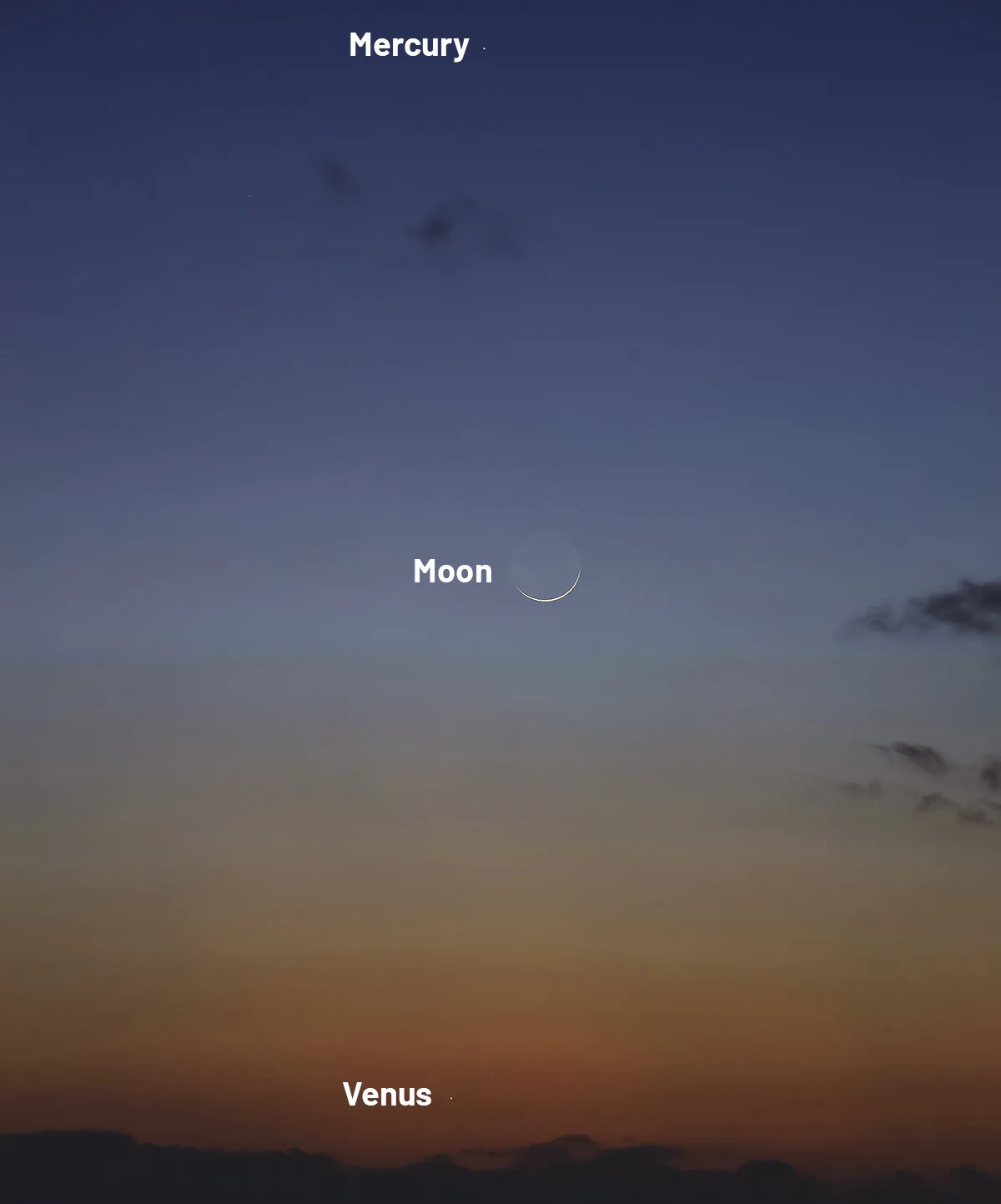 Mercury, the Moon and Venus at sunset, captured by Giovanni Passalacqua, Sicily, Italy, 18 February 2026, 18:27 local time. Equipment: Canon EOS R DSLR camera, Sigma 200mm lens, Manfrotto tripod. Exposure: ISO 100, f/5.6, 1.3s. Software: Photoshop
Six-planet alignment at a glance
There are a few key things to note about this six-planet alignment.
Let’s start with the good news. Of the six visible worlds, Jupiter will be the easiest planet to see.
It’s spectacularly bright, as of late February 2026, and you can find it in the southern part of the sky after dark, not far from Orion constellation.
Once you find Orion’s distinctive shape in the sky, keep looking up and turn to your left.
You’ll see a bright star beside two dimmer stars. The brightest ‘star’ is the planet Jupiter and the two dimmer stars are Castor and Pollux in Gemini.
Uranus is also high in the sky after dark, but you’ll need binoculars or a telescope to see it. It’s below the Pleiades star cluster, not far from the Orion constellation.
Mercury, Venus, Saturn and especially Neptune will be harder to see during the planet alignment, and will require a bit more planning.
The problem is that they’re low down in the west just after sunset. That makes things tricky for two reasons.
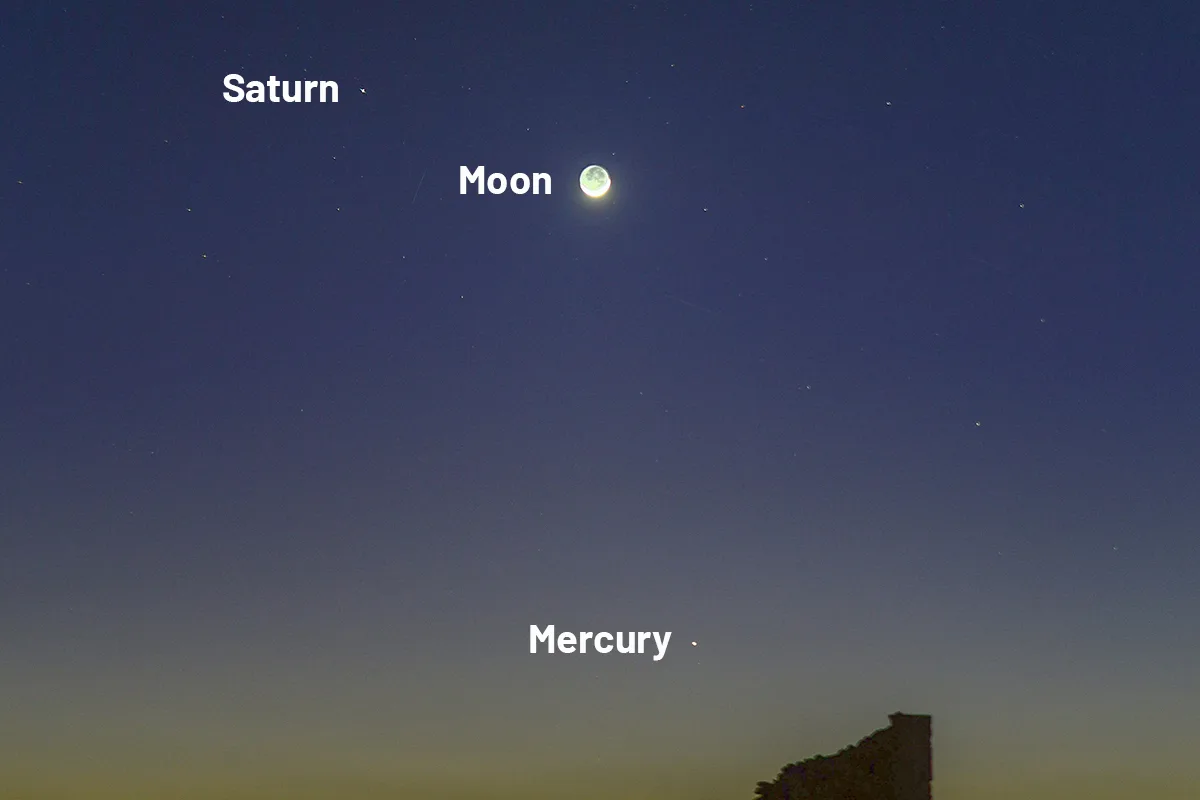 Saturn the Moon and Mercury captured by Giovanni Passalacqua over Punta Secca, Sicily, Italy, 19 February 2026, 18:48 local time. Equipment: Canon EOS R DSLR camera, Sigma 35mm lens, Manfrotto tripod. Exposure: ISO 100, f/1.8, 4s
The first is that you’ll need a clear, flat western horizon to see Mercury, Venus and Saturn as soon as the Sun sets, but they will at least be visible with the naked eye.
However – and this is the second reason – you shouldn’t try to observe them until the Sun has actually set below the horizon, as viewing the Sun with the naked eye could damage your eyesight.
Neptune is a different story altogether. It can only be seen from Earth with binoculars or a telescope, and we wouldn’t recommend attempting to do this so soon after sunset, as catching sunlight through binoculars or a telescope could seriously damage your eyesight.
And as Giovanni’s images here show, the planets really are very low down in the sky, just after sunset.
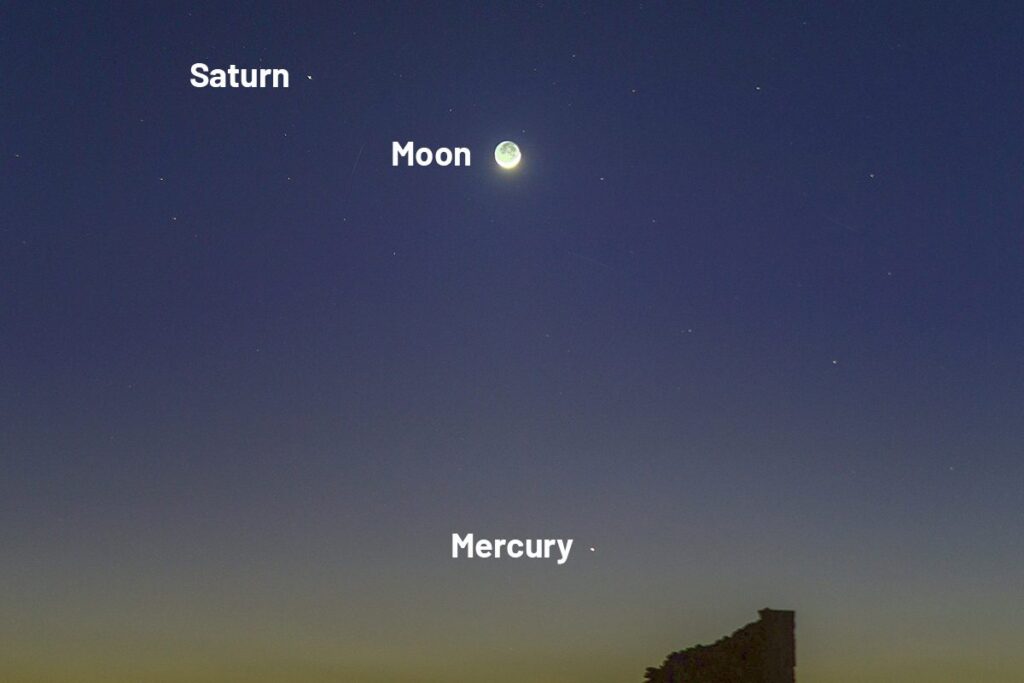
The Sicily-based photographer managed to capture a view of Mercury, the Moon and Venus on 18 February, following it with a view of Saturn, the Moon and Mercury on 19 February.
This will be a tricky planet alignment to see, but then again, the planet alignment of February 2025 was tricky too, and some of the images we saw of that event were indeed spectacular.
You can see Giovanni’s full, unannotated images in the slideshow below.
They offer a great visual reference as to how some of the February 2026 planet alignment will appear, but also a beautiful view of the worlds of the Solar System, as they appear from our home planet.
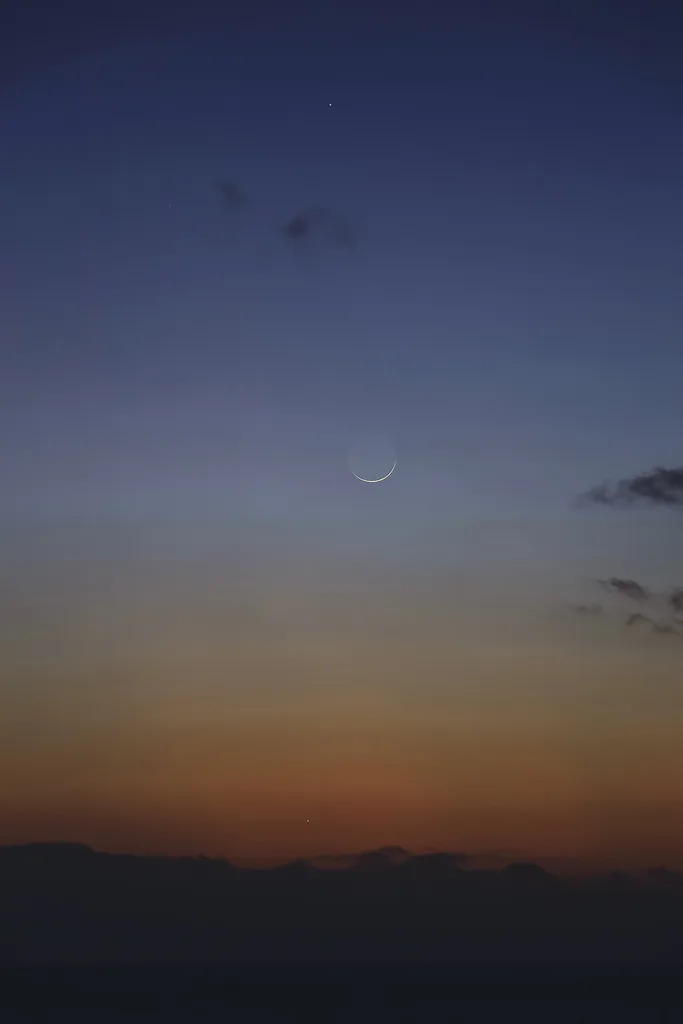 Mercury, the Moon and Venus at sunset, captured by Giovanni Passalacqua, Sicily, Italy, 18 February 2026, 18:27 local time. Equipment: Canon EOS R DSLR camera, Sigma 200mm lens, Manfrotto tripod. Exposure: ISO 100, f/5.6, 1.3s. Software: Photoshop
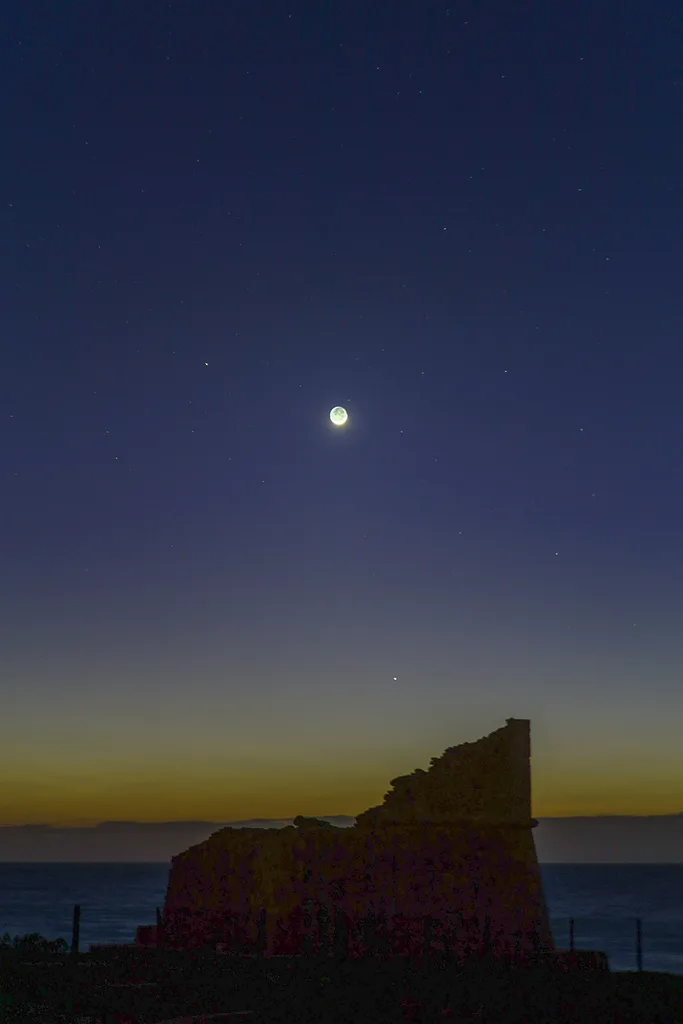 Saturn, the Moon and Mercury captured by Giovanni Passalacqua over Punta Secca, Sicily, Italy, 19 February 2026, 18:48 local time. Equipment: Canon EOS R DSLR camera, Sigma 35mm lens, Manfrotto tripod. Exposure: ISO 100, f/1.8, 4s
If you do manage to observe or photograph the planets during the February 2026 alignment, share your observations and images with us by emailing contactus@skyatnightmagzine.com