
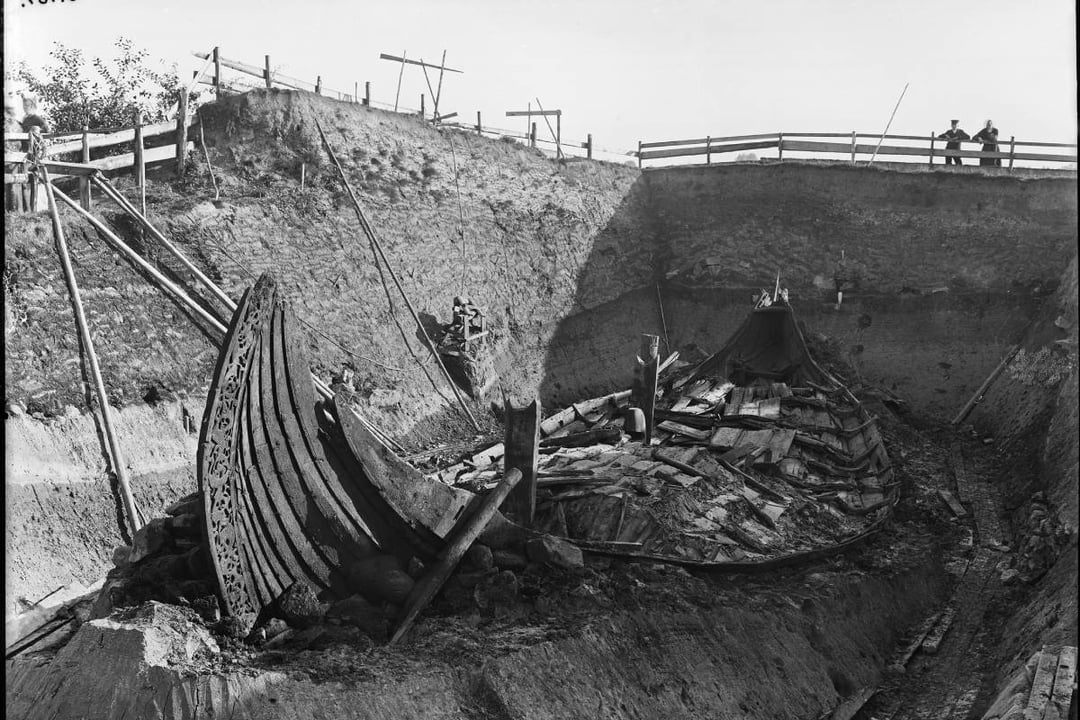
It was in 1904 that the archaeologists finished their excavation of the Oseberg burial mound. Starting with the discovery of the Oseberg ship, the archaeologists later found out the ship was a part of the burial mound.
The Oseberg dated back to the 9th century which was during the glory of the Viking Age. There were signs that the Oseberg ship was looted and the tomb robbers attempted to break through the prows and the roofs of the burial site. They must have stolen all of the precious items.
But the excavation yielded incredible artifacts, especially the Viking ship which we know as the Oseberg. The skeletal remains of two women inside the Oseberg burial site suggested the high social rank of the Viking women who deserved an extremely luxurious funeral. Other items left inside raised questions, for example, the Oseberg tapestry of the "horned helmet".
Before this, the standard view, especially in academia, was that the early medieval Scandinavians (and surrounding regions) were little more than thugs with axes, rapacious and greedy barbarians who pillaged and plundered everywhere from the British Isles to the Black Sea.
by PristineHearing5955
8 Comments
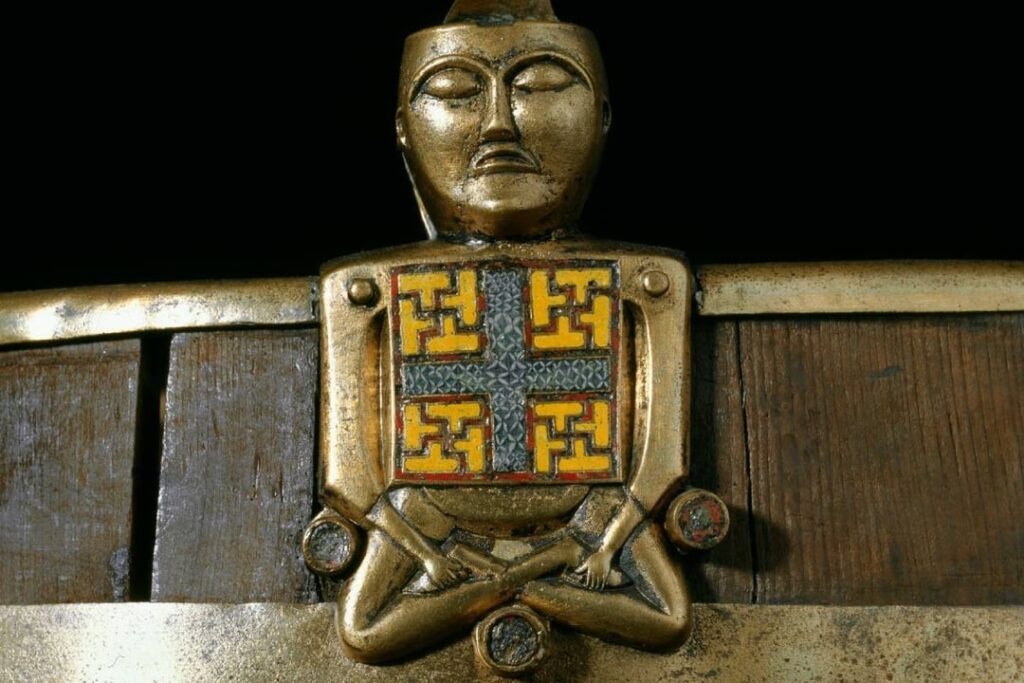
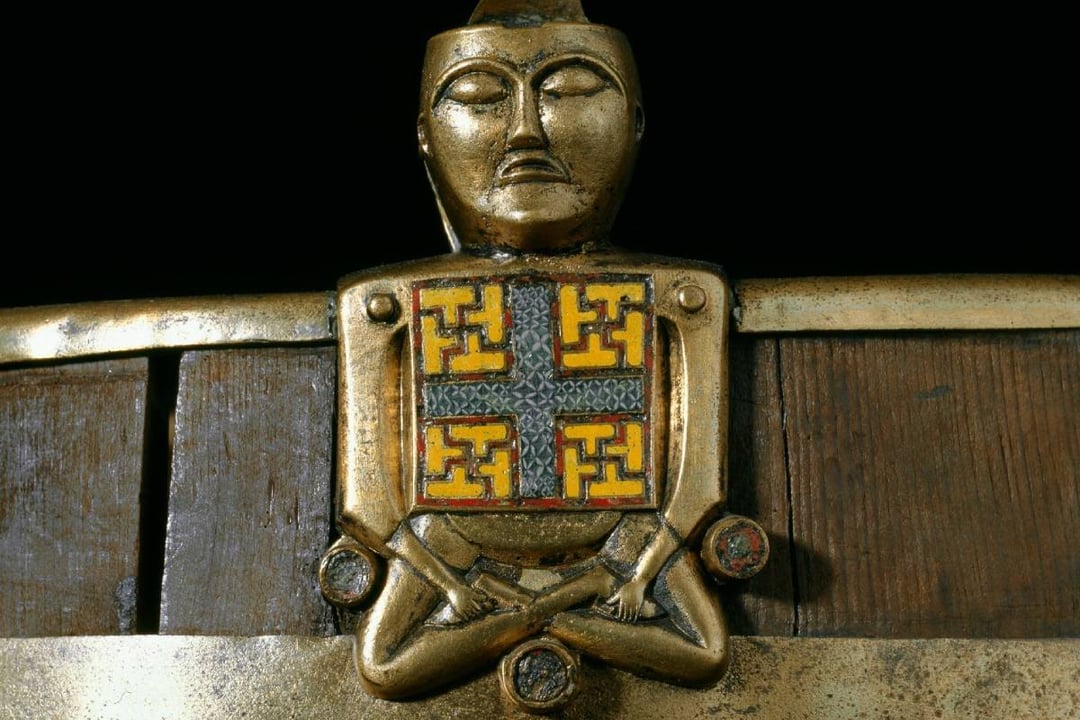
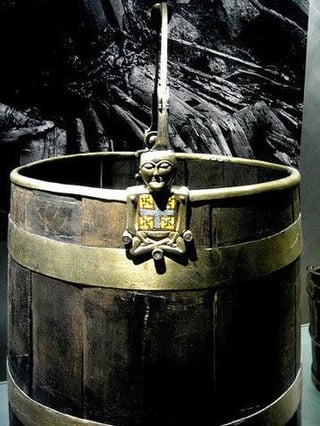
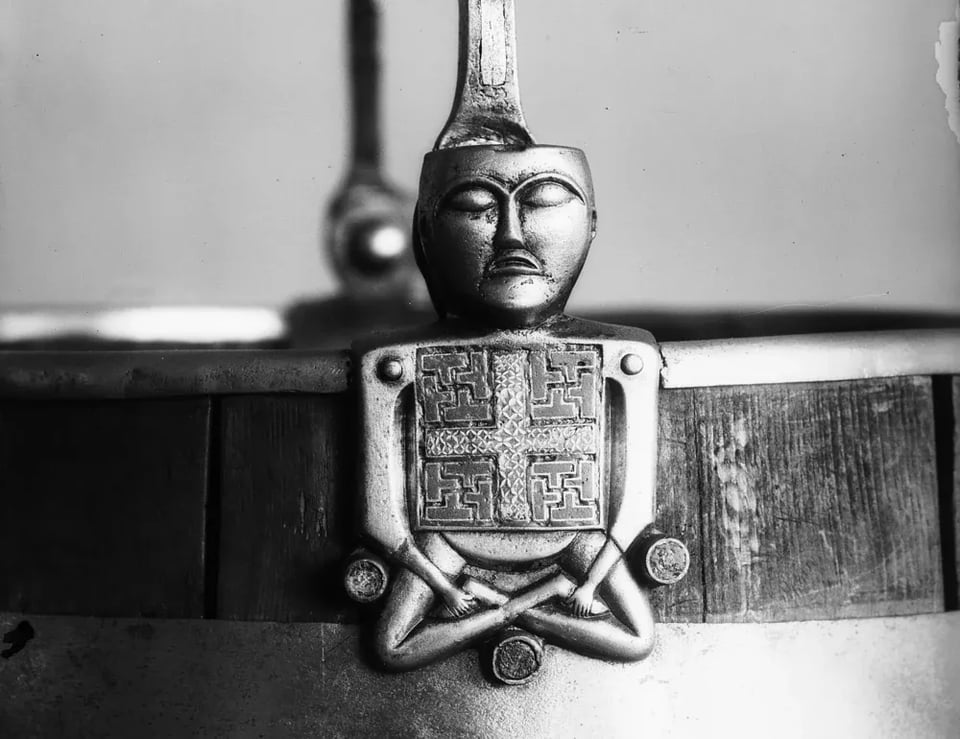
Since its discovery more than a century ago, similar buckets have been uncovered in Hexham (United Kingdom) and Loland (Norway) with similar figures and swastika-looking designs.
Mahadhammarakkhita (Sanskrit: Mahadharmaraksita, literally “Great protector of the Dharma”) was a **Greek Buddhist master, who lived during the 2nd century BCE,** during the reign of the Indo-Greek king Menander.
In the *Mahavamsa*, a key Pali historical text, he is recorded as having travelled from “Alasandra” (thought to be Alexandria of the Caucasus, around 150 kilometers north of today’s Kabul, or possibly Alexandria of the Arachosians), with **30,000 monks** for the dedication ceremony of the Maha Thupa (“Great stupa”) at Anuradhapura in Sri Lanka, when it was completed shortly after the death of the Sri Lankan king Dutthagamani Abhaya (c. 161 – 137 BCE).
Comparisons were made between the figures and depictions of Buddha sitting in the famed lotus position. Both contemporary and later historians and academics wildly speculated that this proved a link between Viking societies and the cultures and civilizations further east in Asia.
The so-called Silk Roads were known to Europeans since Antiquity as trade existed between the Roman Empire and the Han Dynasty in China.
Could merchants, traders, or raiders from Viking societies have traversed their well-trodden Silk Roads to encounter merchants, traders, or raiders from Asia?
Could Vikings have made it further afield than the eastern shores of the Black Sea and pushed into Central Asia or even further east into regions that lay under the influence of Buddhism?
the big reason it is called the buddha bucket is that the person in charge of the Oseberg excavation, Gabriel Gustafson, literally shouted ‘it’s the buddha!’ when they discovered it.
to note in 2006, one of the major theory set forward is that it was a representation of Cernunnos for usage in human offerings, [(norwegian link sorry)](https://www.aftenposten.no/norge/i/PoWmp/doede-keltere-paa-norges-fineste-boette). though it is not unheard of more direct buddhist artifacts being in scandnavia, see the Helgö Buddha which at least was made 100 years before the buddha-bøtta / keltisk bøtte (literally buddha-bucket / celtic bucket), jury is out on which came first.
So anything that has it’s legs crossed is a budha?
Trade went far and so did the vikings
Looks Irish to me. Probably plunder.
What is strange about this? Vikings travelled far, and traded goods from even further.