
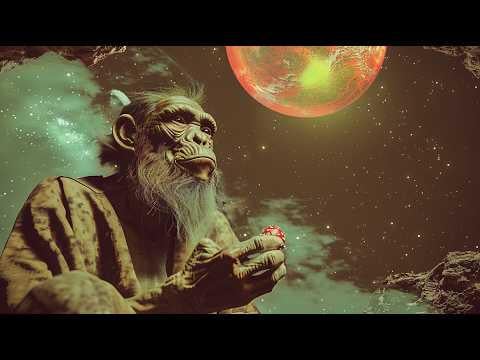
Terence McKenna's idea that early hominids consuming psilocybin mushrooms could explain the rapid leap in brain size, language, and symbolic thinking is still one of the more intriguing fringe hypotheses out there.
It's polarizing—mainstream anthropology largely dismisses it for lack of direct fossil or genetic evidence, while recent papers and renewed interest (especially around psychedelics' effects on neuroplasticity and cognition) have some people revisiting whether there's some truth to it.
I crammed the studies into a NotebookLM and made a 13-minute podcast convo unpacking the core claims, criticisms, and what modern research might add (or subtract) to the picture. Not everyones cup of tea, but if you're interested in the format- give it a listen: https://www.youtube.com/watch?v=nrnmux3Sovc
Curious where the sub lands on this. You think it is a plausible catalyst for the cognitive explosion? Overhyped? Or something in between?
Drop your take on this.
Let's discuss!
by CaptCannoli
9 Comments
It wasn’t a psychedelic “flip the switch” moment. It was incremental.
Op – talks about expanding consciousness and neural plasticity
Also Op – uses the exact thing that’s diminishing human brain capacity, wrecking society and burning the planet
[trombone slide]
Does this board have mods?
Can we just auto-delete AI spam?
Honestly, I think it was alcohol (fermented fruit) that did this somehow ..
But, that’s my own personal theory…
I remember reading that it may have been cooking that helped us evolve. The freed energy taken from digestion went to maintaining higher brain function over time thus making mutations with higher intelligence more sustainable. I would need to find the articles
Modern humans possess an arginine, while Neanderthals and other apes have a lysine at a specific position in the TKTL1 protein. Unless psilocybin was the cause of this the stoned ape theory is unlikely.
If that were true, dreams would be enough
Don’t know about that but marijuana is why we have the Abrahamic religions
No. Language did. But an experience may have led to one trying to explain to another and finding a need for language