
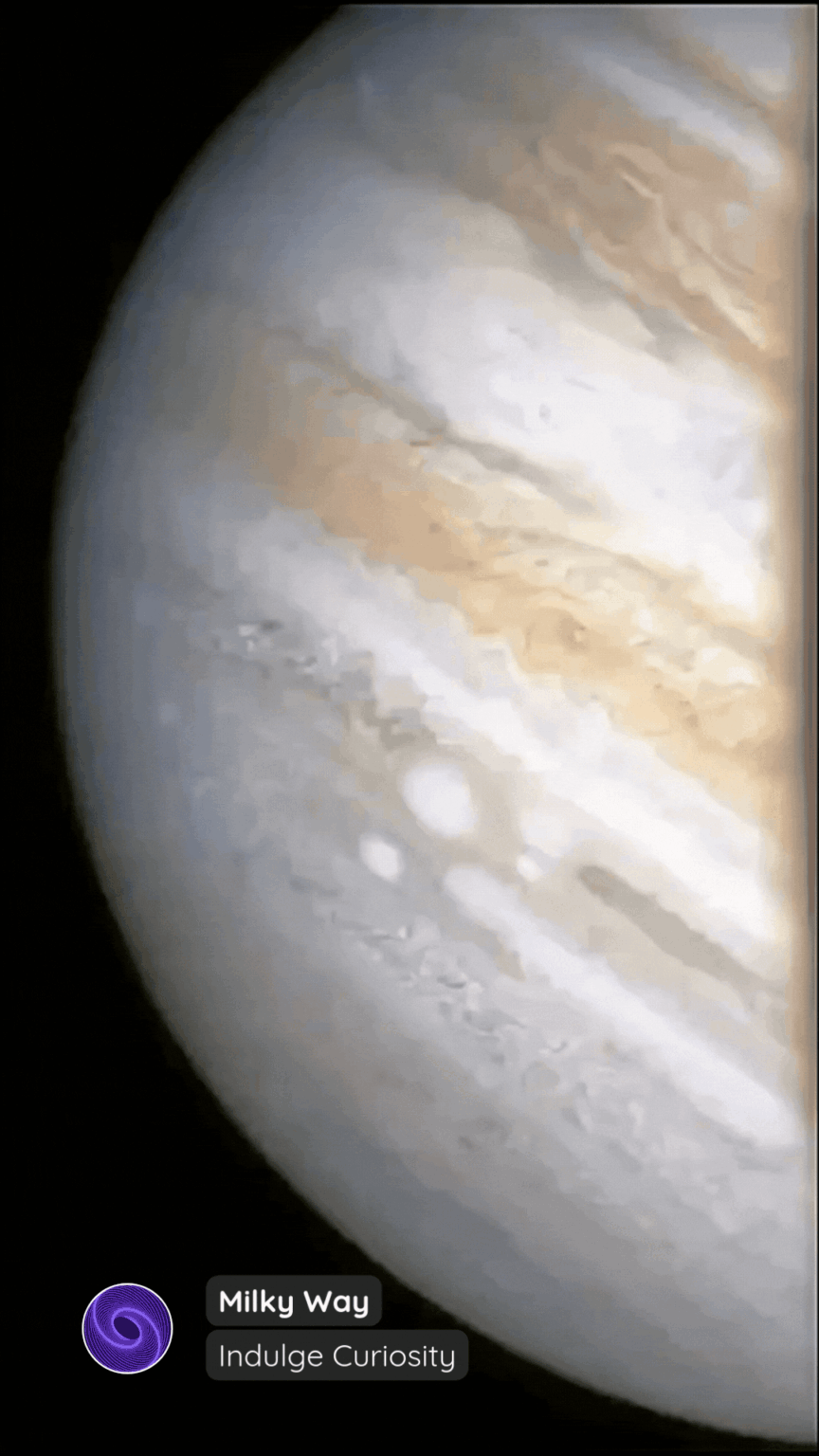
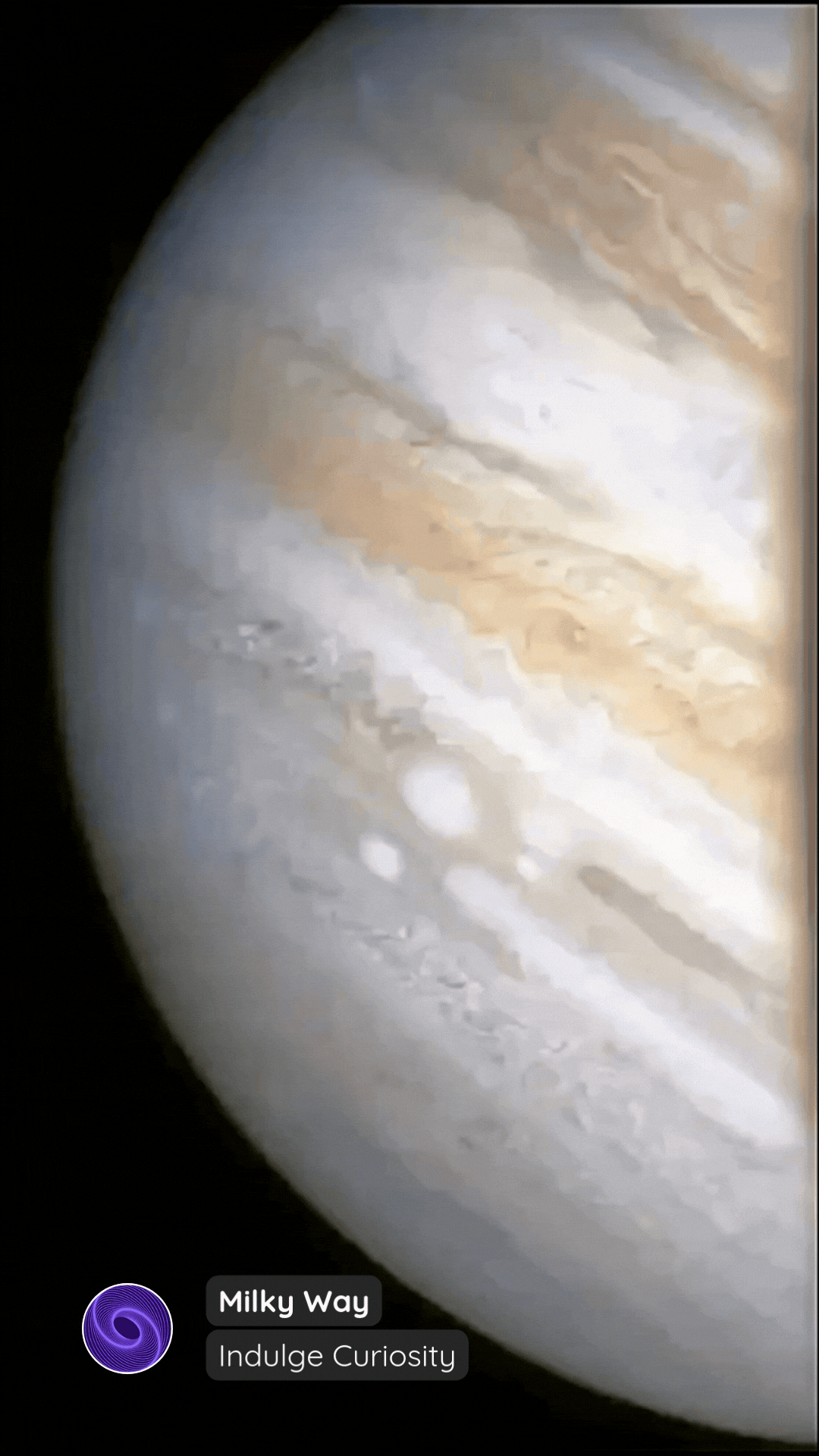
The first impact occurred at 20:13 UTC on July 16, 1994, when fragment A of the comet's nucleus slammed into Jupiter's southern hemisphere at about 60 km/s (35 mi/s).
Instruments on Galileo detected a fireball that reached a peak temperature of about 24,000 K (23,700 °C; 42,700 °F), compared to the typical Jovian cloud-top temperature of about 130 K (−143 °C; −226 °F). It then expanded and cooled rapidly to about 1,500 K (1,230 °C; 2,240 °F).
The plume from the fireball quickly reached a height of over 3,000 km (1,900 mi) and was observed by the HST.
Source: NASA
by Busy_Yesterday9455
11 Comments
That is so cool!
No more dinosaurs in there after that
Has anyone ever created a simulation of how the impact would have looked from nearby?
That black ring is around 7500km in diameter.. Earth is 12700km in diameter 😐

It’s super cool as it is of course, but imagine if the impact occurred in full sunlight with a mord direct camera angle
One of the very greatest videos!!
Good ol’ Jupiter, doing its job.
Granted, it *did* drop the ball about 65 million years ago… but that’s all in the past.
Jupiter Sir, I guess you need some new shoes for the date with Saturn on Saturday
Jupiter taking one for the team. Better it than us 💪🏼
Harpua > 2001 > Harpua IYKYK
How much damage would it cause if it had hit Earth?