
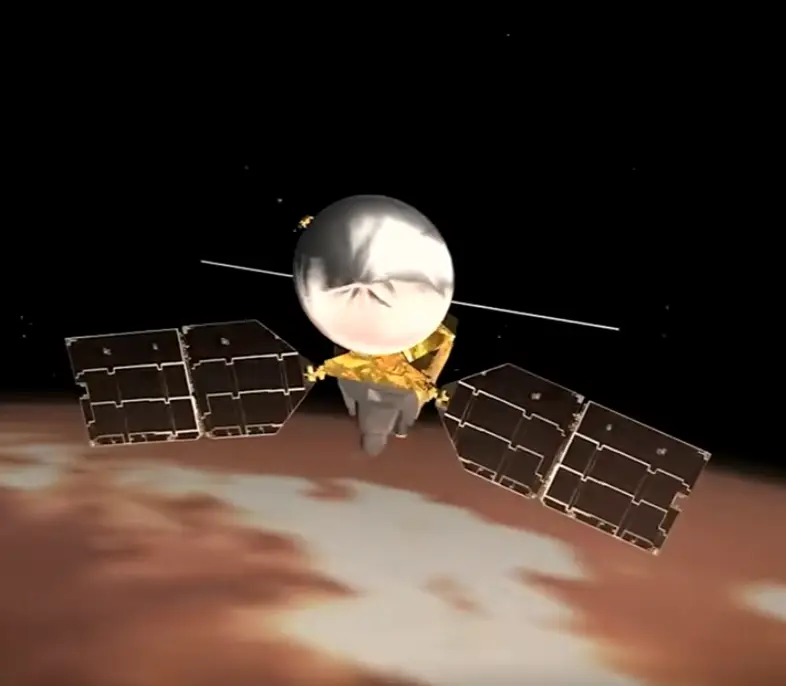
NASA has developed a new autonomous technology that links with Mars Rover, letting us gain more insight into the Red Planet than ever before.
Slowly, scientists have been gaining more and more information about our solar system, the different planets, and how they relate to our world.
For example, it wasn’t too long-ago matter was found on Mars which confirms it would have hosted water and life at one point.
But as there’s still so much more we need to know, the Mars Rover has gotten an upgrade as it continues its exploration of the dusty land.
Known as Mars Global Localization, NASA’s new feature pinpoints the Perseverance Rover’s location, all without human intervention.
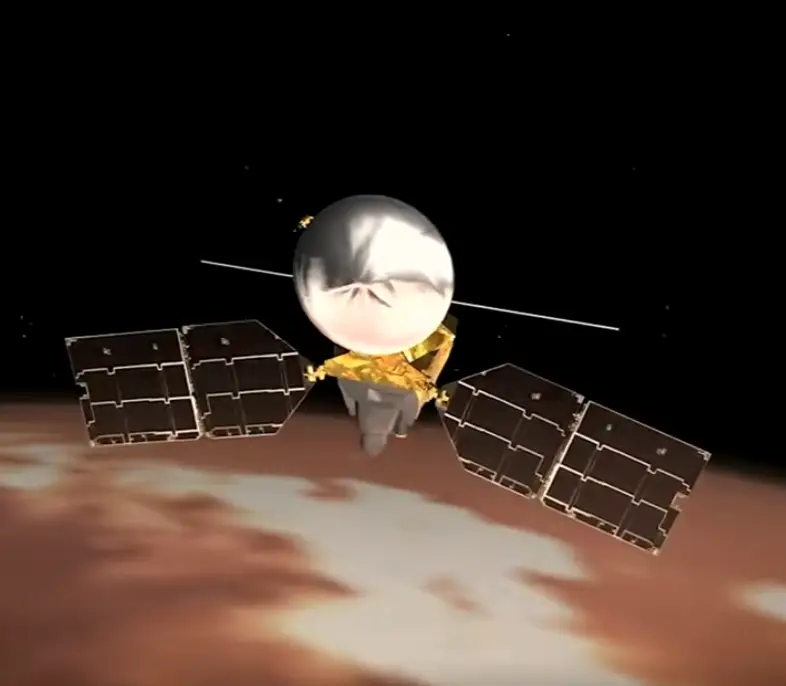 NASA’s new technology allows the Mars Rover to pinpoint its location (NASA)
For five years the Mars Rover has been exploring without the aid of maps, GPS or even a brief idea of where it’s going without the help of people on Earth feeding it information.
However, NASA’s Jet Propulsion Laboratory in Southern California developed its tracking system to create an algorithm that compares ‘panoramic images from the Rover’s navigation cameras with onboard orbital terrain maps’.
According to NASA, the technology takes around two minutes to come up with the information it needs to send the Rover on its path.
The tech now helps the Rover out when it comes to its auto-navigation self-driving features, allowing it to re-plan its path around obstacles as it travels on its pre-routed journey.
Known as AutoNav, it means Perseverance can drive to an estimated unlimited destination before being recalled to base.
“This is kind of like giving the rover GPS. Now it can determine its own location on Mars,” said JPL’s Vandi Verma, chief engineer of robotics operations for NASA’s Mars mission.
“It means the rover will be able to drive for much longer distances autonomously, so we’ll explore more of the planet and get more science. And it could be used by almost any other rover traveling fast and far.”
According to NASA, the key to Mars Global Localization is the rover’s Helicopter Base Station (HBS).
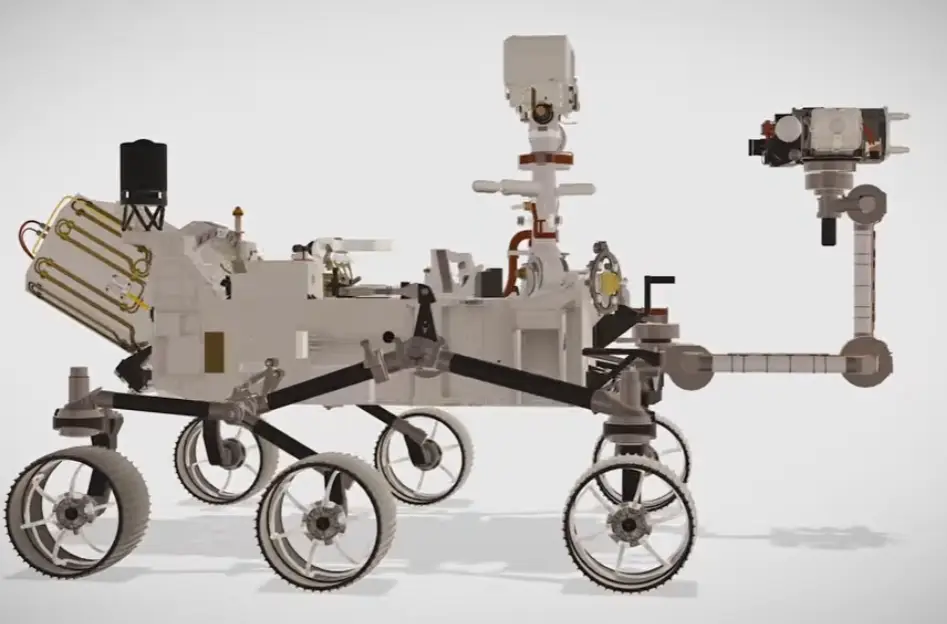 It can map out its surroundings (NASA)
This is what Perseverance used to communicate with the Ingenuity Mars Helicopter before it went out of commission.
The HBS runs ‘more than 100 times faster than the rover’s two main computers, which, built to survive the radiation-heavy Martian environment, are based on hardware introduced in 1997,’ NASA said in its press release.
Now, the Rover will be able to complete long journeys, mapping out Mars and doing it all without our help.