
Molly Coleman
|
February 18, 2026
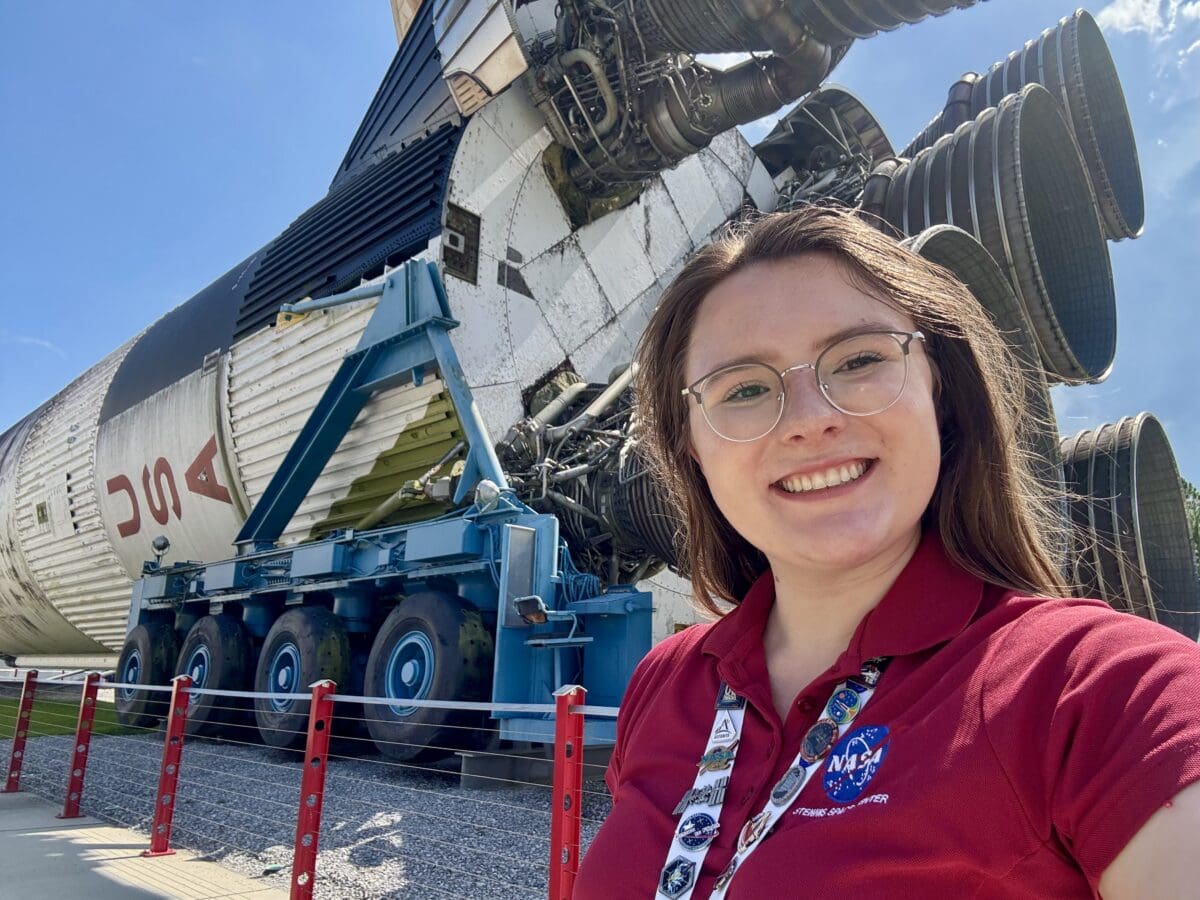
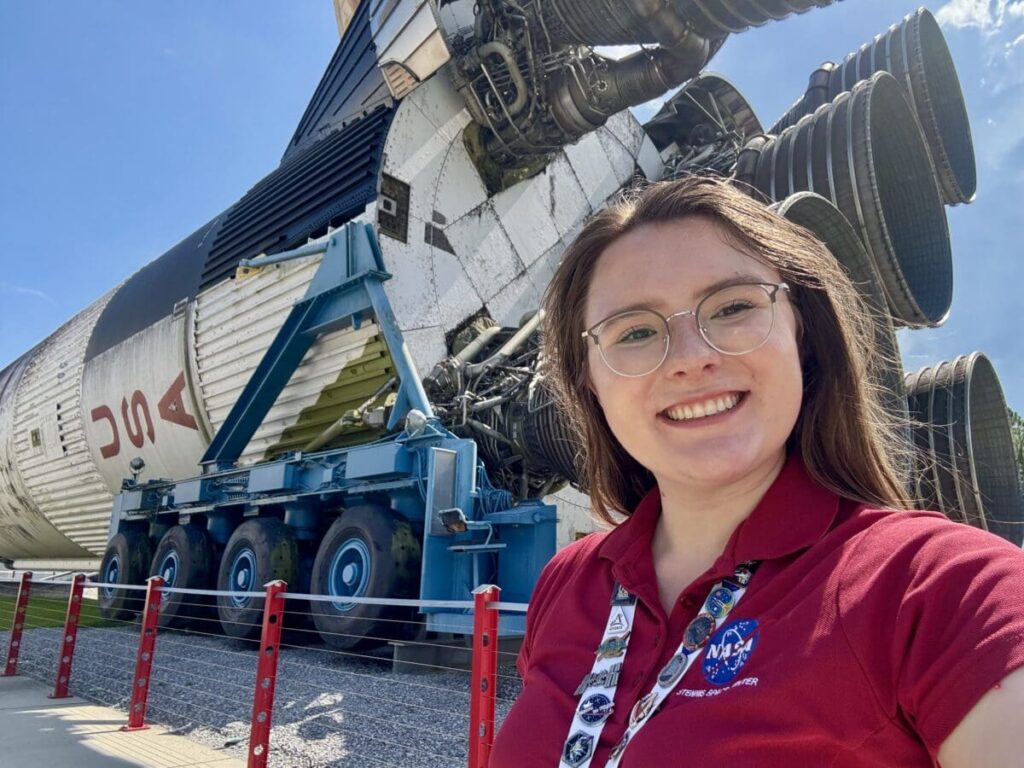
Hannah Jones, a master’s student in mechanical engineering and graduate researcher in the Material Intelligence and Prognostics Lab, recently participated in the L’SPACE Program’s NASA Proposal Writing and Evaluation Experience (NPWEE) Academy, a nationally competitive, fully-funded program for students pursuing careers in aerospace. The online academy brings together students from across the country to develop and evaluate proposals addressing NASA’s most pressing research needs.
Submitted photo
A graduate student at the University of Arkansas at Little Rock is helping shape the future of space exploration — one proposal at a time.
Hannah Jones, a master’s student in mechanical engineering and graduate researcher in the Material Intelligence and Prognostics Lab, recently participated in the L’SPACE Program’s NASA Proposal Writing and Evaluation Experience (NPWEE) Academy, a nationally competitive, fully-funded program for students pursuing careers in aerospace. The online academy brings together students from across the country to develop and evaluate proposals addressing NASA’s most pressing research needs.
“It’s a really good introduction to proposal writing as well as research as a whole,” Jones said. “Everything is tailored towards NASA and the aerospace industry, so you get exposure to how research really works in that space.”
Jones learned of the opportunity while interning at NASA’s John C. Stennis Space Center in Mississippi last summer.
L’SPACE, which stands for Lucy Student Pipeline Accelerator and Competency Enabler, is a NASA-funded workforce development program open to undergraduate and graduate students nationwide. The rigorous NPWEE Academy promotes innovation and creative problem-solving by engaging students in real challenges facing NASA. Participants are placed on interdisciplinary teams to identify agency needs and develop research proposals guided by NASA’s official taxonomy report, which outlines key research gaps and areas for technological advancement.
Teams compete for a $10,000 award to support their research, but the experience extends beyond the competition. After submitting proposals, participants evaluate and score submissions from other student teams, gaining insight into both sides of the proposal process. By the end of the program, students leave with hands-on experience in writing and reviewing research proposals — valuable skills for both academic work and future careers.
Jones’ team focused on in-situ methane production on Mars, producing methane using only resources available on the planet. The research is directly tied to future space exploration missions that rely on methane as a fuel source.
“Other planets don’t have the same resources that we do on Earth,” Jones said. “We were looking for materials that would optimize manufacturing methane so we can have a source of fuel in those environments.”
While her background is in engineering and materials research, her team’s project ended up being very chemistry-centered — a challenge Jones had not expected.
“It took a lot of reading on my side to understand our goal and how we could achieve it, and then translate that into the proposal,” Jones said.
Jones was also challenged by the second half of the NPWEE Academy, when she stepped into the role of reviewer for her peers. During this phase, students evaluated competing teams’ proposals using NASA’s established criteria. Pushing beyond her comfort zone, Jones volunteered to chair one of the proposal review panels.
“I had never done anything like that before,” she said. “Reviewing the proposals helps give you an idea of areas you need to improve in your own technical writing. I was reviewing proposals I had no familiarity with, so it was really eye-opening to see how essential it is to be able to communicate these ideas at a foundational level everyone can understand.”
Experiencing both sides of the proposal process underscored the importance of clear communication, even in scientific research. The experience highlighted how strong communication can make or break a proposal — and often determines whether a project is funded or passed over by reviewers.
“Being able to communicate complex ideas and translate them into an incredibly condensed version is essential,” Jones said. “You have to be able to prove that your project is feasible. If you can’t communicate exactly how you’re going to execute your project and why it makes sense, it creates doubt in the people reviewing your proposal. You have to simultaneously show your credibility while demonstrating that the project can be completed within the timeline and budget, all while clearly explaining the science behind it.”
This experience allowed Jones to work with people from diverse industries and backgrounds while addressing real-world issues, which is hard to experience in a traditional classroom setting.
“I can’t emphasize enough how important it was for me to learn how to come up with projects catered to what the industry needs rather than just my own interests,” she said. “It is incredibly important to learn how to work with subjects you’re unfamiliar with and to rely on people who are more experienced than you in other fields — to gain exposure to different industries and fields of study.”
Jones said her experience in the L’SPACE Academy solidified her determination to work in this field and strengthened her confidence in her technical writing and research skills.
“I really enjoy materials research, of course, but now I have more confidence taking on projects outside of that comfort zone” she said. “This experience has made me more ambitious to pursue new concepts or ideas and to work with others to tackle issues that research can address within the aerospace industry.”
Because the L’SPACE Academy is fully funded and open to students nationwide, Jones said programs like this are especially meaningful for students at institutions like UA Little Rock.
“I think sometimes it can be hard to think at a broader level about what’s possible,” she said. “At least for me, there were times I limited myself by thinking, ‘I’m not at an Ivy League or a huge institution, so maybe I’m not as competitive.’ But there were students in the program from all kinds of universities — not just large schools, but smaller, local institutions too.”
Seeing that diversity, she said, reinforced that opportunities in aerospace and research are not reserved for students at elite universities. For students considering applying, Jones encouraged them not to underestimate themselves.
“Applying never hurts,” she said. “Even if you’re a freshman or your background isn’t traditionally aerospace-focused, you never know how your skills might fit into a project.”
She recalled advice that stayed with her throughout the process: Don’t reject yourself before anyone else has the chance to.
“These projects touch so many different fields and NASA pain points,” Jones said. “People from all kinds of backgrounds can contribute. My number one piece of advice is just to apply and see what happens, and if you get in, give it your best.”
Looking ahead, Jones said she plans to complete her master’s degree in spring 2027 before pursuing a Ph.D. at another institution. Her long-term goal is to conduct materials research in the aerospace industry, building on her current focus on composite materials.
For Jones, the program was more than a competition — it was a stepping stone toward the career she hopes to build.