
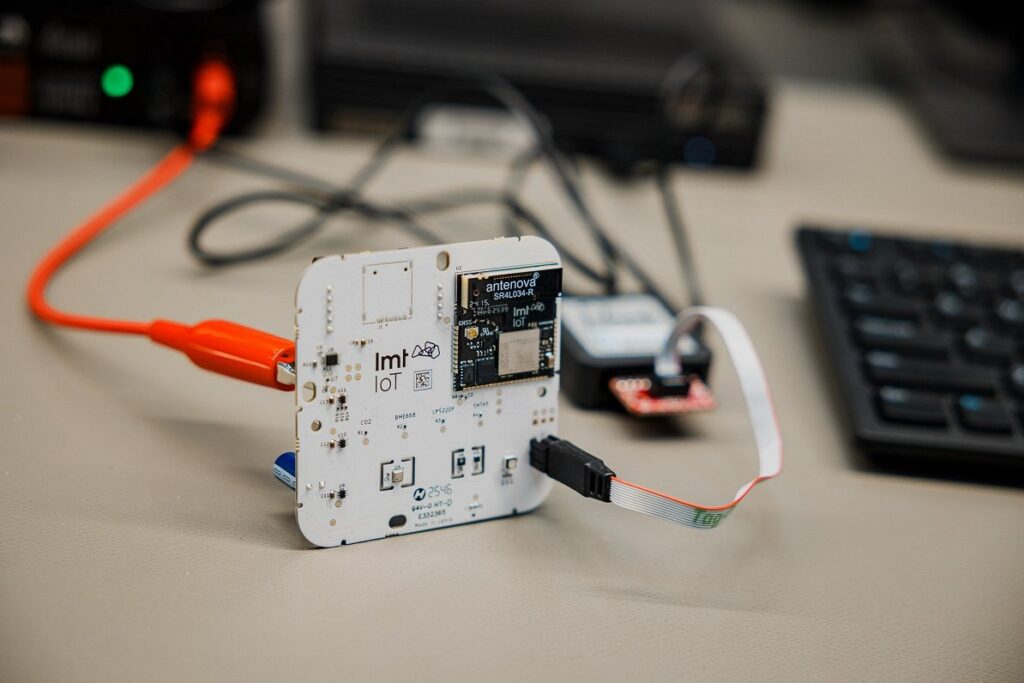
Latvian technology company LMT Group has announced a 12-month development initiative in collaboration with the European Space Agency (ESA) to pioneer a new generation of universal IoT (Internet of Things) connectivity, reports Labs of Latvia.
The project aims to develop an IoT module that operates across mobile networks and satellite networks, enabling devices to remain connected almost anywhere.
While cellular networks cover most populated areas, oceans, deep forests, and rural agricultural lands remain dead zones for connectivity. In collaboration with ESA LMT’s IoT team will develop a cost-effective hardware module and software suite to enable IoT devices to autonomously switch between terrestrial cellular networks and Non-Terrestrial Networks (NTNs) which would allow devices to transition between cellular and satellite links without user intervention or data loss.
“Many devices remain too complex, expensive, or unavailable in the required market formats, especially for low-power IoT solutions. LMT is removing this exact barrier by developing a module that provides connectivity in cities, rural areas, and beyond traditional mobile coverage, without requiring two separate devices or complex configurations,” said Ingmārs Pūķis, VP & Member of the Management Board at LMT.
Europe is investing €2.1 billion in satellite communication programmes to strengthen secure and resilient connectivity and to advance new satellite‑integrated 5G/6G technologies that reinforce Europe’s industrial autonomy.
In the dual-mode satellite IoT project, the LMT IoT team and ESA will also be partnering with a Spanish company, Sateliot and receiving knowledge support from the Ventspils International Radio Astronomy Centre.
Seen a mistake?
Select text and press Ctrl+Enter to send a suggested correction to the editor
Select text and press Report a mistake to send a suggested correction to the editor
Tell us about a mistake