
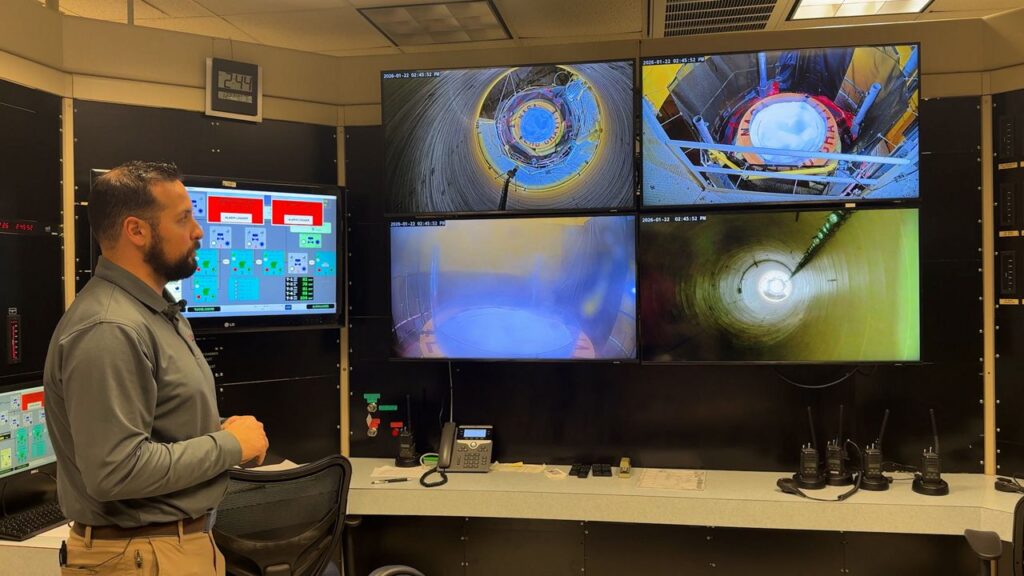
CLEVELAND — This year marks NASA Glenn Research Center’s 85th anniversary. The facility, which is one of 10 NASA research centers across the country, has enabled some of NASA’s most famous space missions.
What You Need To Know
The Zero Gravity Research Facility was originally built during the space race era of the 1960s.
Its still functional today and helps researchers around the world better understand the nature of microgravity.
Currently, researchers are assessing the flammability of different fabrics which could be used during future Artemis missions.
An integral part of the NASA Glenn Research Center is the Zero Gravity Research Facility, which was originally built in the 1960s during the space race. NASA Glenn Research Center engineer Vittorio Valletta explained how the facility came to be.
“The guys would have to be lowered down, and then a crane would bring them down, and that would be how they would excavate the dirt little by little,” Valletta said.
Workers dug the 510-foot pit by hand.
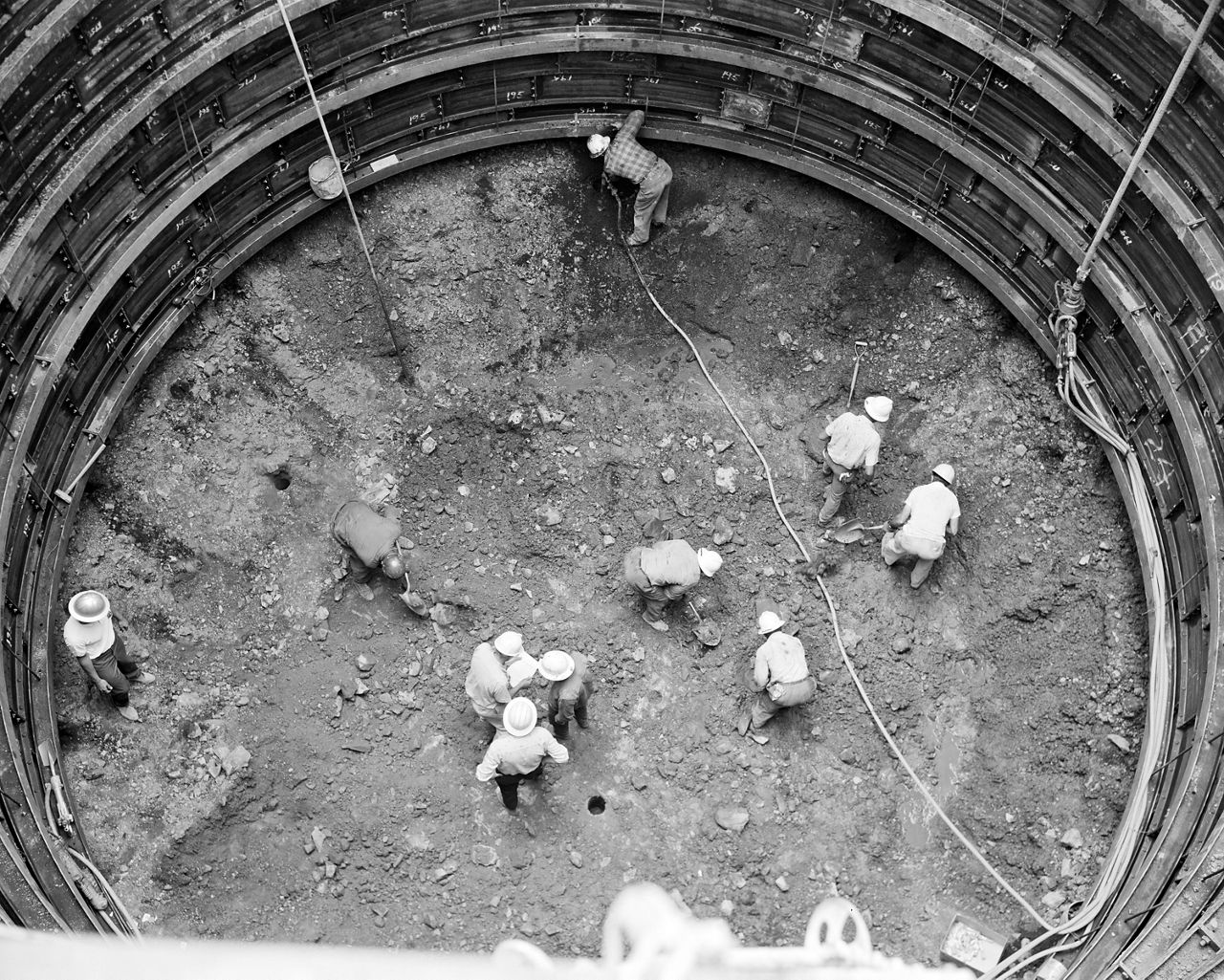
Workers hand-dig the pit used for the Zero Gravity Research Facility (Courtesy: NASA)
“Within that 510 ft is a 460 ft steel vacuum chamber,” Valletta said. “And then we utilize 430 ft for the drops to create 5.18 seconds of microgravity.”
Decades after the space race, the facility is still in use.
Researchers dropped ‘rigs’ fitted with experimental equipment down the steel vacuum chamber. Valletta said these rigs weigh about the same as a Mini Cooper.
Through their research, they’ve learned fire behaves differently in microgravity. Through a camera inside the rig, researchers captured how a flame looks as gravity changes.
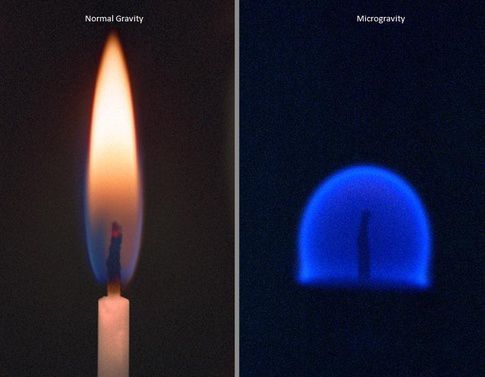
A flame experiencing Earth gravity (left), compared to a flame experiencing microgravity (right) (Courtesy: NASA)
To be cost-effective and to ensure they can collect their findings, scientists need to make sure the rig survives the fall.
“So the way that we do that is we have expanded polystyrene beads, which are basically just Styrofoam balls that you’d find, you know, in a beanbag chair,” Valletta said. “And, this is in a bucket down below filled about 20 ft deep with those beads.”
NASA researchers run these tests several times a week, which helps researchers around the world acquire a better understanding of microgravity.