
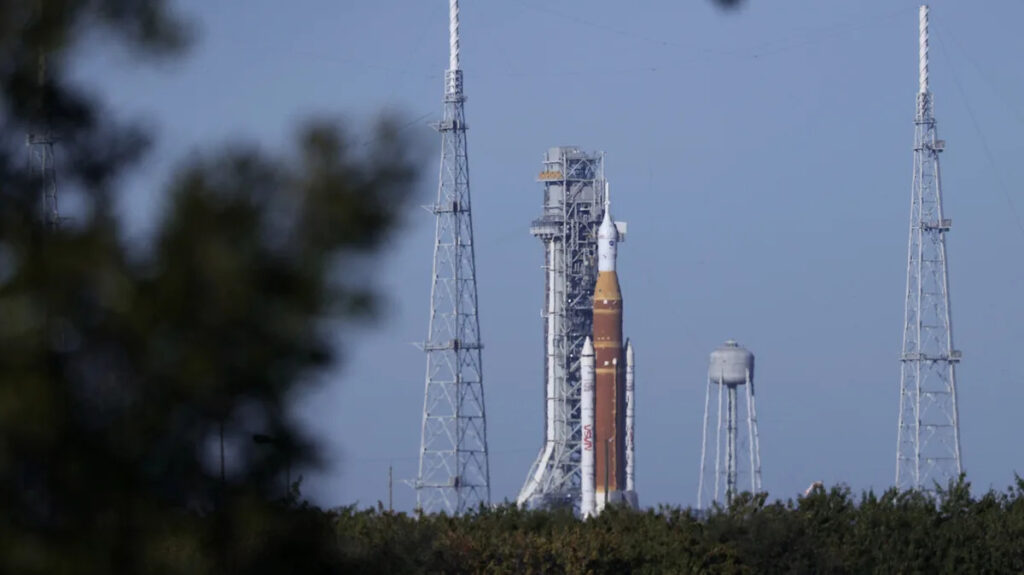
Although it seems to have flown slightly under the radar when it comes to the broader public interest and rapid-fire news cycles of today, NASA is currently preparing for one of the most ambitious manned space missions of the last few decades. The space agency is poised to move forward with the next step of the Artemis Program, which is aiming to put humans back on the moon for the first time in over 50 years.
Artemis I, the uncrewed test mission for the program, flew back in late 2022. The next pivotal mission, Artemis II, is expected to take humans farther into space than they’ve ever gone before on a trajectory that will take them around the moon. It’s all part of NASA’s plans to to land astronauts on the surface of the satellite once again in the future; at some point after that, the goal is to continue all the way to the surface of Mars.
But as the Artemis II mission gets closer to its now pushed-back launch window, some have raised concerns over the safety of the Orion spacecraft that will carry four astronauts during the lunar fly-by. Their concern specifically calls into question the integrity of Orion’s heat shielding; for many, this will will bring back memories of the tragic Space Shuttle Columbia disaster in 2003. Per NASA’s view on the situation, the agency says it is well aware of the heat shield issue and has made adjustments to the mission’s reentry plan to avoid putting the crew at risk.
Read more: Every Major Tractor Brand Ranked Worst To Best
Is Orion’s heat shielding a minor issue or a serious flaw?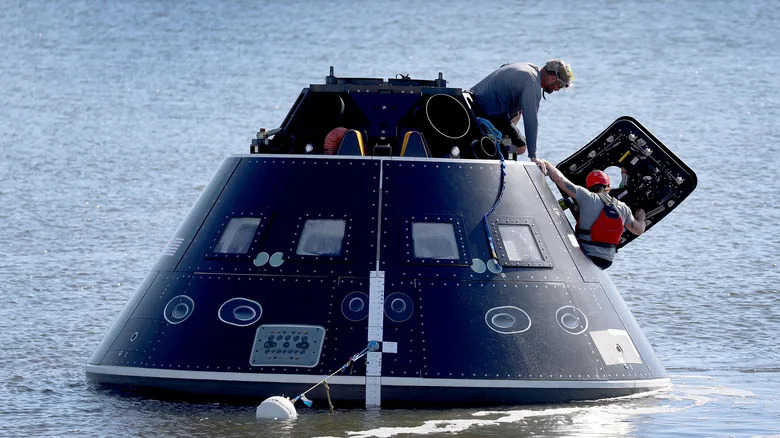
NASA’s Orion capsule in the ocean during a training mission. – Joe Raedle/Getty Images
Initially, the plan was for the massive Artemis II rocket to lift off on this crucial mission in early February 2026, but liquid hydrogen leaks during testing have since pushed the launch window back to March at the earliest. It’s not these leaks, though, that are the cause of concern for some scientists and former astronauts who have been following the program.
Instead, it’s the ablative Avocat material used on the Orion capsule’s heat shielding. It will certainly be put to the test at the end of Artemis II’s 10-day mission when the capsule reenters Earth’s atmosphere at high speed. This was not nearly as critical during the first Artemis mission, as the Orion spacecraft was empty for the entire 25-day flight. Upon returning to Earth, however, significant damage to Orion’s heat shielding was discovered, with large pieces of the shielding found to have fallen off during the mission’s required high-speed atmospheric reentry.
This is something that some engineers, scientists, and former astronauts had already raised concerns over. This includes former astronaut Dr. Danny Olivas, who served on NASA’s investigative committee and reported the heat shield as “deviant”. However, the space agency claims it has full confidence in both the Avcoat that makes up Orion’s heat shielding as well as the newly-developed 3-Dimensional Multifunctional Ablative Thermal Protection System (3DMAT) that’s being used to further reinforce the spacecraft.
NASA takes astronaut risk seriously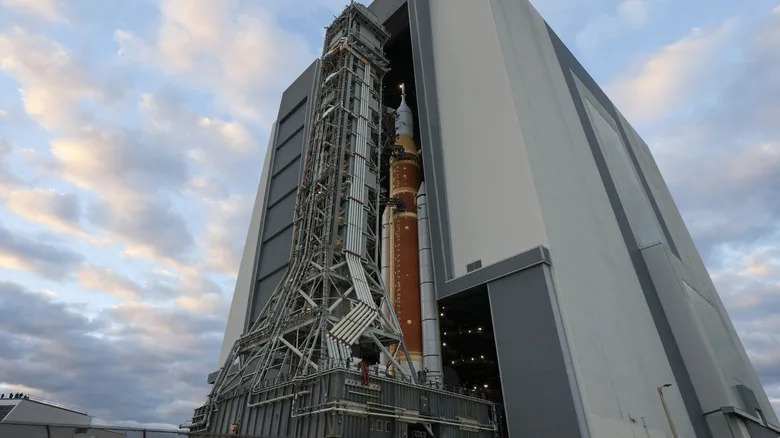
Artemis II rocket being prepared for launch – Joe Raedle/Getty Images
Any potential safety issue around reentry on a manned spacecraft is not to be taken lightly. For NASA, it hearkens back to the 2003 Columbia launch that was brought to a tragic end when a damaged wing from a debris strike caused the shuttle to break up during the extreme heat of reentry, killing all seven astronauts on board.
NASA teams studied the damage to the Orion capsule after the Artemis I mission and are convinced that there is no significant safety threat to the crew of Artemis II. And for the upcoming mission, NASA will use a modified reentry flight path, which it says will further reduce the likelihood of damage to the heat shield. The space agency has also stated that flight data from Artemis I shows that the Orion crew would have been safe even with the damage that the heat shield sustained during reentry.
While everyone is hopeful that this important space mission will be pulled off without issue once Artemis II gets the green light for launch, the heat shield controversy nonetheless serves as a reminder of the inherent risk that comes with manned spaceflight, even with the massive advancements in aerospace technology we’ve seen since the days of the original lunar missions.
Want the latest in tech and auto trends? Subscribe to our free newsletter for the latest headlines, expert guides, and how-to tips, one email at a time. You can also add us as a preferred search source on Google.
Read the original article on SlashGear.