
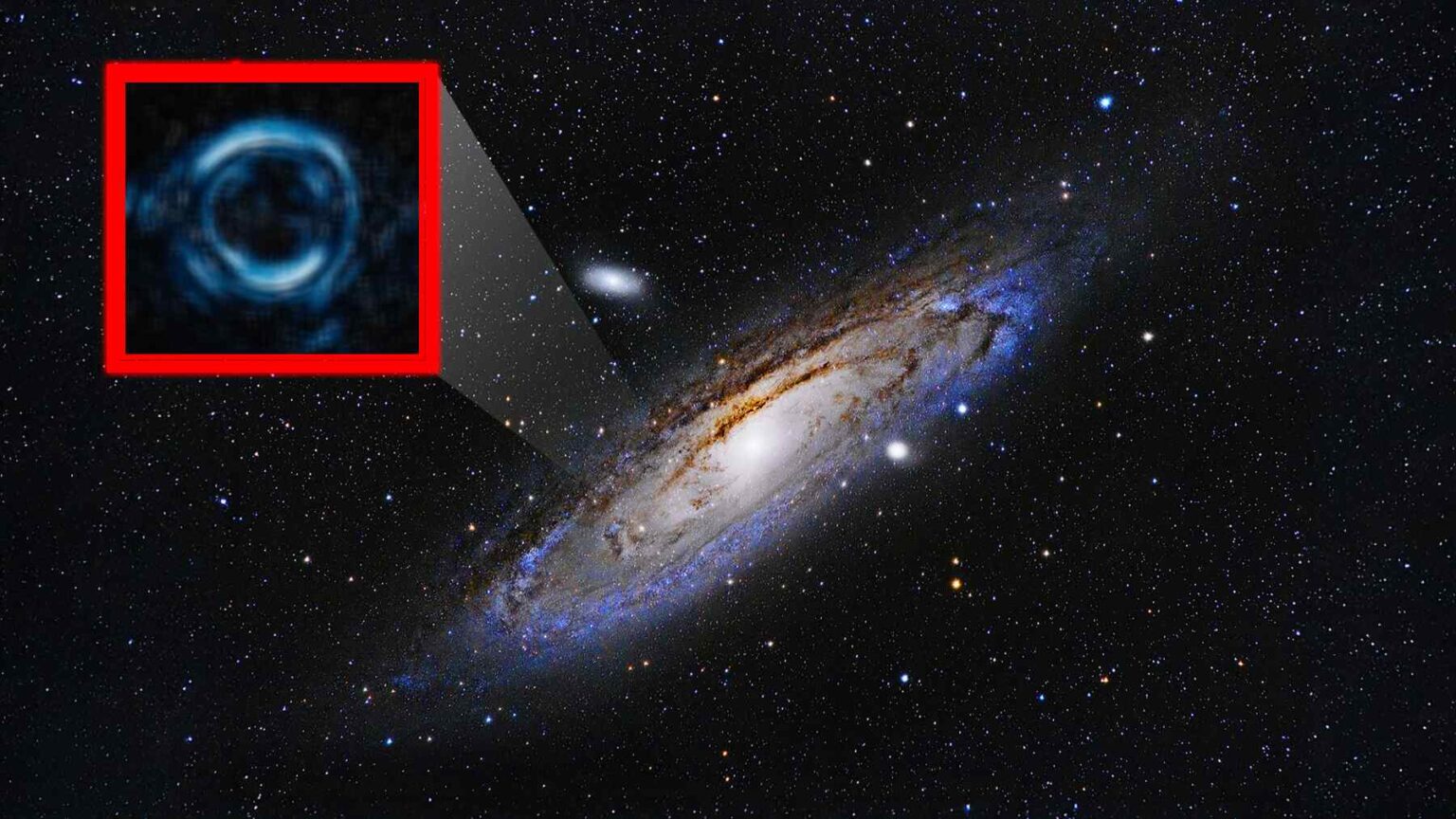
You go about your day thinking space is quiet, distant, empty, and harmless. But scientists studying our solar system have identified something unsettling — millions of invisible “dark bubbles” drifting far closer than you might expect. They don’t glow or announce themselves, and under certain conditions, they interact with Earth in ways that aren’t immediately obvious. NASA researchers are taking them seriously. The real question is whether you should. What do these shadowy structures mean for us?
Our Solar System is strange, and also unsettling
There was a time when space travel sounded impossible. You looked up at the night sky, with a telescope if you were lucky enough to have one, and that was it. Distant dots of light were a pure mystery.
But curiosity doesn’t rest. Engineers pushed and scientists calculated, and eventually, humans managed to look further beyond Earth. The Space Race turned the sky into a proving ground, and almost overnight, we realized how small we really are.
Still, even inside our own Solar System, not everything is visible. Some objects don’t shine or reflect sunlight. They don’t announce themselves, but they were first imagined centuries ago—long before rockets existed.
In 1916, Albert Einstein used his theory of relativity to predict that these hidden objects should exist. At the time, it was pure mathematics with no direct proof. Fast forward to 1964, and astronomers detected a powerful X-ray source in space. It wasn’t something you could see with a regular telescope and it didn’t behave like a normal star.
That signal changed everything. From that moment on, researchers—including teams at NASA—were determined to confirm what had only been theoretical before. What they eventually uncovered wasn’t just surprising, it was downright unsettling.
NASA: “There are more than 100 million ‘dark bubbles’ out there”
For decades, black holes felt almost theoretical, like dark bubbles or mere mathematical predictions. These were objects we couldn’t see, only infer. Then the confirmations came: NASA acknowledged there aren’t just a few of them — there are hundreds that have already been identified. And that was before newer instruments sharpened the picture. Some black holes aren’t just distant and hard to observe; they’re hidden, buried behind clouds of dust and gas that block conventional detection methods.
Recent research suggests that a significant percentage of supermassive black holes — the kind far heavier than our Sun — remain obscured. One study estimated that roughly 35% of them are effectively invisible to us, based on the sample analyzed — that’s a massive blind spot.
If over a third are hidden, what does that say about the total count? Are there far more lurking undetected in distant galaxies than we’ve cataloged so far? That uncertainty is part of what’s fueling renewed interest.
Some of these objects aren’t just sitting quietly in space, they’re dangerously and actively consuming matter. In extreme cases, entire galaxies can be disrupted or reshaped by the gravitational influence of a growing supermassive black hole.
We could see more stars in the sky. But there’s an obstacle
So now you’re not just talking about abstract cosmic oddities. You’re talking about forces capable of restructuring entire galactic systems — some of which we can’t even see clearly.
This leads to the real question: If a significant fraction of the universe’s most powerful objects are still hidden from view, what else are we missing? That’s where the conversation shifts from fascinating to unsettling.
These strange black holes are thus more eerie and more abundant than we once thought, as NASA has also discovered what happens when two black holes collide. As the technology for space research continues to advance and our knowledge of the universe becomes more insightful, we cannot help but wonder which hidden secrets of the Solar System will be uncovered by NASA next.