
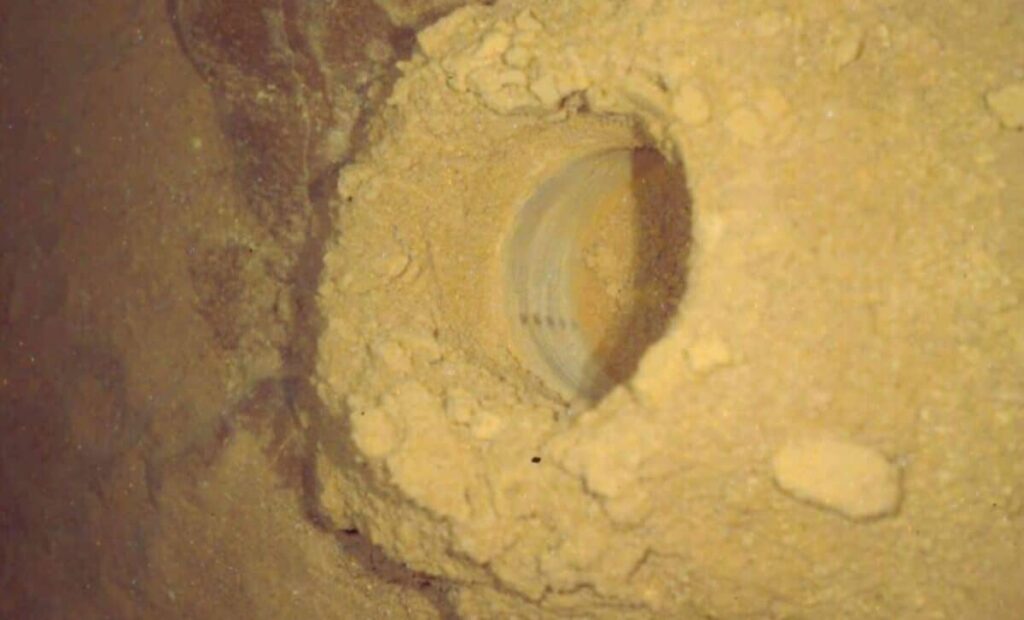
More than a decade after landing in Gale Crater, NASA’s Curiosity rover has uncovered something unexpected in the Martian soil. Scientists reviewing samples collected from a former lakebed have identified a set of complex organic molecules, chemically stable compounds with long carbon chains. These are not new samples. They were drilled from a rock called Cumberland back in 2014. What changed is the method of analysis.
The molecules, decane (C10), undecane (C11), and dodecane (C12), were detected using reprocessed data from the rover’s Sample Analysis at Mars (SAM) instrument. The revised thermal extraction techniques revealed molecular signatures that earlier runs had missed. These compounds are known on Earth as both abiotic hydrocarbons and breakdown products of fatty acids, molecules essential to cell membranes and biological functions.
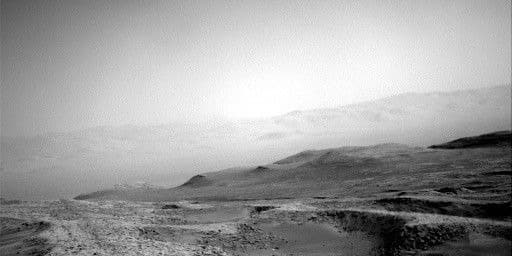 NASA’s Mars rover Curiosity acquired this image on Dec. 21, 2025, with the boxwork terrain in the foreground and Gale crater rim in the far background, using its Right Navigation Camera. Credit: NASA/JPL-Caltech
Their discovery inside 3.7-billion-year-old mudstone has reopened long-standing questions about the potential for past life on Mars. If biological material once existed on the planet, this would be the kind of residue it might leave behind. If not, then Mars may still have experienced complex organic chemistry on a scale previously underestimated. Either answer has significant implications for planetary science, and both raise further questions.
One detail in the new findings drew particular attention: the apparent dominance of even-numbered carbon chains. On Earth, that pattern often results from biosynthetic processes. But three data points do not establish a rule, and the scientific community remains cautious. What cannot be explained, however, is no longer ignored.
Confirmed Data from NASA’s Analytical Teams
The detection of long-chain alkanes was publicly confirmed by NASA, in a formal statement describing the molecules as “the largest organic molecules ever detected on Mars.” The work was led by Dr. Caroline Freissinet at the LATMOS laboratory, part of the French National Centre for Scientific Research (CNRS), and published in the Proceedings of the National Academy of Sciences.
These molecules were identified using SAM’s gas chromatography–mass spectrometry (GC-MS) suite during a reanalysis of the Cumberland drill samples. The team used updated heating protocols that enhanced the instrument’s ability to preserve and detect heavier molecular fragments. The compounds, decane, undecane, and dodecane, had not appeared in the initial thermal runs.
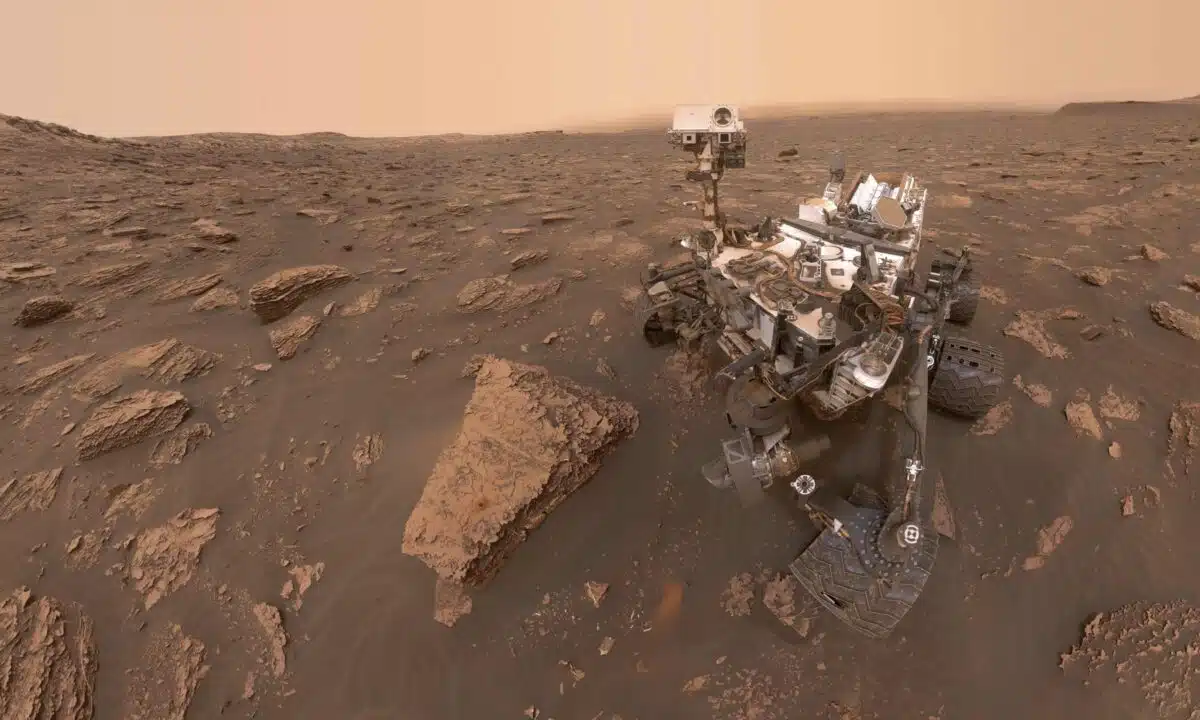 A composite image of the Curiosity rover in the Gale crater, where the sample was taken. The rover has traversed about 20 miles of the crater since landing on Mars in 2012. Credit: AP
Freissinet and her colleagues also conducted laboratory tests on Earth, showing that these alkanes can be generated from the thermal degradation of carboxylic acids, specifically fatty acids. This strengthens the hypothesis that the Martian rock once contained biologically relevant precursors. However, fatty acids themselves were not directly identified in the sample.
In an interview with The Guardian, Freissinet noted: “Cumberland is teasing us.” The quote appears in a March 24 article, which also reported that of the three molecules detected, the even-carbon dodecane was the most abundant. Freissinet added, “There is a bias on Earth life toward even-numbered carbon chains,” referencing how biological systems typically build fatty acids.
Interpreting the Chemistry: Life or No Life?
Long-chain alkanes can arise in both biological and abiotic contexts. On Earth, they are often remnants of fatty acids and appear in sediments linked to past biological activity. But they can also form through volcanic or hydrothermal processes that require no biology. In Martian settings, both pathways remain viable.
The context of the discovery is notable. The Cumberland sample was extracted from Yellowknife Bay, a location believed to have once hosted a standing lake. The geological unit is composed of clay-rich mudstone, which has previously yielded indicators of sustained aqueous environments. Earlier analyses had already confirmed that the site met key habitability criteria based on mineral content and depositional environment.
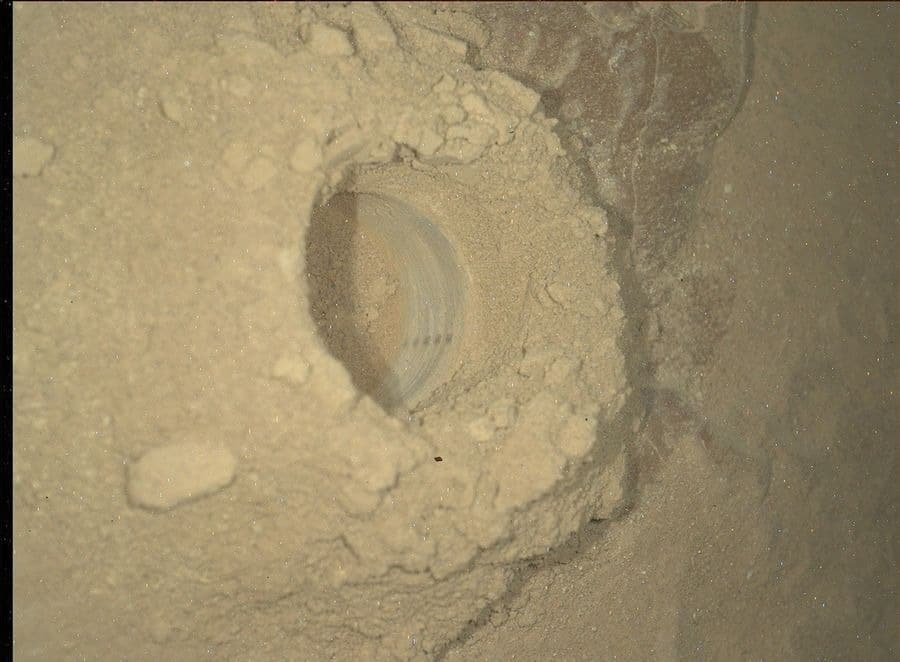 NASA’s Mars rover Curiosity captured ths image on Dec. 6, 2025, a “MAHLI after dark” image of the Nevado Sajama drill hole, using its Mars Hand Lens Imager (MAHLI), located on the turret at the end of the rover’s robotic arm. Credit: NASA/JPL-Caltech/MSSS
Curiosity’s SAM instrument did not return measurements on isotopic fractionation or molecular chirality, two essential lines of evidence in confirming biological origin. Still, the size and preservation of these molecules under Martian surface conditions, exposed to ionizing radiation and oxidants such as perchlorates, suggest rapid burial or favorable shielding after their formation.
The molecules were found in one of the few sample sites where Curiosity drilled into sedimentary layers rather than just analyzing surface dust. That context improves confidence that the organics reflect ancient depositional processes rather than recent contamination or atmospheric fall-in.
Future Tests Depend on Earth-Based Analysis
Curiosity’s discovery reinforces the limitations of in situ analysis and the value of reprocessing legacy data. More precise instruments will be required to determine the biological versus abiotic origin of the detected compounds. For now, these determinations are beyond Curiosity’s capabilities.
NASA and the European Space Agency (ESA) are developing a Mars Sample Return campaign that would collect samples from Jezero Crater, currently being explored by the Perseverance rover, and return them to Earth for full laboratory analysis. Those samples, if retrieved intact, could finally allow isotopic and structural evaluations capable of resolving the question of biogenicity.
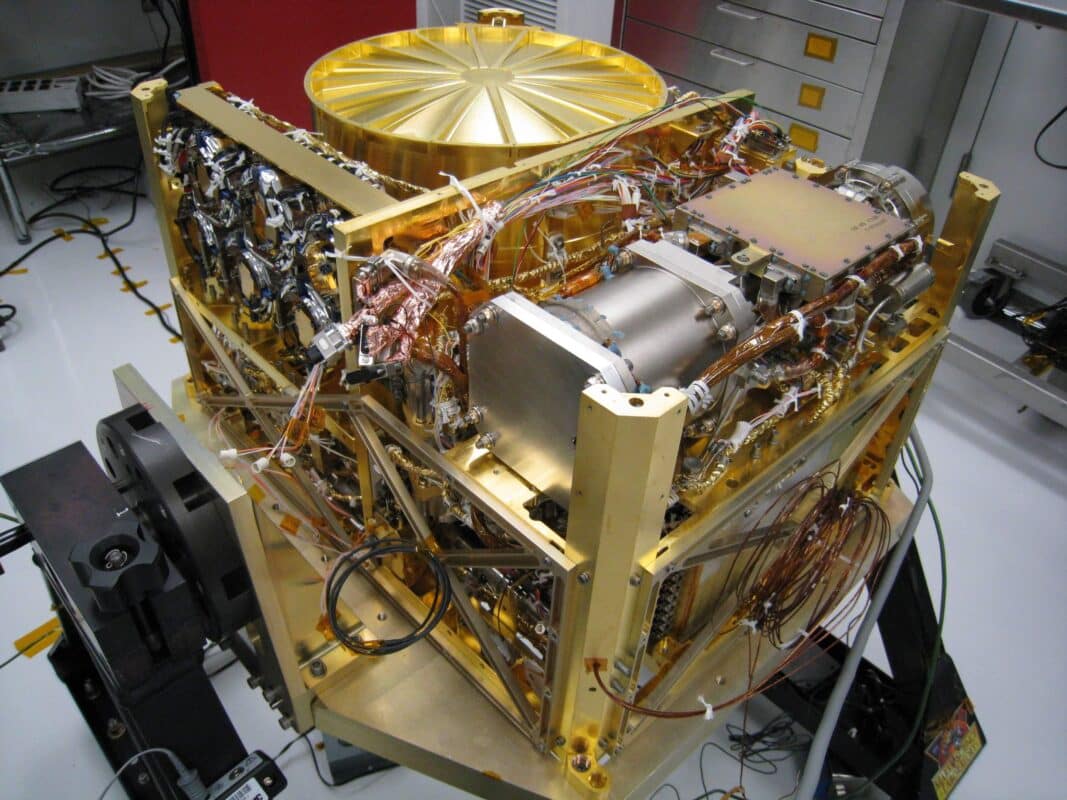 SAM (Sample Analysis at Mars) is a suite of instruments onboard NASA’s Mars Science Laboratory rover, Curiosity. Credit: NASA-GSFC
Until then, scientists continue to extract meaningful insights from the data Curiosity provides. Its ten-year record includes earlier detections of simple organics and mineral evidence of ancient water, but the identification of long-chain alkanes adds a new layer of complexity. The molecules themselves may not confirm life, but they open new investigative paths.
Freissinet’s comment that “Cumberland is teasing us” captures the dual reality of this mission milestone. It was the first time decane, undecane, and dodecane were positively identified on the surface of Mars.