
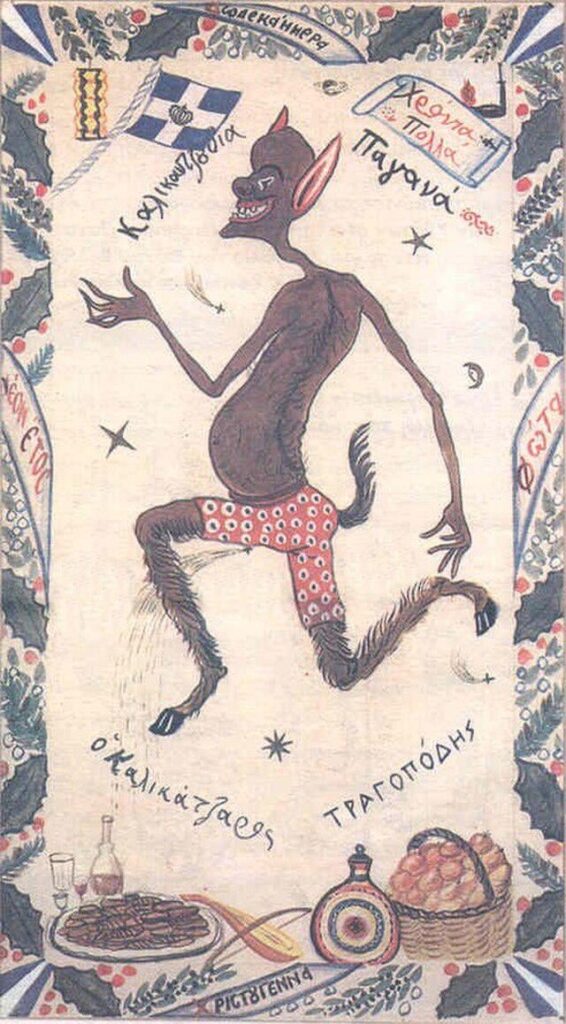
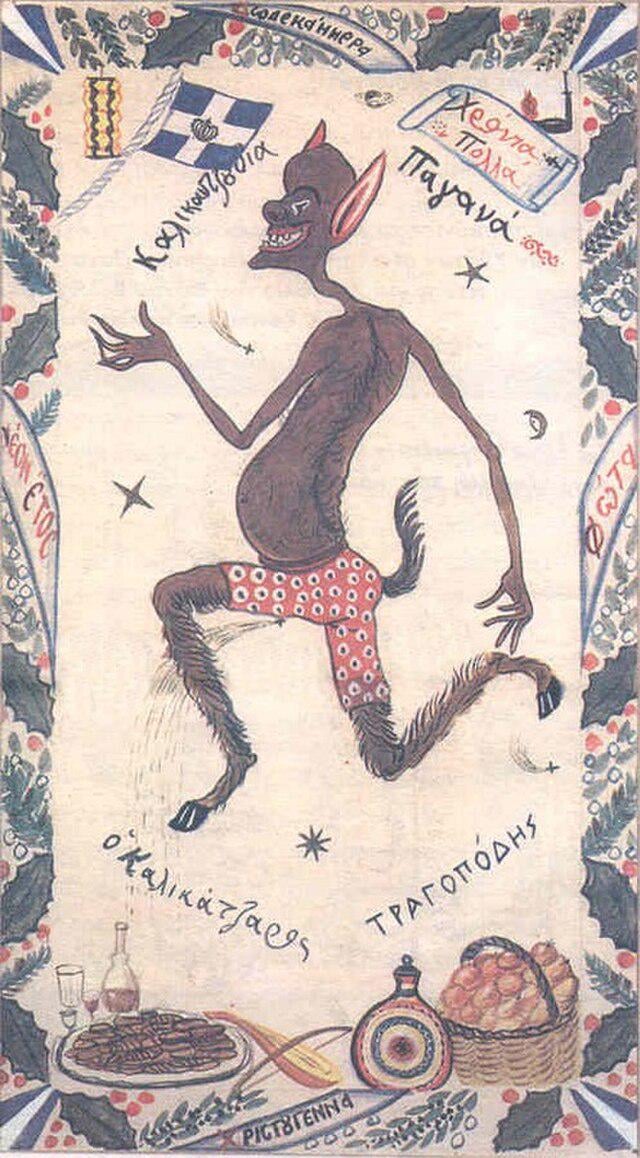
Zemheri is here.
In the high mountains of Anatolia and the freezing plains of the Balkans, there is a period known as "Zemheri"—the dead of winter. It spans roughly from late December to late January. While modern life hides behind electric heaters and double-pane glass, a primal fear still lingers in the rural "thresholds." They call it Karakoncolos (or Kalikancaros).
It’s not just a monster. It’s a glitch in the coldest nights of the year.
The Entity of the Void Evliya Çelebi, the famous 17th-century traveler, documented this "talisman" in the streets of Istanbul and the Caucasus. Descriptions are consistently unsettling: A small, ape-like humanoid covered in matted black fur, carrying a heavy walking stick, with bells clanking from its waist. But its most disturbing feature? The palms of its hands are hollow.
The Mimicry: Do Not Answer Your Name The "High Strangeness" begins after midnight. Karakoncolos is a master of mimicry. It stands outside your window in a blizzard and calls your name using the exact voice of your mother, your child, or a deceased relative.
The local rule is absolute: Never answer on the first call. If you answer, or worse, if you step outside the threshold to see who is calling, you enter a trance. People are often found the next morning, frozen to death just a few meters from their door, with no struggle, as if they simply walked into the white void by choice.
The "Kara" Language Game If you are caught by it in the streets, you enter a life-or-death riddle game. It will ask you: "Where are you coming from?" and "Where are you going?" There is only one way to survive. You must answer every question using the word "KARA" (Black).
- "I come from the Black-mountains."
- "I go to the Black-sea."
It is obsessed with its own nature. If you use the word, it finds you "one of its own" and lets you go. If you fail, it uses its heavy wool-comb (a sharp, iron-toothed tool) to tear into your skin or leads you into the freezing waters.
The Protection Rituals This isn't just folklore; it’s a living practice. In many Bulgarian and Turkish villages, people still:
- Hide the Combs: Wool combs are locked away at night because Karakoncolos loves to use them on human hair—and skin.
- The Threshold Meal: They leave "Kuymak" or boiled beets on the doorstep. Not as a gift, but as a distraction. If it's eating, it isn't calling names.
- The Iron Phobia: Since the 1800s, it’s believed the entity fears iron. Families place needles or knives under the pillows of newborns, whom the entity is said to crave.
The Scientific or the Supernatural? Skeptics call it "Hypothermia-induced hallucinations" or "The Wind's howl." But how do you explain the collective rituals of thousands of people across different cultures (Turkish, Greek, Bulgarian, Serbian) who all described the same bells, the same hollow palms, and the same terrifying mimicry long before they had a way to communicate?
Is it a sentient atmospheric phenomenon? Or something that lives in the "thin places" created by the extreme cold?
Whatever it is, if you hear your mother calling your name from the blizzard tonight… count to ten before you answer.
Image Credits & Legal Note: The illustration provided is from the OEDB 1961 (Greek State Textbook Publishing Organization) and is in the Public Domain. It is used here for educational and folkloric commentary purposes under Fair Use guidelines. Source: Wikimedia Commons.
by bortakci34
2 Comments
This seems like another cultural description of an ‘archon’. Like how they can’t create anything original & use mimicry as a means of deception. ‘Create a false reality only existing in the mind’
Oh that’s just Tumnus