
 Credit: ESA / ATG mediaLAB
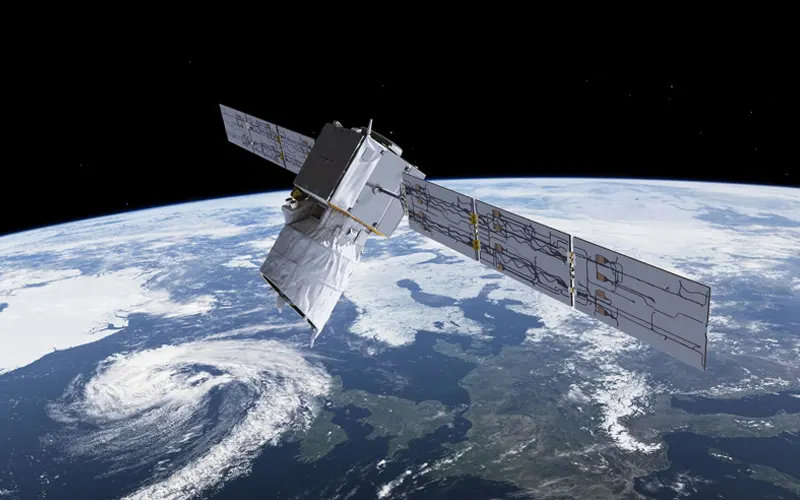
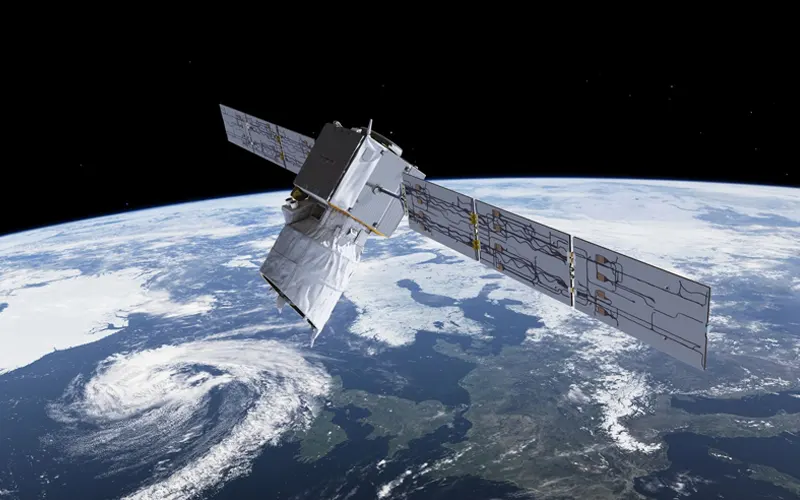
The European Space Agency (ESA) has approved the selection of the prime contractor for its Aeolus-2 weather satellite and is preparing to conclude an initial €70 million award to begin the next phase of its development.
Aeolus-2 is the planned operational successor to the original Aeolus mission, which was built by Airbus Defence and Space and deorbited in early 2023. The mission is being developed under the EUMETSAT (European Organisation for the Exploitation of Meteorological Satellites) European Polar System programme, in partnership with ESA, and aims to provide high-resolution wind measurements that will aid weather forecasting.
According to EUMETSAT, Aeolus-2 will consist of two satellites, launched sequentially, each carrying a Doppler Wind Lidar instrument. The instrument is unique in being the first space-based Doppler wind lidar capable of measuring global wind profiles from the lower atmosphere up to the stratosphere, at altitudes of around 40 kilometres. Each satellite is designed to have a lifespan of between 5.5 and 7 years, with the two satellites together expected to provide more than ten years of continuous operations. The launch of the first 2.5-tonne Aeolus-2 satellite is currently expected in 2034.
While ESA has not yet made an official statement on the mission’s status, a post published by an Aeolus-2 project manager indicates that the agency’s Industrial Policy Committee met in Paris on 28 January to approve the next phase of the mission’s development. According to the project manager, the Aeolus-2 prime contractor has been selected, the clarification phase is complete, and the kickoff is planned for the first quarter of 2026. During the 28 January meeting, a €70 million ATP (Authorisation To Proceed) was approved, enabling the selected prime to begin work on Phase B2.
With its work on the original Aeolus mission, one would expect Airbus Defence and Space to be a likely candidate for the prime contractor of Aeolus-2. If that occurs, the project could be folded into Project Bromo, a planned merger that would combine the space businesses of Airbus, Thales, and Leonardo. ESA may, as a result, require assurances that its development will not be hampered by the inevitable reorganization that follows the merger.
Keep European Spaceflight Independent
Your donation will help European Spaceflight to continue digging into the stories others miss. Every euro keeps our reporting alive.