
Image: Steven Madow / Space Explored
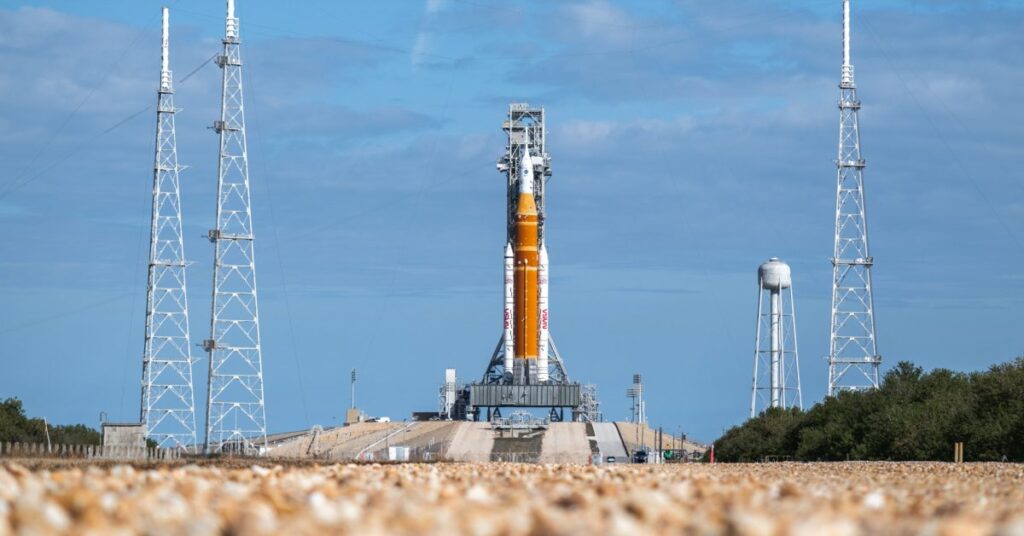
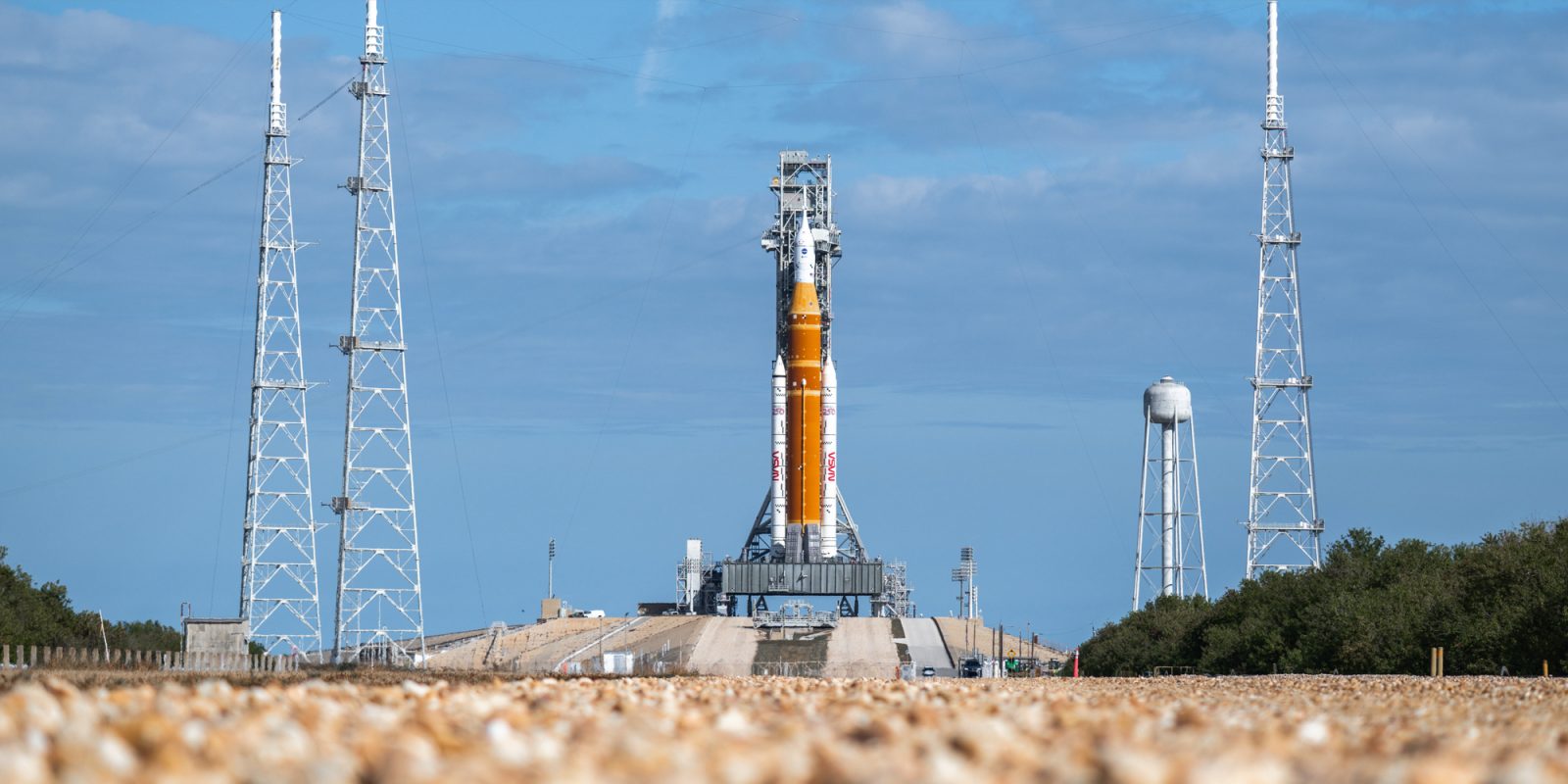
When people picture Artemis 2, the first human flight to the Moon in more than 50 years, they usually visualize Orion’s cone-shaped crew capsule riding atop NASA’s Space Launch System, the American heavy-lift rocket that gets it off the pad in Florida. But once Orion is in space, the mission quickly becomes a story of international systems engineering, with one of the most critical pieces being European-built.
Airbus, serving as the prime contractor for the European Space Agency, built Orion’s European Service Module, often described as the spacecraft’s “powerhouse.” On Artemis 2, the ESM will supply propulsion, electrical power, water, oxygen, and thermal control, enabling a four-person crew to survive and operate during a roughly 10-day lunar flyby mission.
Power, propulsion, and survival
Think of the ESM as Orion’s combined engine room and life-support trunk. It has four solar array wings, each about seven meters long, generating roughly 11 kilowatts of electricity. This is enough to run spacecraft systems continuously and keep the crew module supplied with power in deep space.
The service module houses 33 thrusters and engines – 24 reaction control thrusters, eight auxiliary engines, and one primary engine – that handle everything from fine course corrections to the major burns that shape the lunar flyby and set up Orion’s return to Earth. And because deep space is brutal on hardware, the ESM also manages thermal control, helping keep Orion’s habitable volume within operational temperature ranges.
Advertisement – scroll for more content
Crucially, the service module also carries and feeds the crew’s key consumables, water and oxygen, so Orion can operate as an independent spacecraft far beyond low Earth orbit.
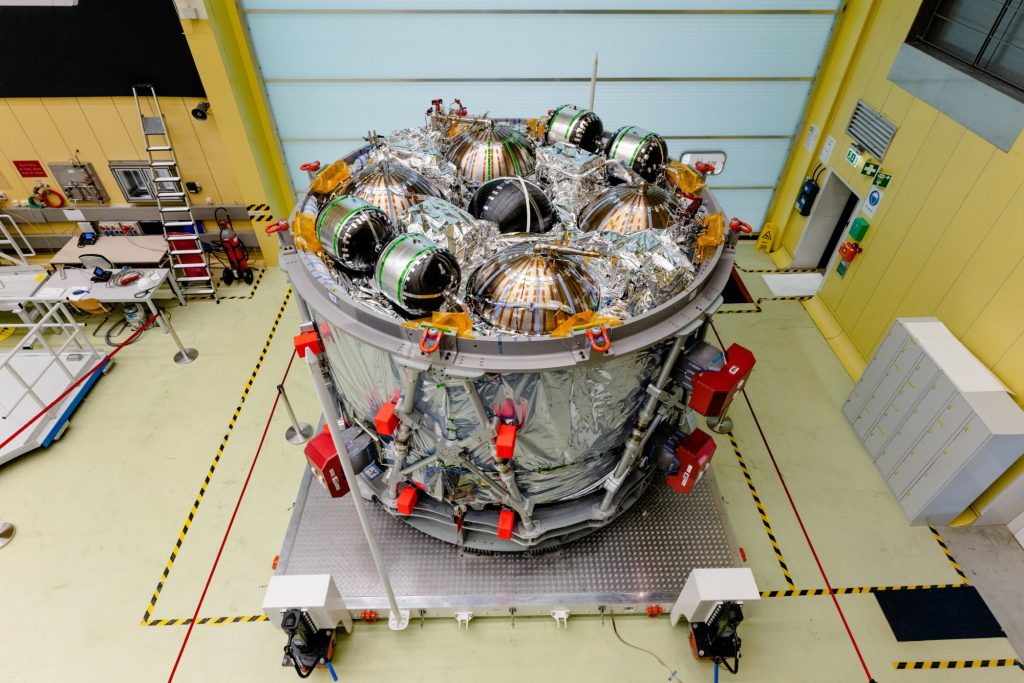 The European Service Module for Artemis 2 before it was shipped to Kennedy Space Center in 2021. Image: NASA
From Europe to Florida
The European Service Module is built at Airbus’ facility in Bremen, Germany, before making a transatlantic journey to the United States for testing and integration with Orion’s crew module. That handoff is where Florida enters the story. Major ESM hardware is delivered to NASA’s Kennedy Space Center, where it undergoes final checkout and is mated with the spacecraft that will carry astronauts around the Moon.
Airbus’ presence on the Space Coast extends beyond Orion. Through its U.S. Space & Defense division, the company maintains a facility on Merritt Island, where it operates a small-satellite final assembly line for its ARROW satellite family. While Airbus’ Artemis work is global, the company still has operational footprints in Florida’s space economy.
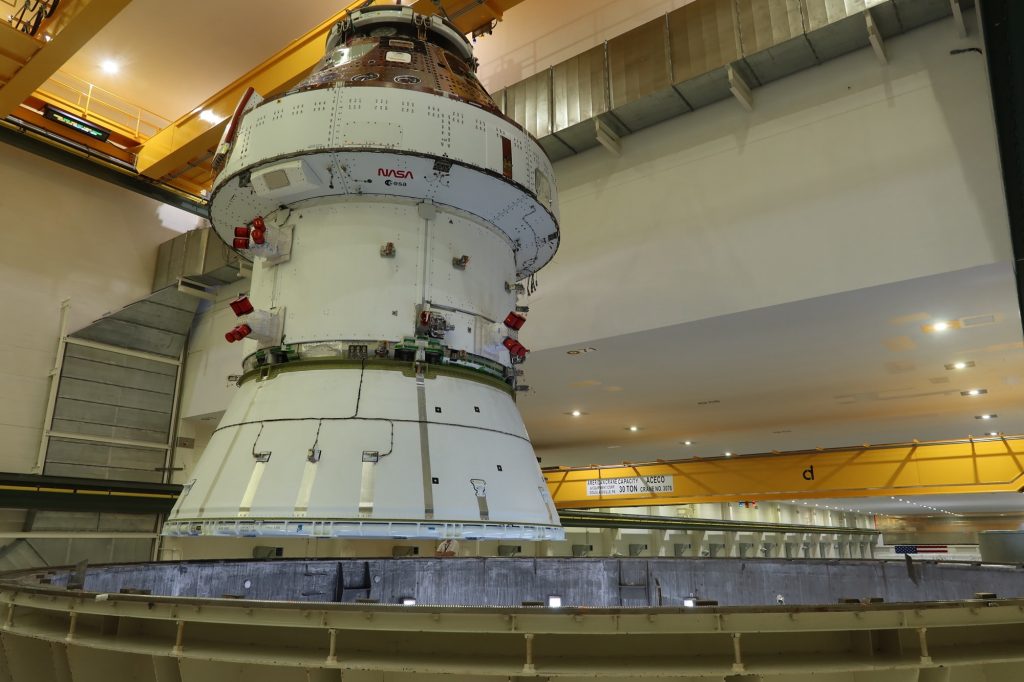 The Artemis 2 Space Launch System rocket and Orion spacecraft at Launch Complex 39B at Kennedy Space Center in Florida. Image: NASA
Airbus’ human spaceflight heritage
Airbus’ role in Artemis 2 reflects a longer tradition of multinational aerospace development. The company itself emerged from a European effort to pool industrial capabilities across national borders, an approach that later carried into human spaceflight.
That experience includes programs such as Spacelab, the International Space Station’s Columbus laboratory, and ESA’s Automated Transfer Vehicle, all of which helped establish the engineering and operational expertise behind Orion’s European Service Module. It’s decades of incremental capability converging into one very modern spacecraft element.
Artemis doesn’t stop at Artemis 2
The European Service Module is not a one-off contribution. ESA has contracted Airbus to build multiple service modules for Artemis missions, extending the partnership well beyond Artemis 2.
The first ESM was flown with an Orion spacecraft in late 2022 as part of the uncrewed Artemis 1 flight around the Moon. The service module for the Artemis 3 mission is being integrated with its Orion capsule in Florida. And in late 2025, Airbus completed the shipment of the service module for the Artemis 4 mission to Florida for integration and testing.
Artemis 2 represents more than a single test flight. It’s a demonstration that lunar exploration is now a systems-of-systems effort: American launch vehicles and capsules, European spacecraft infrastructure, and a globally distributed supply chain operating as a tightly integrated whole.


FTC: We use income earning auto affiliate links. More.