
Scientists from the University of Trento have proven for the first time the existence of an empty lava tube beneath the surface of Venus. The discovery was made thanks to analysis of radar data from the Magellan mission.
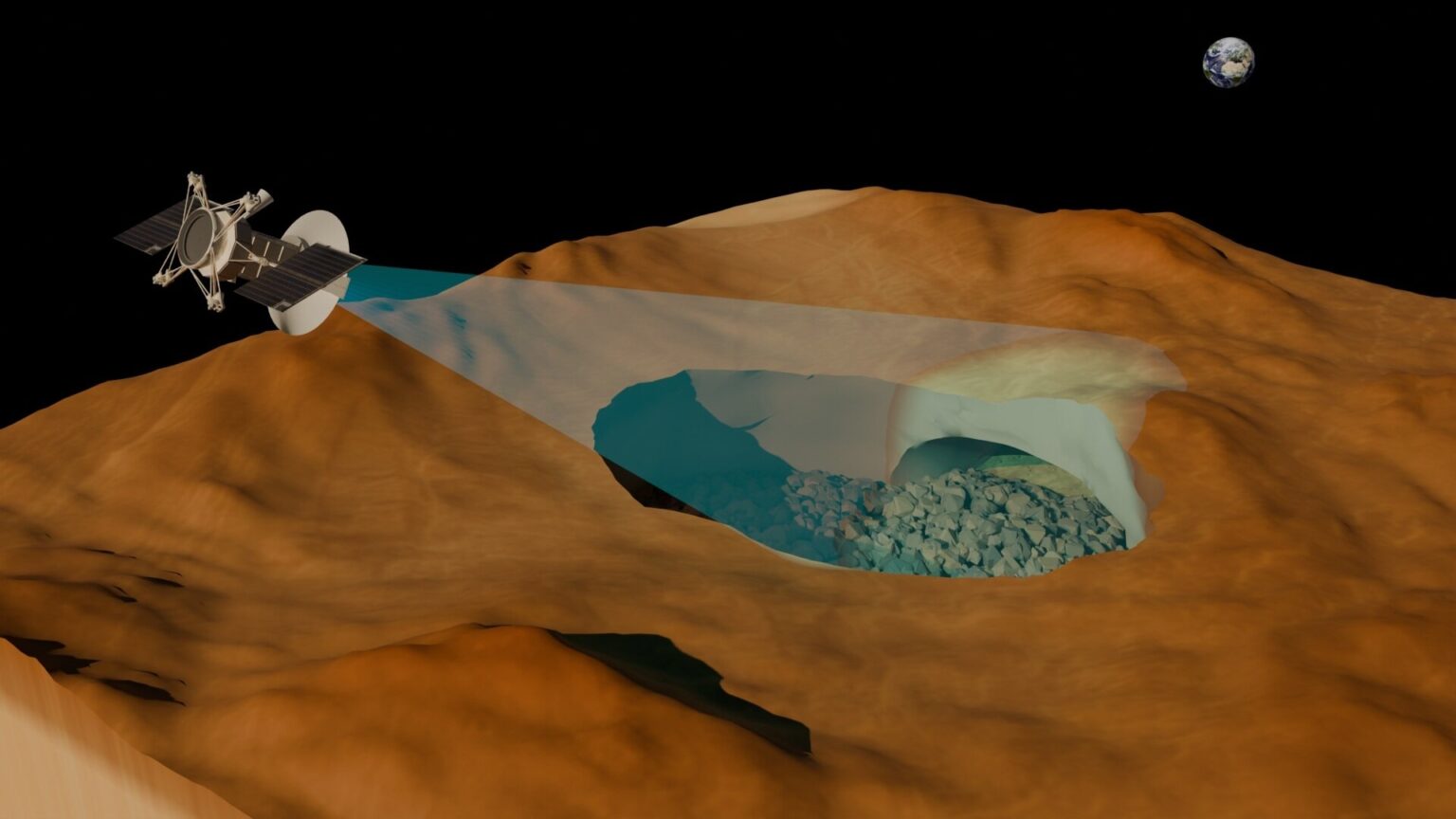 Lava tube on Venus (concept). Source: RSLab, University of Trento
Volcanic activity is not unique to Earth: traces of it have been found on Mars and the Moon. These include lava tubes — natural subsurface channels formed by the uneven cooling of lava, when the solidified crust conceals the liquid flow, leaving voids after the source has been depleted.
Since Venus’ surface and geology are largely shaped by volcanic processes, it is logical to assume that lava tubes must also exist there. However, finding them is a very difficult task. Since the tubes are formed underground, they usually remain hidden and can only be detected if part of their arch collapses, creating a pit visible on the planet’s surface. In the case of Venus, the situation is further complicated by the fact that the planet’s surface is always hidden by thick clouds. Therefore, scientists can only rely on radar data.
To solve this problem, a team of researchers from the University of Trento turned to archival data from the Magellan mission: between 1990 and 1992, it used radar to compile the most detailed map of Venus’ surface to date. Using the visualization technology they developed, the scientists analyzed radar images showing signs of local surface collapses.
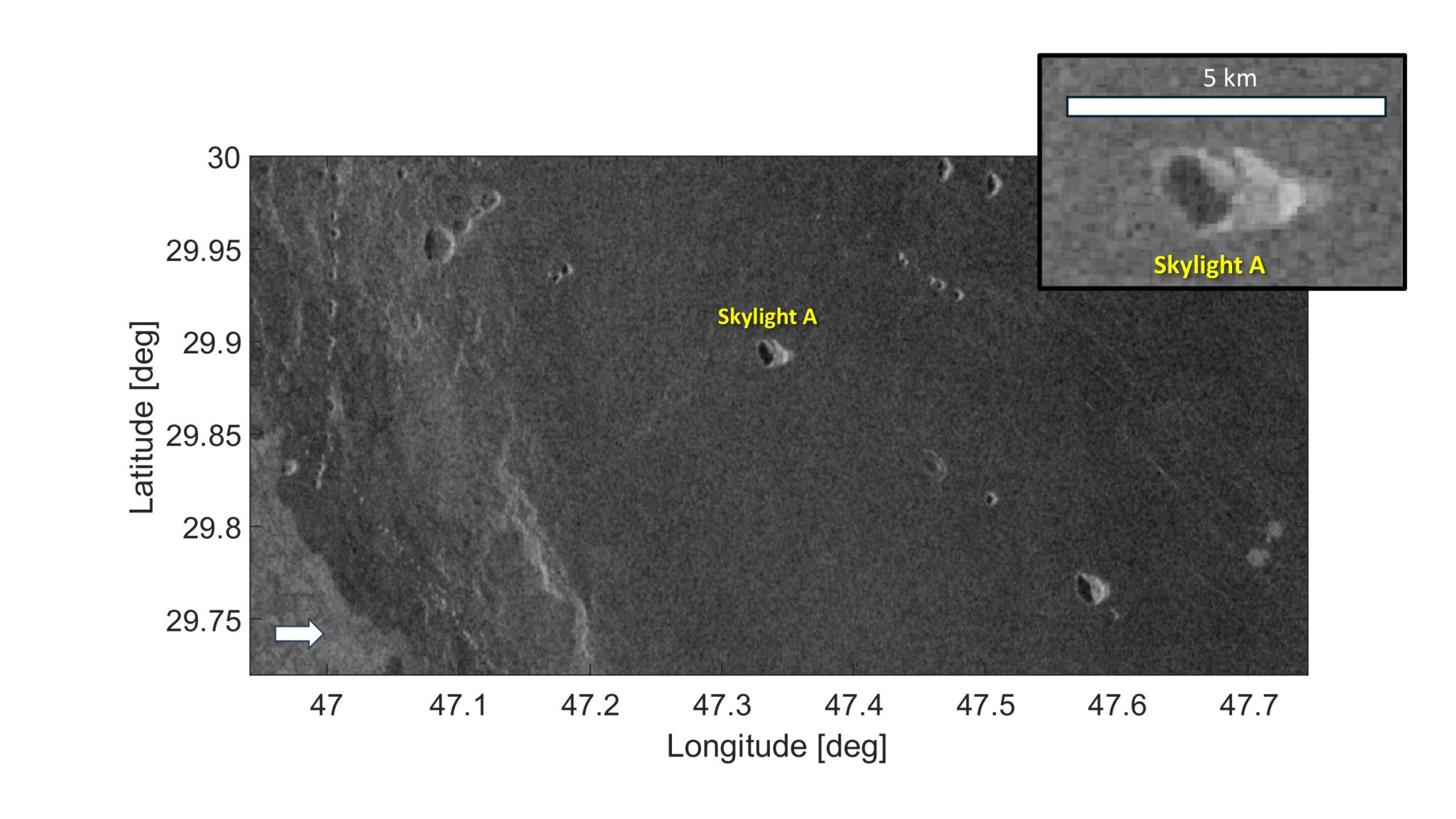 Radar map of the surface of Venus with a pit marked on it, caused by a collapse of the dome. Source: Nature Communications, DOI: 10.1038/s41467-026-68643-6
The analysis revealed the existence of a large underground channel in the Nyx Mons region, named after the Greek goddess of the night. Scientists interpreted the structure as a possible lava tube with an estimated diameter of about one kilometer, a vault thickness of at least 150 meters, and a depth of at least 375 meters.
The lava tube that has been discovered appears to be wider and taller than those observed on Earth or predicted for Mars. It is at the upper end of the range that scientists had predicted (and in one case actually observed) on the Moon. This is not surprising, since Venus has lower gravity and a denser atmosphere than Earth. This promotes the rapid formation of a thick insulating crust immediately after the lava flows out of the vent.
According to scientists, analysis of the morphology and elevation of the surrounding terrain, as well as the presence of other pits similar to the one under investigation, confirm the hypothesis that subsurface channels on Venus may extend for at least 45 kilometers. New, higher-resolution images and subsurface radar data will be needed to verify this and identify additional lava tubes. They are expected to be obtained by the Envision and Veritas missions, which are scheduled to launch in the next decade.
According to University of Trento