

The launch of the Artemis II mission to send humans around the Moon is fast approaching. The Register had a go at building Lego’s latest SLS set and found it a lot of fun, particularly making whooshing noises as the rocket “launches.”
The 632-piece set uses Lego Technic elements to recreate NASA’s Space Launch System (SLS). Turn the handle on the side, and the rocket rises from the launch pad, the solid rocket boosters separate, and eventually the upper stage detaches.

Lego SLS set with box
The box contains several plastic bags of Lego components (the paper bags used in other sets have yet to arrive here) and an annoying page of stickers. While the latter has long been a feature of Lego sets, its inclusion is frustrating because some pieces are pre-printed.
It takes approximately three to four hours to build at a leisurely pace and isn’t particularly challenging – its target audience is aged nine and up.
That age range is important to keep in mind since the set is a little inaccurate. The core stage, for example, only has two engines rather than the four ex-Space Shuttle units that get thrown away with every launch of the real-world rocket.
The two engines at the base hint at a larger problem with this set: it only really works when viewed from the front. Look at it from the side or back, and it becomes evident that only half of the core stage is present due to the rail on which the rocket rises.
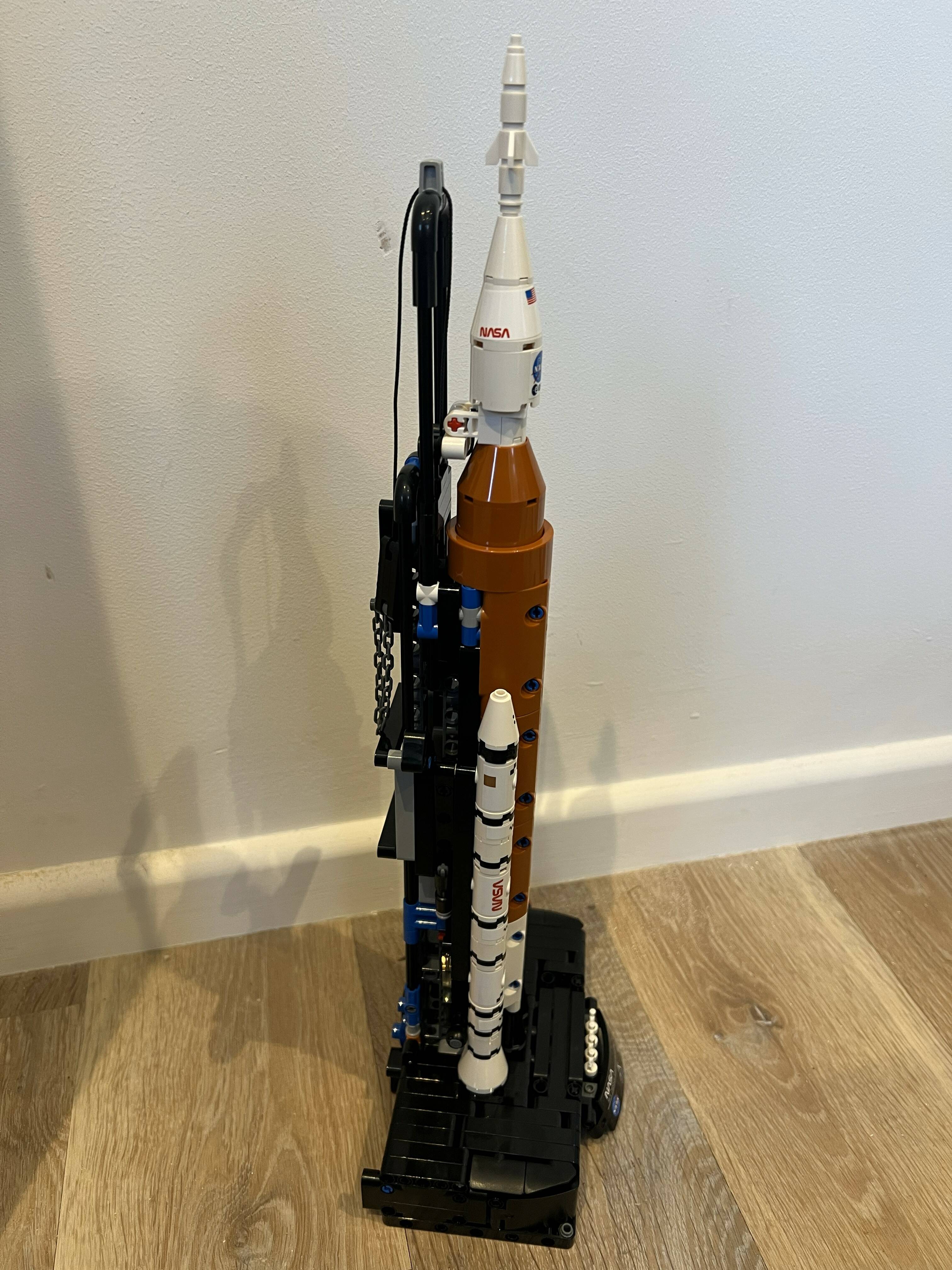
Artemis, the half-a-rocket
It is also a shame that Lego did not take the opportunity of disguising the rail as a launch tower or similar. The larger SLS set features a more detailed launch pad as well as a tower. The addition of some Technic wizardry to that would have been great.
Then again, the larger SLS set is considerably more expensive. This version comes in at $59.99 from the Lego store, a lot less than the $259.99 Lego wants for its bigger brother. In addition, while the larger set will take a lot longer to build, we’d argue that this set has more post-build playability thanks to its moving parts.
While it is easy to pick on places where Lego has sacrificed technical accuracy for economy or scale, the educational value and sheer fun of the set outweigh the irritations. Turning the crank and watching the rocket do its stuff is quite something, and it gets over how the SLS works far better than a static display.
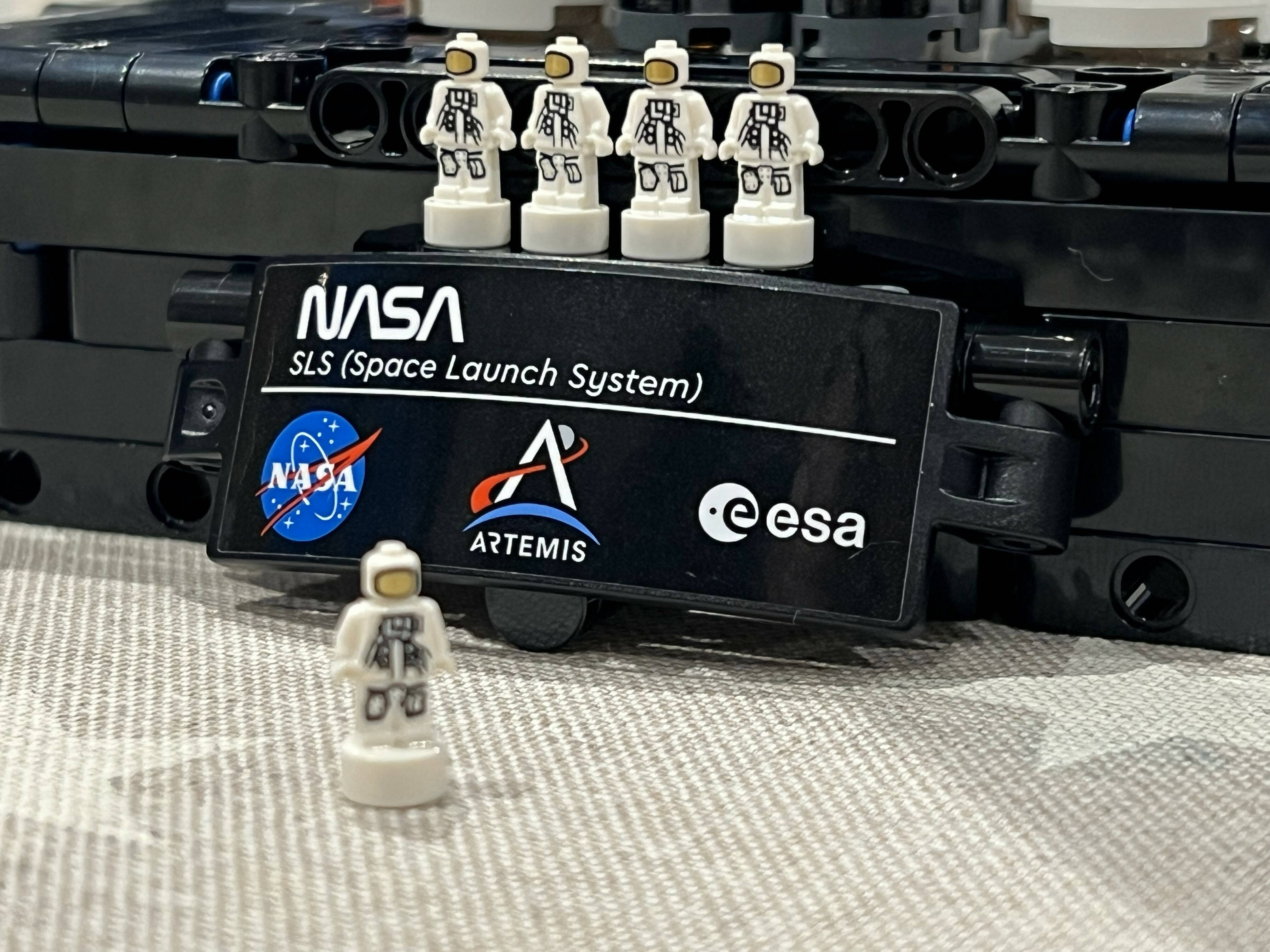
Not everyone gets to go to the Moon – a leftover Lego astronaut
Artemis II was scheduled to launch this month. The rocket is on the launch pad, but following a Wet Dress Rehearsal (WDR) in which NASA’s monster Moon rocket leaked hydrogen, managers announced that the agency is targeting March for lift-off. The mission won’t enter lunar orbit, but it will fly humans around the Moon for the first time in more than half a century.
Lego’s latest interpretation of the SLS is therefore well timed and gets a thumbs-up from this writer – and from younger brick enthusiasts who are far more interested in whooshing noises than mission briefings. ®