
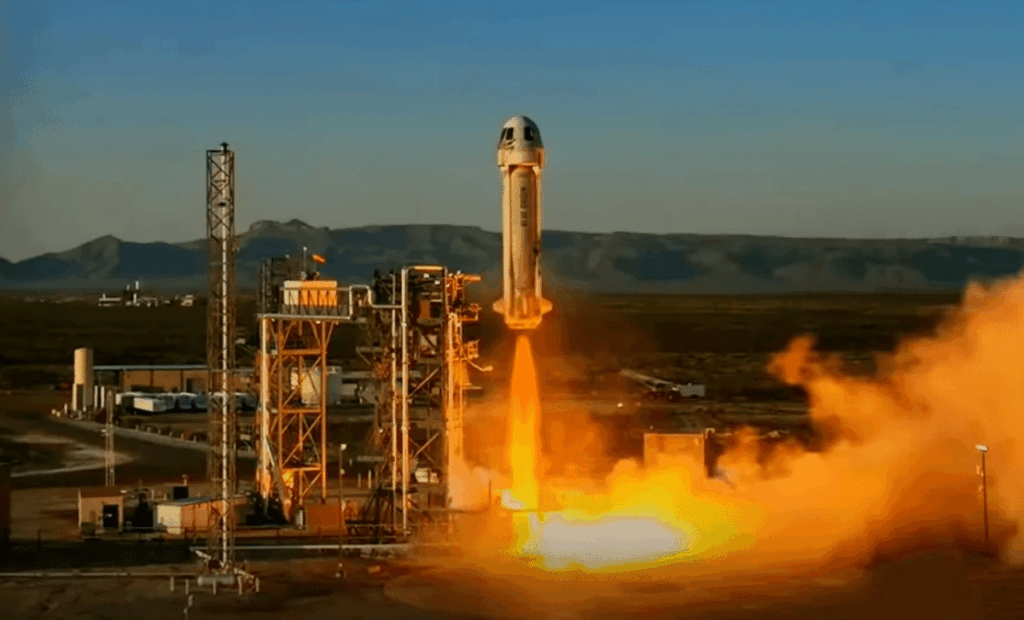
Blue Origin, Jeff Bezos’ aerospace company, recently made a major shift in its strategy that will reshape its operations for at least the next two years. The company announced that it would pause its space tourism missions, focusing instead on advancing its plans for lunar exploration.
Blue Origin Pauses Space Tourism to Focus on Lunar Missions
In a landmark announcement, Blue Origin revealed that it would suspend its space tourism operations for at least two years to refocus its efforts on its lunar ambitions. This shift comes as the company seeks to accelerate the development of its Blue Moon spacecraft, a key player in NASA’s Artemis missions. The announcement has major implications for the future of space tourism, as it signals the company’s move toward more ambitious goals beyond suborbital flights.
By prioritizing lunar exploration, Blue Origin aims to “shift resources to further accelerate development of the company’s human lunar capabilities,” according to a statement released by the company. This decision underscores Blue Origin’s long-term commitment to supporting NASA’s goals for the Artemis program, which intends to return humans to the moon and eventually establish a permanent, sustainable lunar presence. While the space tourism aspect has garnered significant public interest and media attention, Blue Origin is now positioning itself to play a critical role in the new era of lunar exploration.
The company’s New Shepard vehicle, which has been the cornerstone of its space tourism operations, will remain grounded for the foreseeable future. With 38 successful flights under its belt, including 17 crewed missions, New Shepard has already made a mark in the field of commercial space tourism. However, its focus will now be on the development of vehicles and technologies that can take humans to the moon.
What Does This Mean for Space Tourism?
The temporary halt of Blue Origin’s space tourism flights marks a significant turning point for the industry. Space tourism has been a major milestone in the privatization of space travel, with Blue Origin being one of the most prominent players. However, the decision to pause these operations reveals the company’s willingness to step back from commercial endeavors in favor of supporting larger national objectives.
As Blue Origin shifts its focus to lunar missions, it is likely to face challenges, including stiff competition from other aerospace companies like SpaceX, which is also investing heavily in space exploration. The impact of this shift could be twofold. On the one hand, it might delay the commercialization of space tourism, which many had hoped would become more accessible in the near future. On the other hand, this pivot could position Blue Origin at the forefront of deep space exploration, which may prove to be a more lucrative and significant area for the company’s long-term growth.
As the company develops its Blue Moon spacecraft, it is clear that its focus is on larger, more complex missions that go far beyond the few minutes of weightlessness offered by its space tourism flights. The decision to focus on the Moon aligns with the larger U.S. goal of returning astronauts to the lunar surface as part of the Artemis program, which aims to land humans on the Moon in the coming years.