
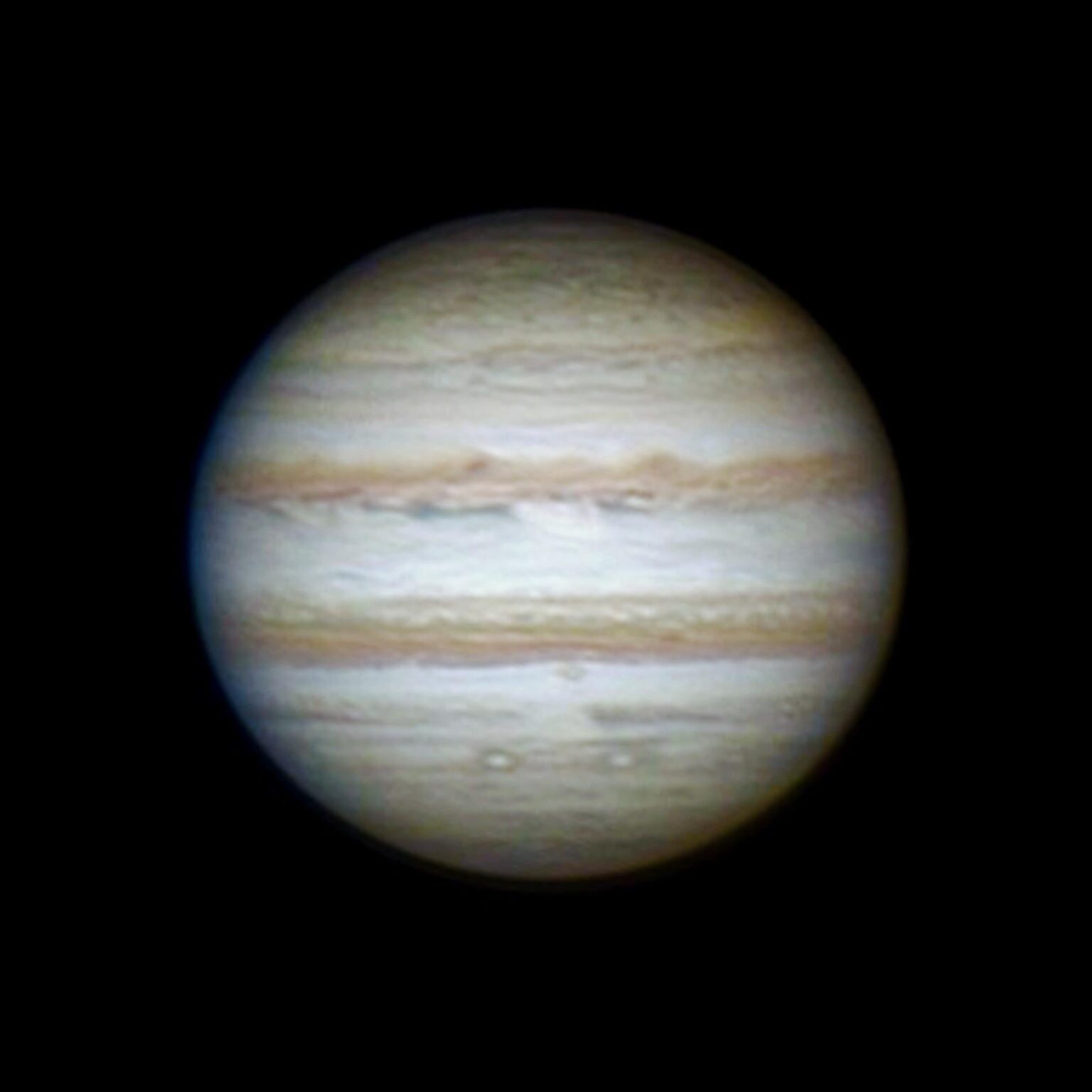
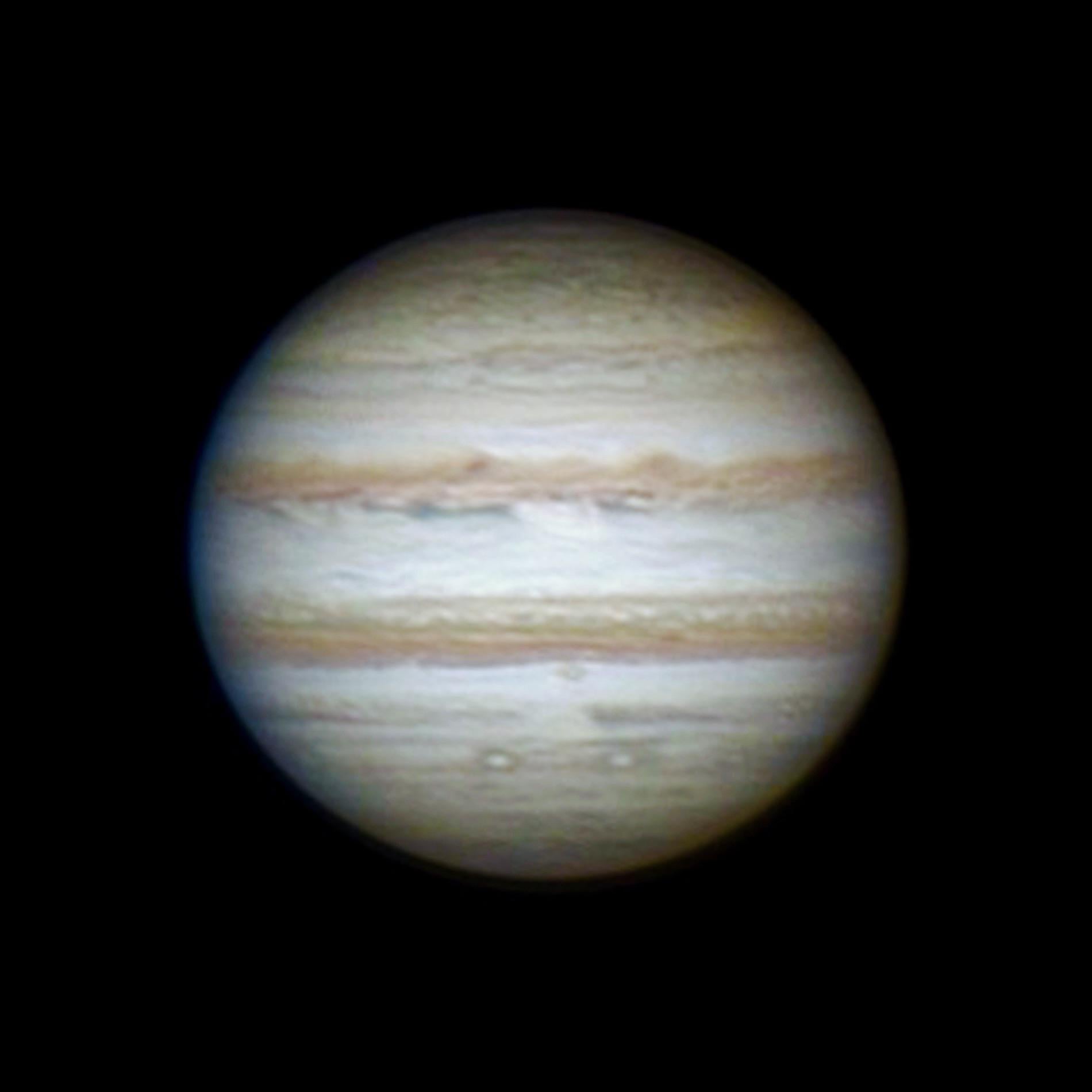
I finally found time to take out the big scope and mount for a session with Jupiter.
Jupiter is still quite close right now. On January 10th Jupiter was at what's called "opposition," meaning that Earth was directly between Jupiter and the Sun. In this alignment, Jupiter appears at its biggest and brightest in the night sky. It will look like an extremely bright star to the East. It is visible as soon as night falls.
Jupiter has four large Galilean that are easily visible through binoculars. It has 95 moons in total.
The prominent stripes and bands you see in the picture are actually cold, windy clouds of ammonia and water, floating in an atmosphere of hydrogen and helium. The dark stripes are called belts, while the lighter bands are called zones, and they flow east and west in opposite directions. Near the bottom you can see a few light ovals. These “string of pearls” as they called, are actually massive storms.
Like all of the other gas giant planets (Saturn, Uranus, and Neptune) Jupiter has rings. Unlike Saturn’s brilliant ring system, Jupiter’s rings are faint and wispy.
Jupiter is also our solar system’s oldest planet, forming from the dust and gases left over from the Sun's formation 4.6 billion years ago. But it has the shortest day in the solar system, taking about 10 hours to spin around once on its axis.
The composition of Jupiter is similar to that of the Sun – mostly hydrogen and helium
Celestron 11” SCT Celestron CGX mount ZWO ASI585MC Planetary Camera
The very fast camera allowed me to shoot at 150 frames per second and capture over 26,000 frames in just under 3 minutes. I stacked the best 25% of frames for this image.
The Great Red Spot was not visible during this session.
by Astro_HikerAZ