
Essentially i’ve been waiting for “ideal” conditions to take out my Celestron ExploraScope 114AZ which is relatively cheap and poorly built.
So people with cheaper telescopes know the struggle of having to wait for more than normal conditions to make good use of the telescopes.
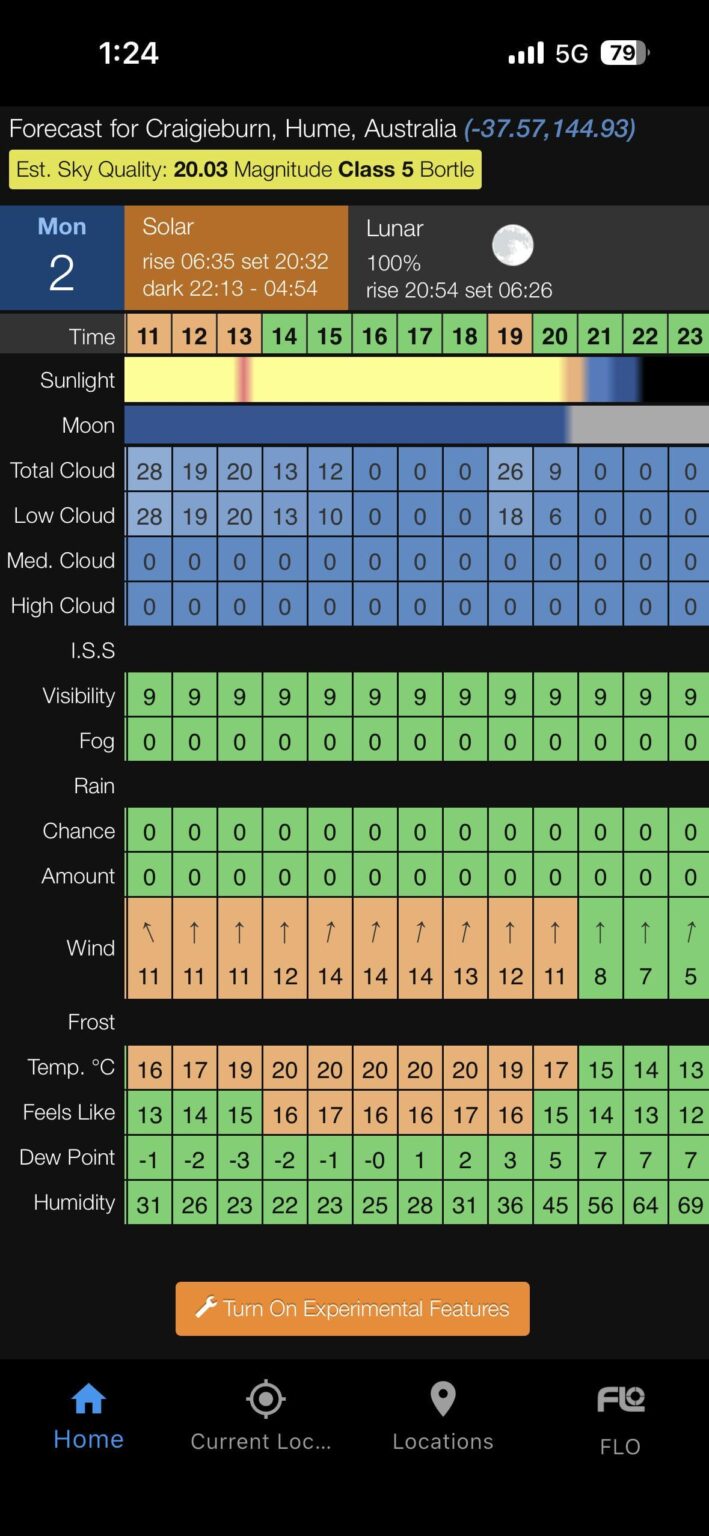
Anyways my point is using this reference picture of melbourne on 02/02 between 7-11pm, can someone explain if this would be a good time to view some planets.
I have a rough idea of the ideal conditions I need especially the wind speed, but i’m not sure how much the moonlight plays into effect for planet observing or stuff like how the different sized clouds play into effect.
Any help would be much appreciated.
by Amraj
3 Comments
moonlight won’t have much of an effect for planetary viewing. looks like clouds won’t give you an issue on monday night. you’ll be able to see jupiter and a glimpse of saturn if you catch it before it goes below the horizon 🙂
I’ve found cloud coverage in all such apps and sites to be 99% inaccurate for the Australian east coast. IDK how you will go out west. It might be because most seem to use a NOAA global cloud model API .. which just isn’t accurate around these parts.
I just use the [BoM satview loop](http://satview.bom.gov.au/) to gauge likely cloud cover. It’s proven much more reliable for me.
My question is: how did you set the homelocation to something else that the default (Arlington, UK)? Always annoys me that I open the app and have to switch to the „current location“ tab.