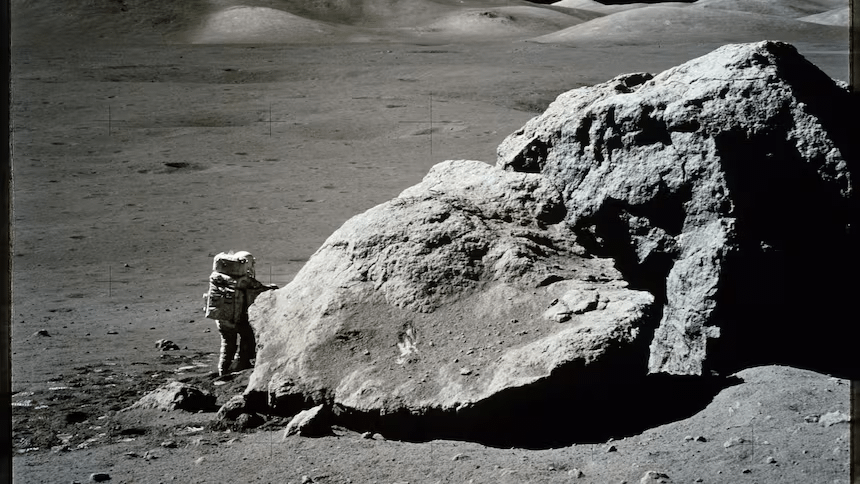
Scientist-astronaut Harrison H. Schmitt stands next to a split lunar boulder during the third Apollo 17 extravehicular activity at the Taurus-Littrow landing site on the moon on Dec. 13, 1972. That was the last mission to the moon. (Johnson Space Center)
by Grahamthicke

4 Comments
One day, roughly 3.9 billion years ago, the Moon and a space rock 160 miles long had an explosive encounter. The tranquility was shattered as this [25,000-trillion-ton projectile](https://www.nature.com/articles/nature18278) moving at a speed of perhaps 52,000 miles per hour — 30 times faster than a particularly speedy bullet — hit the lunar nearside.
Much of the impactor would have been obliterated on impact, which involved more energy than could be unleashed by the combined force of every single nuclear weapon ever made. At ground zero, the preternaturally high temperatures and pressure annihilated the lunar rock, creating ephemeral silicate clouds and a giant, temporary sea of molten rock perhaps 12 miles thick — twice the height of Everest. Fragments of rock that initially survived the encounter shot through the lunar crust, digging out giant trenches;
The Moon had a new [710-mile hole](https://www.nasa.gov/image-feature/nasa-lends-moon-rock-to-new-administration/) in its face. Named Imbrium Basin, it was seven times wider than the crater left behind by the dinosaur-aggravating asteroid that hit Earth 66 million years ago.
Lots of people say it’s all photoshop 🤣
hey we have these on earth
Some of these later Apollo lunar surface photos are just stunning. The astronauts standing next to boulders, them driving around with the moon car, or them visiting that one probe. These are so mind-boggling.