
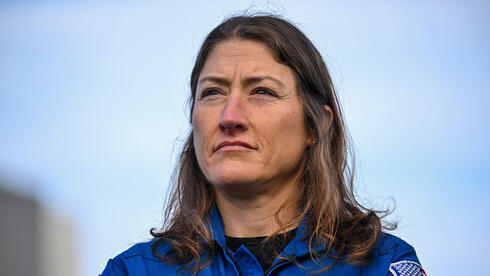
At a distance of about 400,000 kilometers from Earth, American astronaut Christina Koch is about to make history. If there are no further delays, on the night between February 6 and February 7, at 4:41 a.m. Israel time, the Artemis 2 mission will be launched toward the moon, carrying the first humans to approach it since 1972. Several days later, Koch is expected to become the first woman to see the moon up close, following 24 white men who did so during the Apollo missions, 12 who orbited the moon and 12 who also landed on it.
But Koch’s journey to the moon did not begin on the launch pad at Cape Canaveral in Florida. It began much earlier, in places where nature pushes human endurance to its limits.
5 View gallery
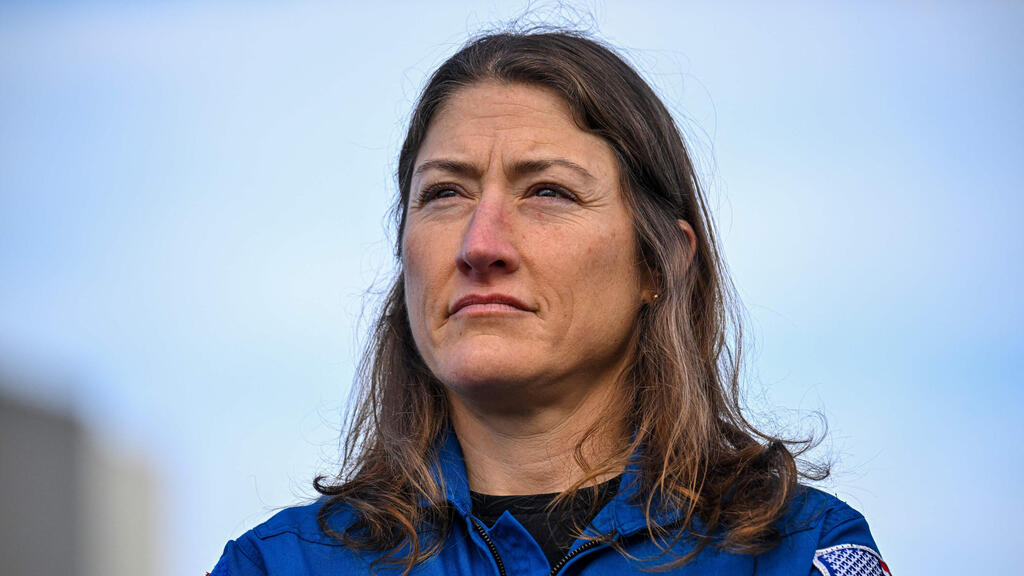
American astronaut Christina Koch
(Photo: Miguel J. Rodriguez Carrillo/ AFP)
Koch was born 47 years ago in Michigan. She grew up in Jacksonville, North Carolina, and later moved to Montana. In one interview, she said she traveled from the eastern United States to the West on a heavy motorcycle. As a child, while spending summers on her family’s farm in Michigan, she developed a passion for hard work and tackling complex challenges. Her hobbies include surfing, rock climbing, community service, running, yoga, backpacking, photography and more. She has said that even as a young girl she would look at a photograph of Earth taken in 1968 by astronaut William Anders, a member of Apollo 8, the first mission to orbit the moon but not land on it.
“I loved opening travel magazines that arrived at our house, tearing out pages with faraway places and hanging them on the walls of my room,” Koch told World Woman News. “When I was in middle school, I had pictures and maps of Antarctica alongside images of space. In hindsight, it turned out that the walls of my childhood bedroom shaped my career.”
Koch said the mission is especially exciting because it is the first in a series of critical milestones toward returning humans to the moon and eventually sending people to Mars. “The fact that we are enabling Artemis 3, in which humans will land on the moon again for the first time in more than 50 years, is an enormous privilege,” she said.
She earned a bachelor’s degree in electrical engineering and another bachelor’s degree in physics from North Carolina State University, followed by a master’s degree in electrical engineering. She also studied at a university in Ghana and was later awarded an honorary doctorate.
5 View gallery
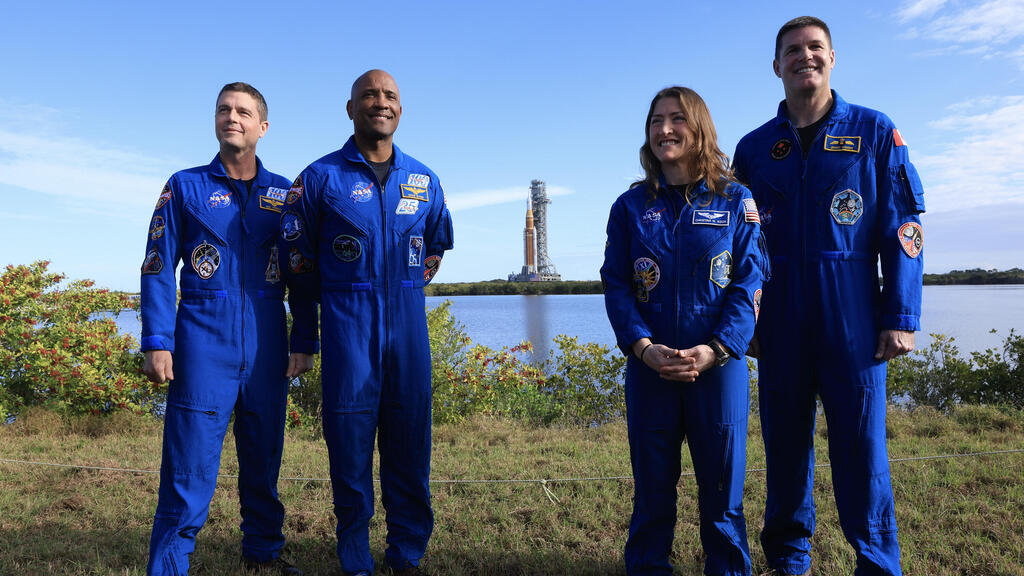
Koch with her Artemis 2 crewmates, including Victor J. Glover, the first African American to see the moon up close
(Photo: Joe Raedle/Getty Images )
Koch began her professional career at NASA, not as an astronaut but as an electrical engineer at the Goddard Space Flight Center, where she contributed to the development of instruments for several NASA missions. She later became a research associate in the United States Antarctic Program, a role that included spending a full year, including an entire winter, at the Amundsen-Scott South Pole Station, as well as a season at Palmer Station. As part of that work, she served on firefighting and search-and-rescue teams. During her time on the frozen continent, temperatures dropped to about minus 80 degrees Celsius.
She later returned to space science instrumentation as an electrical engineer in the space department of the Applied Physics Laboratory at Johns Hopkins University, where she helped develop instruments for missions including the Juno probe studying Jupiter. Koch then returned to field science in remote regions, with additional service at Palmer Station in Antarctica and at Summit Station in Greenland.
She subsequently joined the National Oceanic and Atmospheric Administration and continued working at isolated scientific bases, serving as a field engineer in Utqiagvik, Alaska, and as station manager at the American Samoa Observatory. Throughout her career, she has also been involved in technical training, mentoring, volunteer work and educational outreach.
Koch participated in the NASA Academy program in 2001 and worked as an electrical engineer at NASA early in her career. In 2013, she was selected as one of eight members of NASA’s 21st astronaut class and completed astronaut candidate training in 2015.
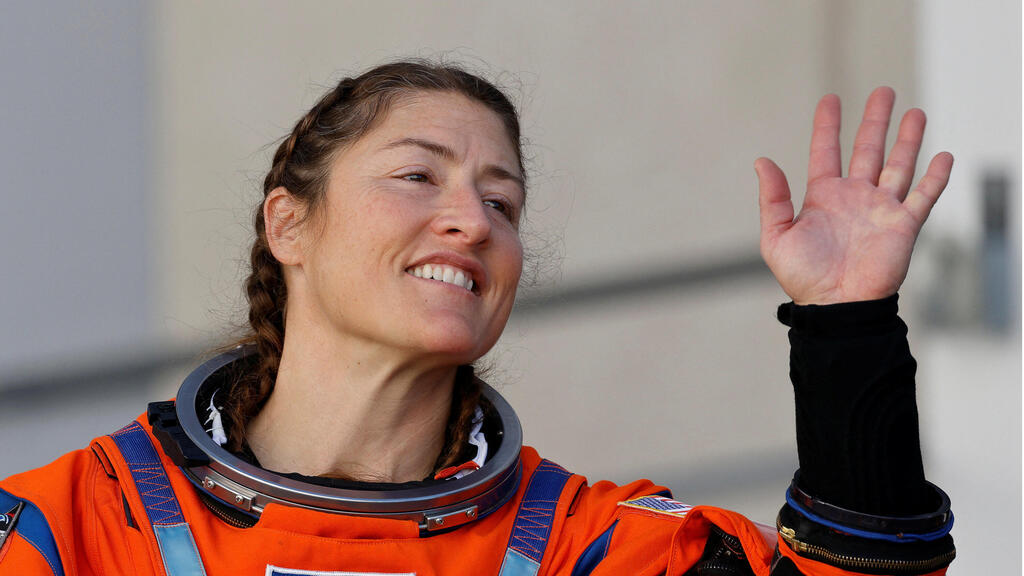
She was launched into space on March 14, 2019, from the Baikonur Cosmodrome aboard the Soyuz MS-12 spacecraft, alongside Russian cosmonaut Alexey Ovchinin and NASA astronaut Nick Hague. She returned to Earth on February 6, 2020, aboard Soyuz MS-13 with Russian cosmonaut Alexander Skvortsov and European Space Agency astronaut Luca Parmitano. In total, Koch spent 328 consecutive days aboard the International Space Station, a record for women.
5 View gallery
(Photo: Joe Skipper/ Reuters)
During her service as a flight engineer on Expeditions 59, 60 and 61, Koch and her crewmates contributed to hundreds of experiments across a wide range of scientific and technological fields. Among the notable achievements of her missions were robotic work to upgrade the Alpha Magnetic Spectrometer, growing protein crystals for pharmaceutical research, and testing 3D biological printers in a microgravity environment.
Koch conducted six spacewalks, including the first three all-female spacewalks in history, totaling 42 hours and 15 minutes. Yet one of the spacewalks that was meant to make history was canceled for an unusual reason.
In late March 2019, history was supposed to be made with the first spacewalk involving two female astronauts. But days earlier, NASA announced a change in plans. Instead of astronauts Anne McClain and Koch, Nick Hague and Koch carried out the spacewalk.
NASA explained that McClain, who had performed a spacewalk with Hague days earlier, realized that the International Space Station had only one medium-sized spacesuit available. As a result, the two female astronauts could not both participate in that mission due to the lack of a second appropriately sized suit.
Koch later recalled, “When I found out I had been selected, the first person I wanted to tell was my husband. I planned to tell him while we were both looking at the moon. Unfortunately, it was too cloudy. So I decided to just tell him while we were looking at a cloudy sky. Even so, it was a very special moment, and he was so, so happy for me.”
That October, history was made when Koch conducted a spacewalk with astronaut Jessica Meir, who is scheduled to fly to the International Space Station in mid-February and may be assigned in the future to Artemis 3, the mission that will land on the moon. During the roughly seven-hour spacewalk, Koch and Meir received a congratulatory call from President Donald Trump. “You’re doing an amazing job,” he told them. “Two brave American female astronauts making history. I want to congratulate you. You are very brave. You are amazing. You are replacing an important part on a space station, and it’s a historic event. The country is proud of you. You’re doing a great job.” Trump also admitted that he “would not do such a thing himself.”
Meir also reflected on the historic moment. In a May 2020 interview with Yedioth Ahronoth and ynet, she said, “Christina and I exchanged glances because we knew we were going through something that was both unprecedented and something very few people have ever experienced. I made sure to take a few moments to look at Earth and really try to take in where I was. Some of the scenery we saw was unimaginable. Seeing sunrise and sunset from that altitude, city lights you could recognize, it overwhelms you.”
In March 2023, Koch received the news that she had been selected to participate in the Artemis 2 mission, which will send astronauts near the moon for the first time since 1972. Joining her on the lunar flyby will be mission commander Gregory R. Wiseman, Victor J. Glover, who will become the first African American to see the moon up close, and Canadian astronaut Jeremy Hansen, who will become the first non-American to reach lunar proximity.
5 View gallery
Artemis 2
(Photo: John Raoux/ AP)
Koch told the Payload website how she informed her husband, Bob, of her selection. “When I found out I was chosen, the first person I wanted to tell was my husband. He has been my biggest supporter. We both deeply love each other’s careers and closely follow one another’s professional paths, and I simply could not wait to get home and tell him,” she said.
“I planned to tell him while we were both looking at the moon. We live by the sea, and one night, while we were riding our bikes home from the gym, we stopped on a pier because I knew the moonrise was about to happen,” Koch recalled. “But unfortunately, it was too cloudy. So I decided to just tell him while we were looking at a cloudy sky. Even so, it was a very special moment, and he was so, so happy for me. We are always happy for each other’s success and simply support one another in everything.”
In the same interview, conducted days after the Artemis 2 announcement, Koch said, “The mission is so exciting because it is the first in a series of critical milestones toward returning humans to the moon and eventually sending people to Mars. The fact that we are enabling Artemis 3, in which humans will land on the moon again for the first time in more than 50 years, is an enormous privilege.”
Of the mission itself, which is expected to last about 10 days, Koch said, “This will be the first time we truly test Orion’s life-support systems, communications systems, maneuvering capabilities for rendezvous in space, and proximity operations between spacecraft. There is so much to learn, and we will be focused 100 percent of the time on future missions.”
Speaking about the moon, which she will soon see up close, Koch said, “One of the beautiful things about the moon as a destination is that we are all looking at the same moon. Every person on Earth sees the same moon. When I lived at the South Pole, I would talk to friends and family I missed and tell them, ‘I am looking at the same moon you are looking at right now.’ The fact that everyone on Earth looks at the same moon, and everyone knows that we are within that field of view, is something incredibly powerful to me.”
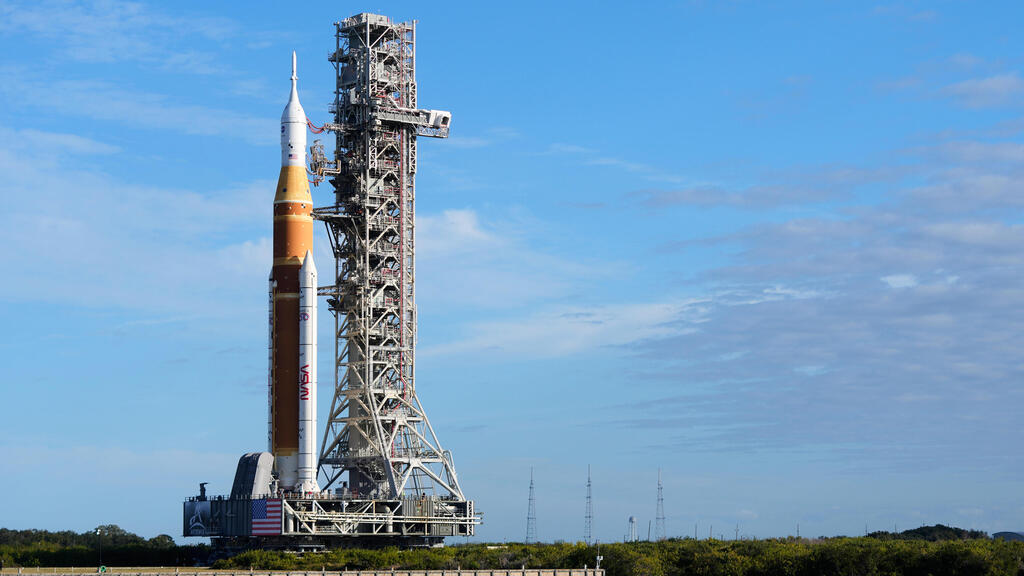
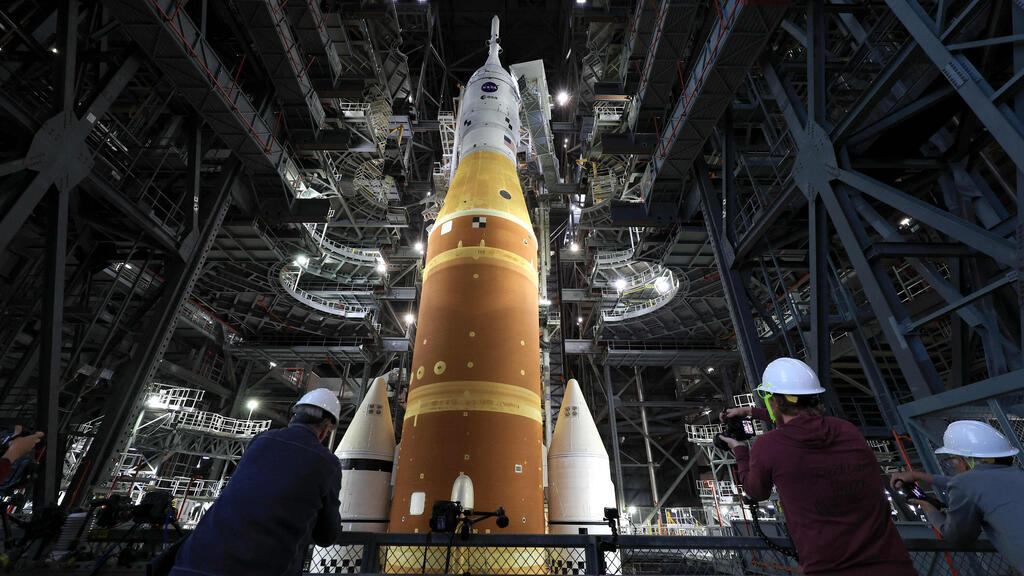
About two weeks ago, NASA’s massive new launch vehicle began its short but very slow journey to the launch pad at Cape Canaveral in Florida. The rocket, standing 98 meters tall, moved at a speed of 1.6 kilometers per hour from the Vehicle Assembly Building at the Kennedy Space Center to the launch pad. The roughly six-kilometer journey included several stops and lasted several hours.
5 View gallery
(Photo: Joe Raedle/ Getty Images / AFP)
Meanwhile, the four astronauts entered quarantine to limit exposure to others in the days before launch and ensure they do not contract an illness that could delay the mission. This period, known as the health stabilization program, typically begins about 14 days before launch.
The crew began quarantine in Houston. If testing of the massive rocket continues as planned and preparations move closer to a possible launch, they will be flown to NASA’s Kennedy Space Center in Florida several days before liftoff. There, the Artemis 2 crew will reside in the Operations and Checkout Building. During quarantine, the crew can maintain regular contact with friends, family and colleagues who comply with quarantine guidelines. The astronauts will avoid public places, wear masks and maintain distance from others they encounter while continuing final training activities, including mission simulations and medical checks.
At the same time, teams at Cape Canaveral continue preparations of the Space Launch System rocket, the Orion spacecraft and associated ground systems ahead of launch. Teams have completed all tests of mechanical propulsion systems, fuel lines and engines at Launch Complex 39B.
NASA and Defense Department teams that will jointly recover the crew and spacecraft after splashdown in the Pacific Ocean are also conducting a final rehearsal known as just-in-time training at sea. These teams will begin moving toward Orion’s landing zone in the days following launch.
The Artemis 2 mission, a roughly 10-day flight around the moon, will be the first crewed flight of NASA’s Artemis campaign. It will help test the systems and hardware required to send astronauts on more complex missions, explore the moon for scientific and economic purposes, and build the knowledge and capabilities needed for the first crewed missions to Mars. NASA has only five launch days in the first half of February, when the moon is properly positioned relative to Earth, before the launch window shifts to March.