
ESA is keeping its foot on the gas.
After closing out 2025 with record funding commitments from its member states, significant progress in the launch industry, and a private sector investing in space ventures, it’d be easy for the agency to take a beat and celebrate.
However, at the European Space Conference in Brussels this week, continental officials called on the industry to keep going, to invest more, and to get to space even faster.
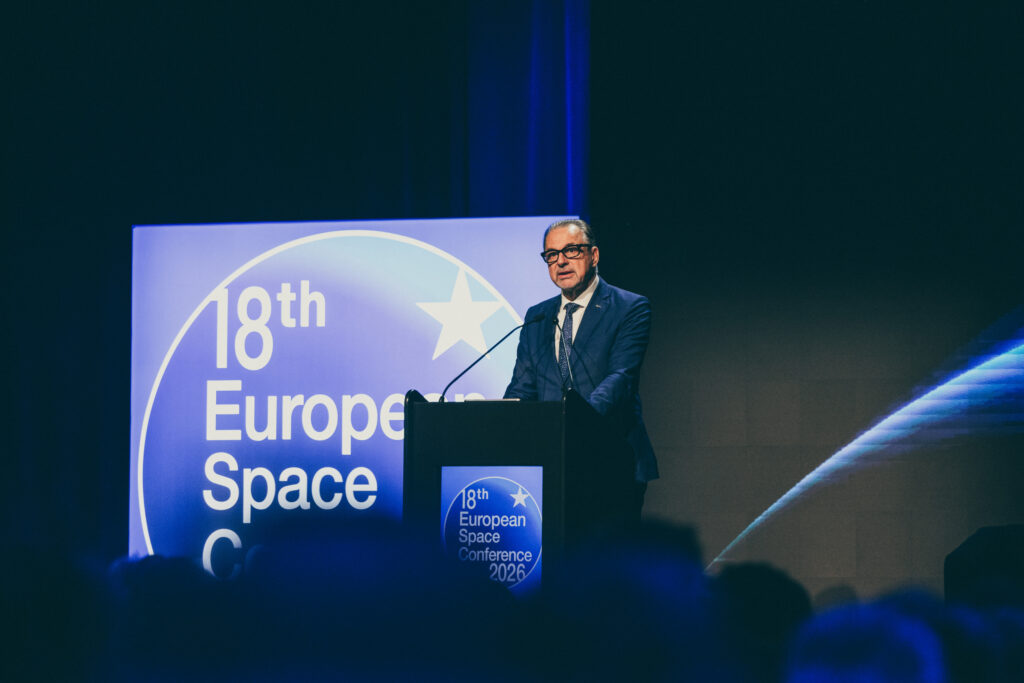
Law of inertia: ESA Director General Josef Aschbacher began the conference with a keynote speech, pouring cold water on the idea that Europe’s successes in 2025 are enough to compete with the rest of the world.
“Europe has come a long way over the past few years, and we are moving in the right direction, but others are moving just as fast—if not faster,” Aschbacher said.
Even with record funding levels, Europe’s total budgets for space still pale in comparison to the United States and China. Ensuring that Europe remains competitive requires the region to compound its investment, and to fundamentally reorganize the space industry for global competition, Aschbacher said.
To catch up, the director general said the region needed to foster a “quantum leap” in innovation, to cut red tape, and to secure increases in long-term funding.
Better, faster, stronger: While Aschbacher called for a “profound transformation” of the region’s space industry, many of the improvements he called for are already in progress.
Aschbacher admitted that “Europe has not yet mastered rapid industrialization, and the mass production of satellites, to build market-leading constellations,” but many businesses across the region spent last year investing in their satellite production capacities—increases that will come online this year.
On “debureaucratization,” ESA has already cut its time in half from tending a contract to signing it. Aschbacher expressed optimism that the proposed EU Space Act will further increase efficiencies in the region.
Upcoming initiatives, like Europe’s Resilience from Space (ERS), will provide prime opportunities to test out a new structure for European cooperation. Under that framework, nations maintain their own sovereign constellations, while pooling resources in a shared infrastructure.
On funding, while ESA’s record funding is a positive sign, Aschbacher urged European investors and lawmakers to give more to the space industry, saying the region should target roughly one-third of US funding levels, or about double Europe’s current funding levels.
“While we are undoubtedly on a positive path, we must not be complacent,” Aschbacher said. “Actually, I would argue that both defense and space should receive even more funding given the critical nature for our people, our economy and our collective security.”