
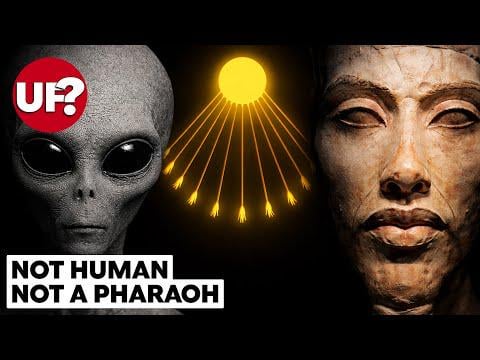
Akhenaten’s reign during the Amarna period is often described as a radical departure from traditional Egyptian religion and art, but some aspects of his legacy remain historically unresolved.
One of the most notable issues is his burial. The royal tomb constructed for Akhenaten at Amarna was found without a confirmed mummy or intact burial assemblage. While political erasure, tomb reuse, or posthumous desecration are commonly cited explanations, no definitive evidence has resolved what ultimately happened to his remains.
Another area of debate concerns how Akhenaten and his immediate family were depicted. Amarna-period art consistently portrays elongated skulls, narrow faces, wide hips, and proportions that differ markedly from earlier and later Egyptian royal imagery. Egyptian art was symbolic, but it was also highly standardized for centuries, making this sudden and consistent stylistic shift unusual.
Some scholars interpret these depictions as theological symbolism tied to Atenism, others as artistic exaggeration, and some suggest medical or hereditary conditions. The fact that similar traits appear across Akhenaten, Nefertiti, and their children raises questions about whether the style reflects symbolism alone or was influenced by observable physical characteristics.
by No_Money_9404
1 Comment
Obviously any times we have questions about gaps in history, the answer is aliens. Duh