
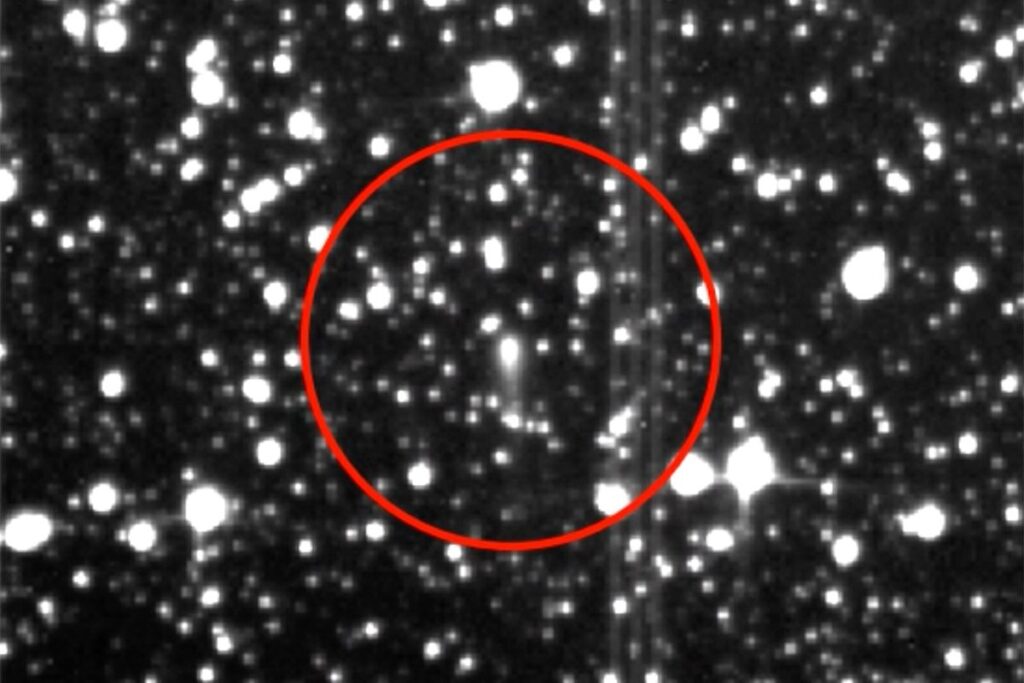
Interstellar comet 3I/ATLAS has been seen moving across the night sky by one of NASA’s top exoplanet-hunting missions.
TESS (Transiting Exoplanet Survey Satellite) spotted comet 3I/ATLAS during an observation run from 15–22 January 2026.
NASA says scientists will be able to use the data to learn more about the comet’s activity and rotation.
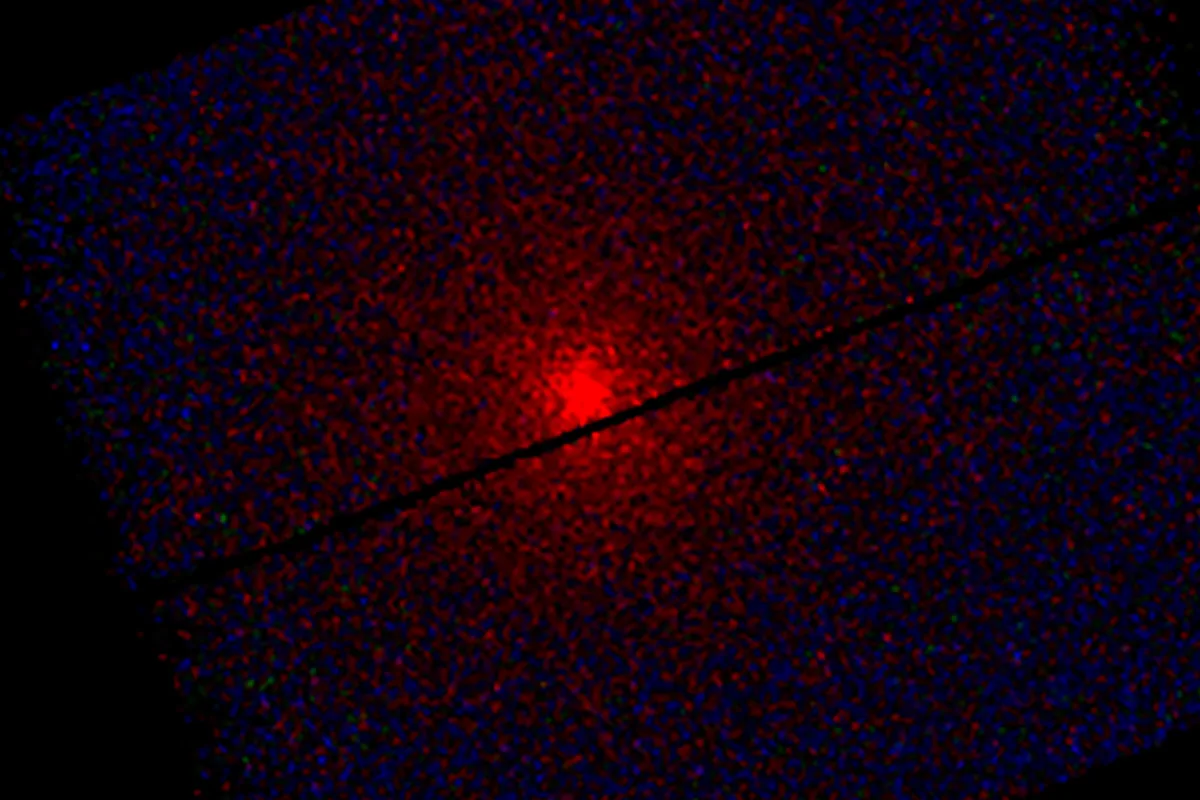 Credit: ESA/XMM-Newton/C. Lisse, S. Cabot & the XMM ISO Team
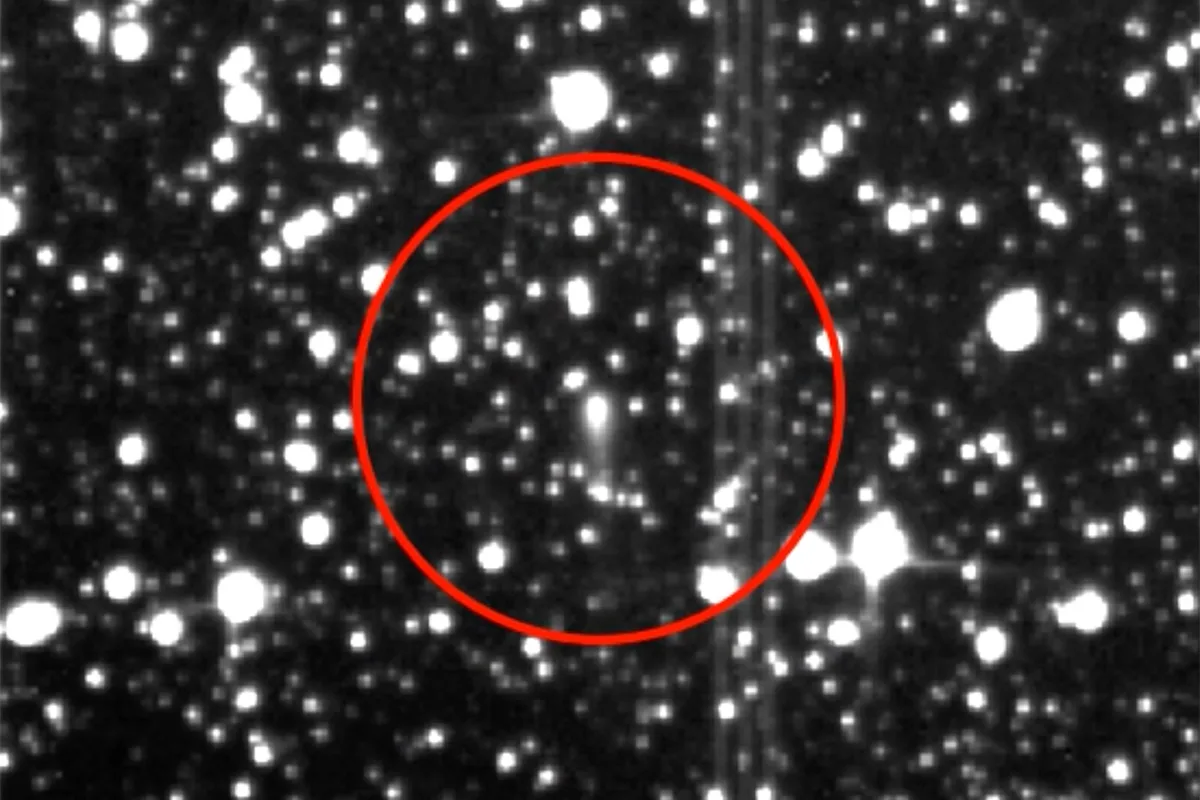 Still from a video of comet 3I/ATLAS produced using data from NASA’s TESS mission, 15 and 18–19 January 2026. Credit: NASA/Daniel Muthukrishna, MIT
A comet from another corner of the Galaxy
The vast majority of comets we observe from Earth originated within our Solar System.
But comet 3I/ATLAS is one of only three interstellar comets ever observed. That means it originated beyond our Solar System, in another part of the Galaxy.
The comets that formed within our Solar System orbit the Sun, but comet 3I/ATLAS is temporarily passing through our Solar System.
It was discovered on 1 July 2025 and has already made its close approach to Earth, and its close approach to our Sun.
Now, it’s on its way out of our Solar System and will soon be lost from view forever.
Video showing comet 3I/ATLAS moving across the sky, produced using data captured by NASA’s TESS spacecraft, 15 and 18–19 January 2026. Credit: NASA/Daniel Muthukrishna, MIT
But scientists have been able to learn a great deal about comet 3I/ATLAS while it’s been passing through our cosmic neighbourhood.
Comet 3I/ATLAS has been imaged by the Hubble Space Telescope and James Webb Space Telescope.
It’s been seen by solar-observing spacecraft and spacecraft at Mars.
It’s been seen by the Europa Clipper and the Juice missions: two different spacecraft currently on their way to Jupiter.
And NASA’s TESS mission kicked off 2026 by taking a look at the comet, capturing multiple views that have been compiled into the video seen here.
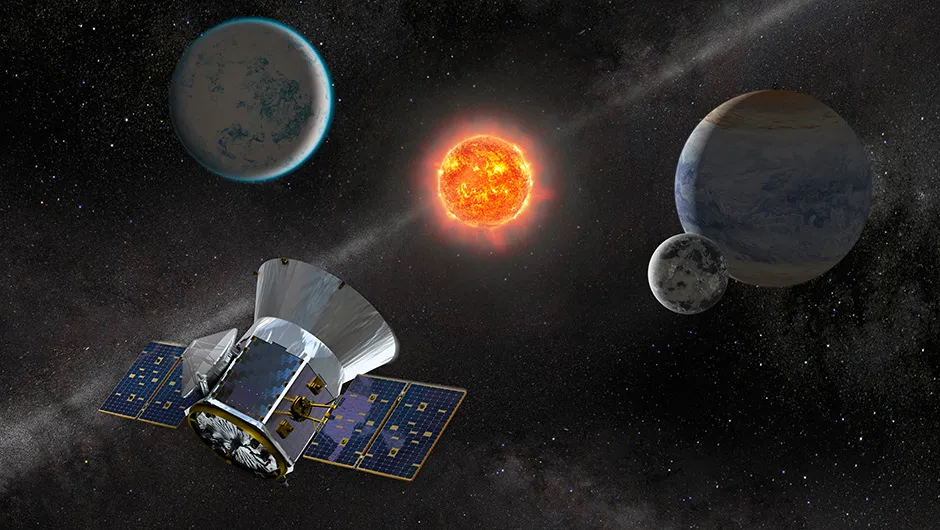 A artist’s impression of NASA’s TESS mission. Image Credit: NASA/JPL-Caltech
TESS sees the interstellar comet
Daniel Muthukrishna is a research scientist at the Massachusetts Institute of Technology in Cambridge, Massachusetts, USA.
He used TESS data from 15 January and 18–19 January 2026 to compile a series of images showing 3I/ATLAS’s movement across the sky.
The temporary interruption in the data was a result of TESS entering a safe mode following an issue with its solar panels. On 18 January, the problem solved, TESS resumed its observations.
In the video, the interstellar comet looks like a bright dot with a tail, moving quickly against the background sky.
NASA says 3I/ATLAS’s brightness is about +11.5 in magnitude, which is the scale astronomers use to describe how bright an object is.
That’s about 100 times dimmer than what can be seen with the naked eye.
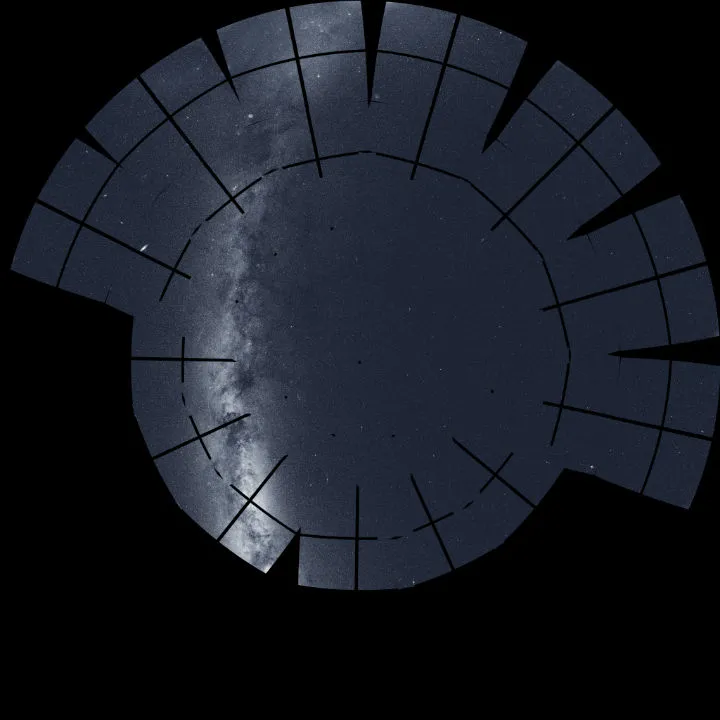 A mosaic of the northern sky produced using data from NASA’s TESS mission. Credit: NASA/MIT/TESS and Ethan Kruse (USRA)
A follow-up view of 3I/ATLAS
The TESS spacecraft launched in 2018 and has been scanning the sky ever since.
It’s primary goal is to discover exoplanets, which are planets orbiting stars beyond our Solar System.
It does this by looking at distant stars and observing changes in starlight that could indicate a planet is orbiting that star.
TESS scans wide regions of the sky for a month at a time, and its wide view of the sky means it occasionally spots comets and asteroids.
In fact, TESS saw comet 3I/ATLAS back in May 2025, two months before it was officially discovered. It was only seen in TESS data when scientists went back and looked at previous observations.